Sustainable Enjoyment in Coburg: organic, regional, fair
Sustainable Enjoyment in Coburg: Organic, Regional, Fair – and What's Next
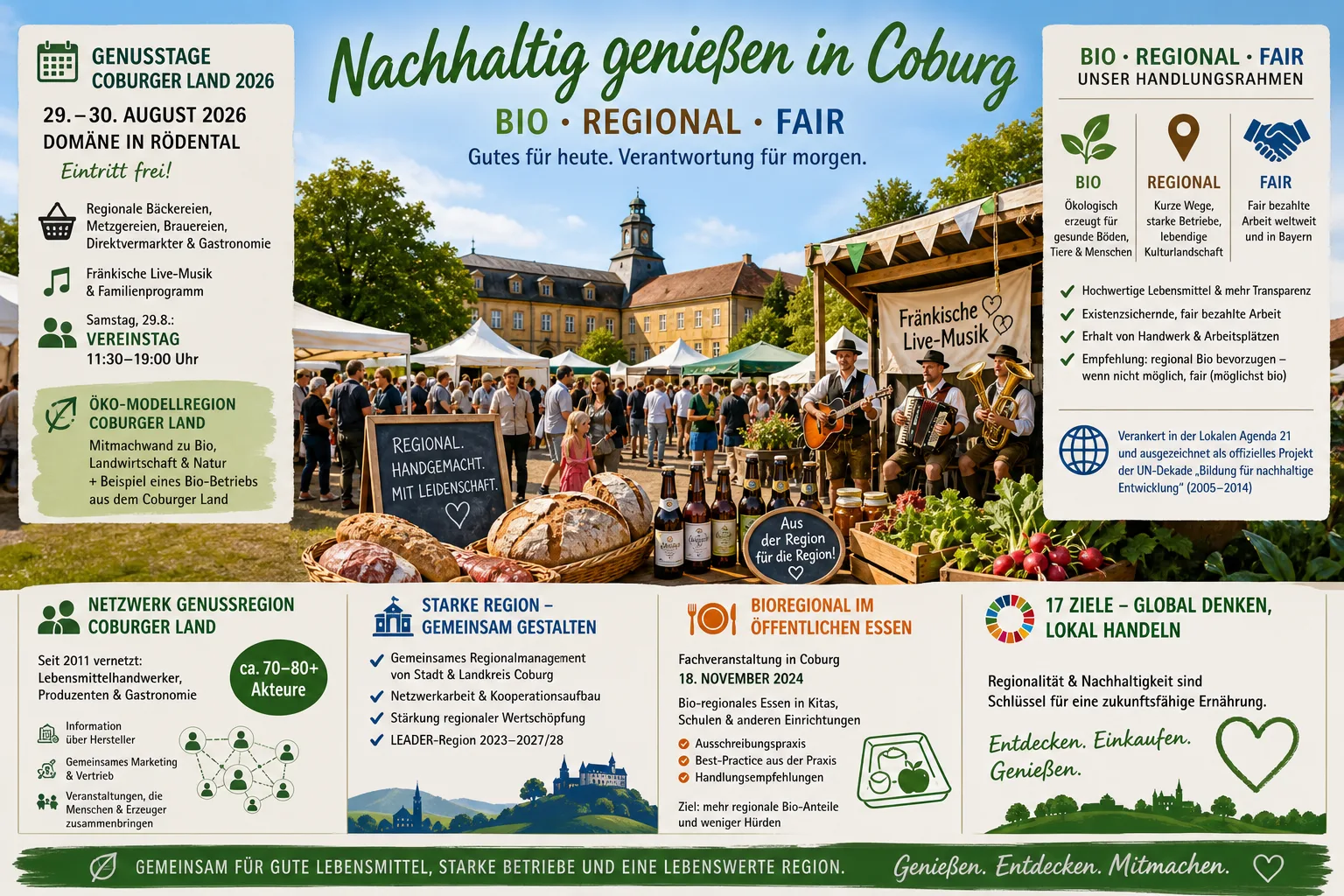
How can a stroll through Coburg be combined with future-proof nutrition – with short distances, honest craftsmanship, and fair standards along the supply chain? In the Coburg region, this aspiration becomes especially tangible when regional networks, gastronomy, direct marketing, and public kitchens (e.g., daycares and schools) work in the same direction: organic · regional · fair.
Culinary Region Coburg: Network and Orientation
For sustainable enjoyment to go beyond individual decisions, visible structures are needed: producers, craftsmanship, direct marketing, gastronomy, and regional marketing initiatives. In the Coburg region, the Culinary Region Coburg (as a regional initiative/brand) brings together exactly such actors and makes access to regional products and businesses easier.
How to Recognize Reliable Offers
- Transparent origin: clear information about production, processing, and region (e.g., which farms supply, where is it processed?).
- Verifiable standards: Organic seals (EU organic logo/German organic seal) as well as recognized fair trade seals.
- Seasonality: Menus/assortments that noticeably change throughout the year.
- Short delivery routes: traceable supply chains (direct sourcing, regional suppliers, cooperations).
If you are new to Coburg or visiting: Actively ask about regional suppliers and certifications. Reputable businesses can usually answer this concretely.
Culinary Days Coburg: Upcoming Editions & What to Expect
The Culinary Days Coburg are designed as a regional culinary and information format to make sustainable nutrition tangible. For the next editions, a typical focus is a mix that appeals to visitors of all generations:
- Stalls of regional producers and food artisans (e.g., baked goods, meat and sausage products, cheese, beverages, delicacies, sweets – depending on the program and exhibitors).
- Direct exchange: Discussions about cultivation, processing, animal husbandry, ingredient lists, craftsmanship, and pricing.
- Hands-on and family offers: low-threshold activities that show how "organic · regional · fair" works in everyday life.
- Impulses for organic and regional development: Contributions from (eco-)model projects, initiatives, or educational partners presenting practical paths to bioregional supply.
If you want to use the Culinary Days as a "test run" for your everyday life, three questions help during your visit: Where does it come from? (region), how was it produced? (organic/standards), and how fair is the supply chain? (especially for imported ingredients).
From Field to Daycare: Next Steps in Public Kitchens
A particularly effective lever for sustainable nutrition is where many people eat every day: public catering in daycares, schools, authorities, clinics, or companies. In the coming years, the decisive factor in the Coburg region will be how consistently the following building blocks are implemented:
1) Shaping procurement & purchasing so that regional/organic becomes possible
- Service descriptions that transparently query quality, season, and origin (instead of just rewarding the lowest price).
- Lot sizes and logistics that regional suppliers can realistically serve.
- Verifiable standards (organic certification, if applicable, fair trade shares for imported products).
2) Menu planning that keeps costs under control
Organic and regional shares can often be better integrated in practice when kitchens focus on seasonal vegetables, less food waste, and balanced portion planning. In Germany, the DGE quality standard for catering in daycares and schools serves as a professional guide for quality and nutrient supply.
3) Education that arrives in everyday life
Especially in daycares and elementary schools, eating experiences have a long-term impact. When children (age-appropriately) learn where food comes from, why seasonality is important, and how fairness in trade works, nutritional competence is created that lasts beyond individual actions.
Why Sustainable Enjoyment in Coburg Shapes the Future
Sustainable nutrition becomes effective when it is easily accessible, verifiable, and suitable for everyday life. In the Coburg region, three factors contribute to this in particular:
- Regional networks that make producers, craftsmanship, and gastronomy visible.
- Public kitchens that can move large quantities through their purchasing and thus change markets.
- Informed consumers who actively ask about origin, standards, and fairness.
If you want to shop or eat more consciously in the coming months, often a first, realistic step is enough: swap one regional product per purchase – or consistently switch to fair for imported goods. Many small decisions create noticeable demand, and demand creates supply.