Zero Waste & Green Events in Coburg – Celebrate Sustainably
Zero Waste & Green Events: How Coburg Celebrates Sustainably
Celebrating sustainably doesn't mean "celebrating less," but planning smarter: with less waste, more reusable items, fair procurement, and good communication. This guide is aimed at anyone who wants to organize events or private parties sustainably in Coburg in the coming months and years – from club evenings to neighborhood festivals.
What is a "Green Event" – and what does Zero Waste mean?
Green Events are events that consider ecological and social impacts from the very beginning (e.g., waste prevention, energy, mobility, procurement, accessibility). Zero Waste is a particularly consistent approach: waste should not arise in the first place by reusing, repairing, sharing, or circulating products.
Practical target image for your next event
- Avoid: fewer giveaways, less single-use, less "one-day decoration."
- Reuse: reusable tableware, robust signage, modular decorations.
- Repair & Share: borrow instead of buy, reusable equipment in the club/neighborhood.
- Recycle (as a last step): clean separation, clear collection points, easily readable instructions.
Coburg as a Starting Point: Where You Can Connect for Upcoming Events
So that sustainable events don't remain isolated ideas, a combination of public participation formats, network locations, and reuse offers is helpful. In Coburg, the following are particularly useful for future projects:
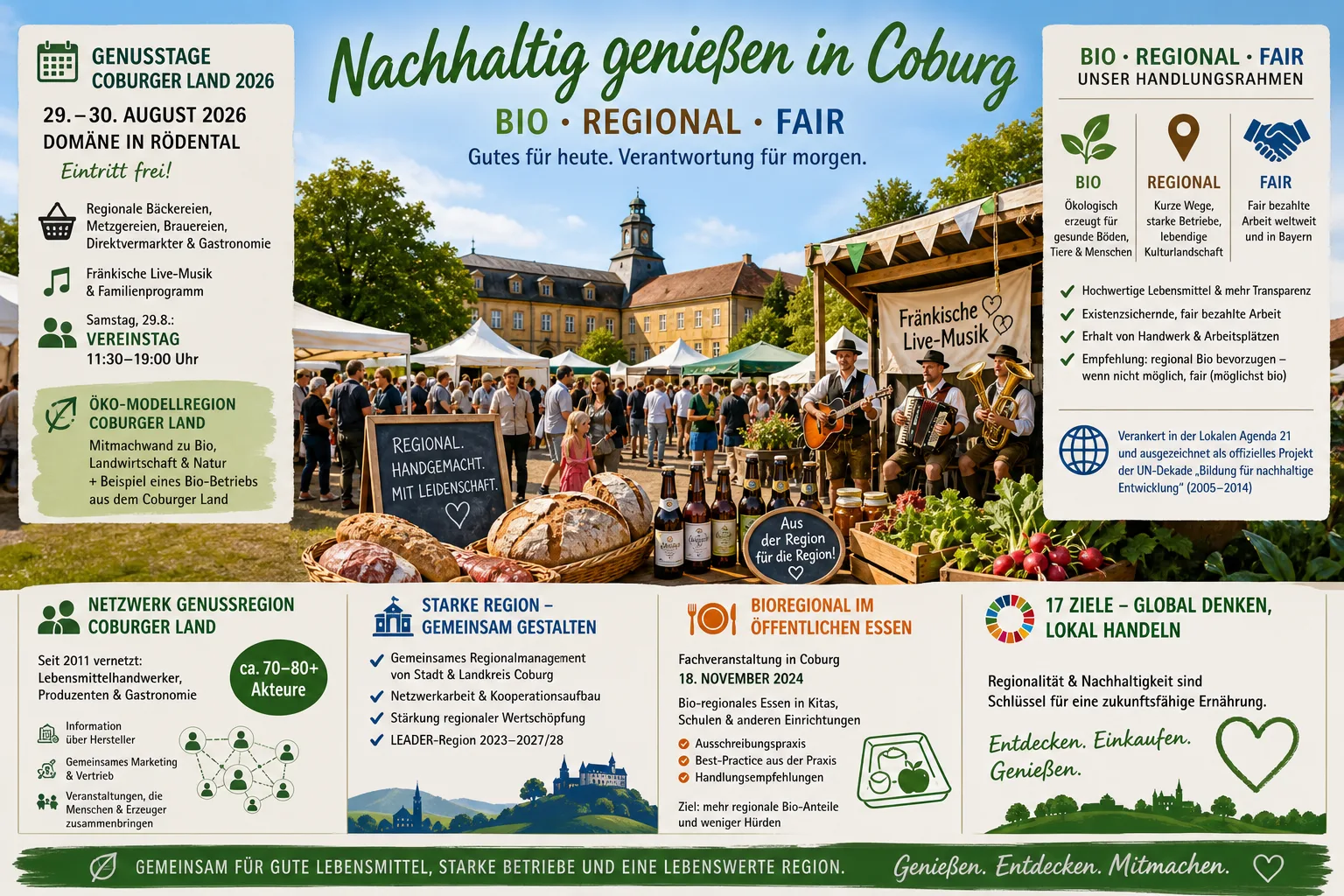
- Coburg Sustainability Days: As an occasion and stage, they are suitable for consistently planning upcoming program points, workshops, or participation activities with minimal waste (e.g., reusable catering, reusable signage, repair or swap formats).
- Future Space Coburg: As a central meeting point for initiatives, it can help find partners, share materials, and make arrangements for recurring reusable or rental systems.
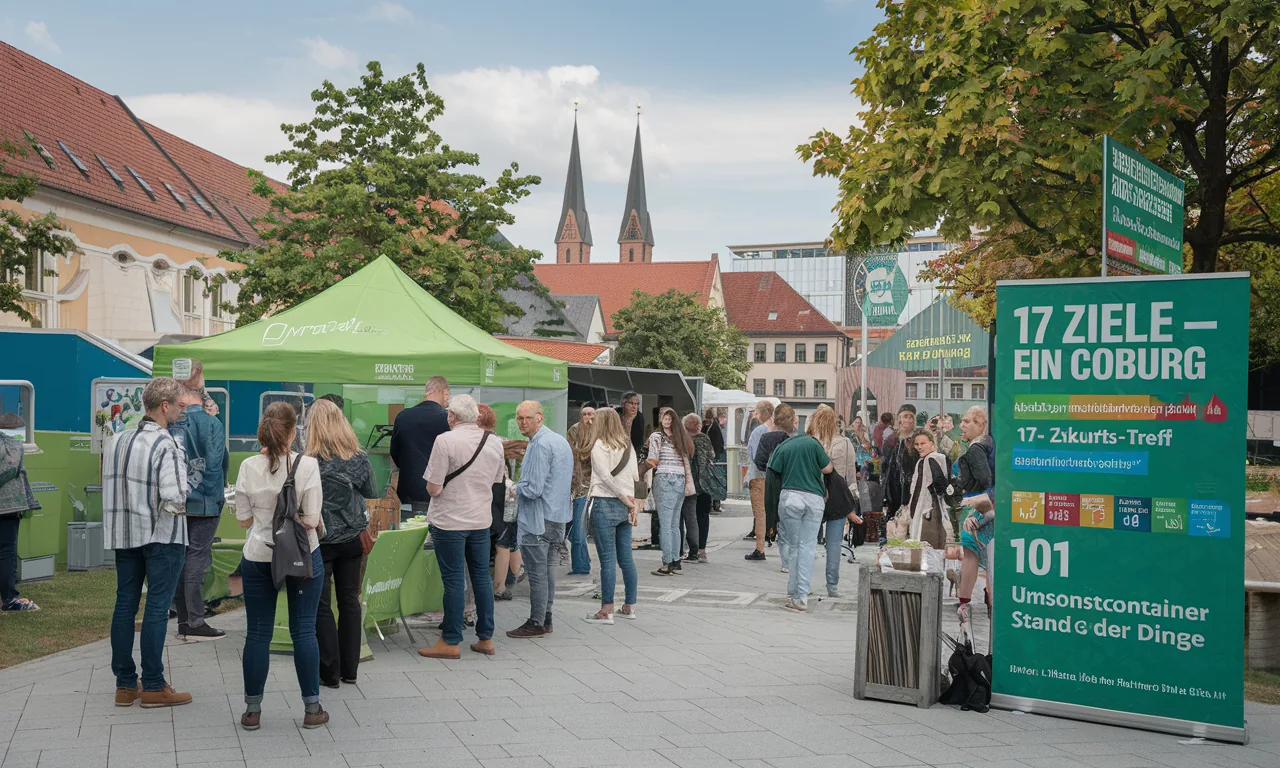
- "17 Goals – One Coburg" (SDG reference): Aligning with the UN Sustainable Development Goals makes it easier to transparently state goals for upcoming events (e.g., responsible consumption, climate protection, social participation).
- Re-use offers like the "Stand der Dinge" container at the recycling center: For upcoming parties, reuse can reduce costs (decorations, household items, toys) and at the same time avoid waste.
- Green Deal Process & "Project Market": Public exchange formats are suitable for making upcoming projects visible, recruiting supporters, and adopting proven solutions.
Important: For each format, check the current participation and usage conditions in advance (e.g., booking, opening hours, take-away rules) via the respective official channels.
Planning a Green Event: 7 Steps That Can Be Implemented Immediately in Coburg
1) Define the goal: "What is our minimum standard?"
Set a clear, measurable standard for your next event, e.g.: "No disposable tableware," "at least 80% reusable," "waste stations with clear separation," "arrival information with public transport/bicycle." This makes sustainability binding within the team.
2) Set waste and reusable concept
- Reusable instead of disposable (cups, plates, cutlery, serving trays).
- Plan deposit or return systems (also for private parties: clear return box).
- Portioning and refill stations instead of individual packaging.
3) Procurement: Borrow, share, reuse
For upcoming events, a simple borrowing and material list is worthwhile: Who has beer table sets, pavilions, string lights, crates, reusable items? What can be supplemented via re-use offers? A shared pool in the club or neighborhood reduces new purchases.
4) Catering & Drinks: regional, seasonal, uncomplicated
- Seasonal dishes with clear labeling (also for allergens).
- Tap water option, refill stations, carafes instead of individual bottles (where hygienically possible).
- Leftover strategy: replenishment in waves, take-away options for brought containers (according to hygiene concept).
5) Mobility: Communicate arrival so that it is used
Every invitation should include information about arrival by bus/train, bicycle, and on foot. Add bicycle parking options and a short, clear route description. This often reduces emissions more than individual material decisions.
6) Communication: Involve guests early
Zero Waste works best when guests know what to expect: "Please bring a water bottle," "reusable cups with deposit," "waste separation at station A/B/C." This increases acceptance and reduces effort on site.
7) After the event: Evaluation for the next round
Plan a short debrief: What avoided waste, what was annoying, what was particularly easy? A one-page checklist (for next time) is often the biggest lever for permanently better Green Events.
Checklist for the Event Day (short & practical)
- Reusable station (distribution/return) clearly signposted
- Waste separation as "islands" instead of single bins (fewer mistakes)
- Helper briefing: 5 minutes is enough (What goes where? Who decides in case of questions?)
- Washing/return logic: crates, tubs, drip areas, clear walkways
- Water & refilling: visible, simple, low maintenance
- Accessibility: paths, signage, possibly a quiet area
- Documentation: 5 photos of the stations + short notes (helps for the next event and for the team)
Zero Waste Ideas for Private Parties in Coburg (Birthday, Garden Party, School Celebration)
Especially at family celebrations, a lot of waste is generated by disposable decorations, party favors, and beverage packaging. For your next party, you can reduce significantly with just a few decisions:
- Decorations: fabric banners, reusable bunting, natural materials (that can be used again afterwards).
- Party favors: experiences instead of plastic (e.g., group games, treasure hunt, craft station with leftover materials).
- Invitation: digital or on recycled paper; clear request for water bottle/box if appropriate.
- Buffet: large bowls instead of individual portions; leftover planning (e.g., "leftover box" for guests).
- Borrowing: specifically collect reusable items, crates, seating, games within the circle of friends or club.
If children are involved, a visible "participation" focus helps: those who are actively involved in crafting, playing, or decorating usually don't miss disposable items.