
Annette Dasch
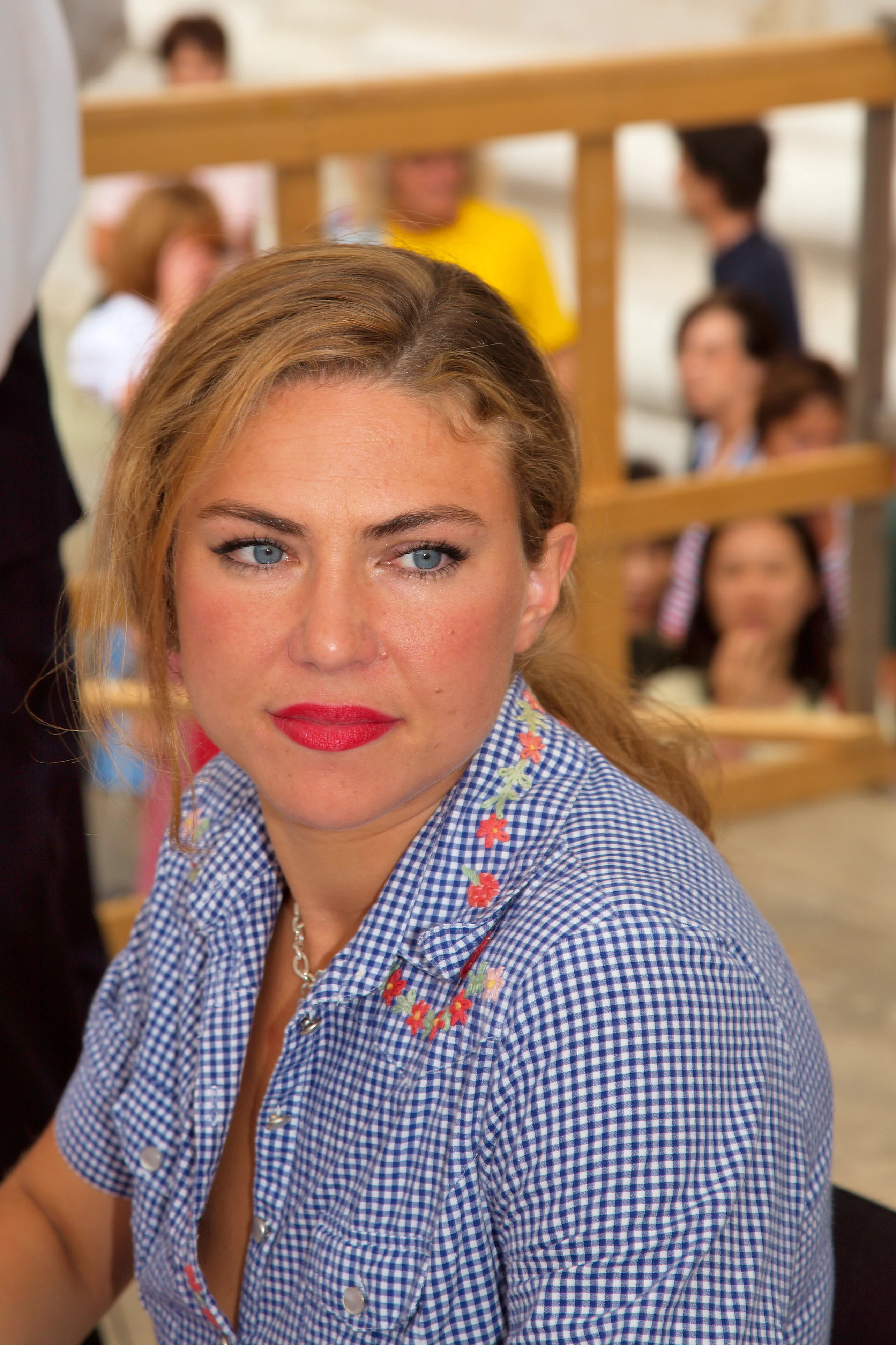
Image from Wikipedia
Image from Wikipedia
Annette Dasch – A Soprano Between Opera Tradition, Art Song, and Charismatic Stage Intelligence
The Berlin soprano who reimagines opera and infuses the repertoire with personality
Annette Dasch, born on March 24, 1976, in Berlin, is one of the most distinctive German soprano voices of her generation. Her artistic career combines an international opera career, song interpretation, concert work, and a palpable eagerness for programmatic curiosity. From an early age, she developed a relationship with vocal music before she chose to study singing, gradually becoming one of the most sought-after sopranos in the German-speaking and international opera scene. ([de.wikipedia.org](https://de.wikipedia.org/wiki/Annette_Dasch))
Biography: From Berlin's Musical Interest to International Opera Career
As a child, Annette Dasch sang in vocal ensembles and grew up in Berlin in an environment that fostered her musical development early on. After completing her Abitur in 1995 at the Arndt-Gymnasium Dahlem, she left her hometown to study singing at the University of Music in Munich under Josef Loibl; additionally, she attended the class for music-dramatic representation in Graz in 1998/99 and completed master classes with Philip Schulze, Wolfram Rieger, and Helmut Deutsch. This education laid the foundation for a career based on precision, stylistic versatility, and dramatic credibility. ([de.wikipedia.org](https://de.wikipedia.org/wiki/Annette_Dasch))
Her international breakthrough came in 2000 with several competition successes: the Maria Canals Competition in Barcelona, the International Robert Schumann Competition in Zwickau, and the Concours de Genève. This trio quickly garnered her attention in the European music scene and opened the door to engagements at opera houses and with leading orchestras. The early career exhibits a pattern that remains characteristic of Dasch: technical assurance, a keen sense of text and character, and an artistic presence that resonates even in concert halls. ([de.wikipedia.org](https://de.wikipedia.org/wiki/Annette_Dasch))
Stages: Between Mozart, Wagner, Haydn, and Modern Music Theater Dramaturgy
Her most significant roles include parts from the Mozart repertoire as well as from romantic and modern opera. She has sung, among others, Donna Elvira, Donna Anna, Fiordiligi, Pamina, Contessa Almaviva, Elsa, Eva, Elisabeth, Antonia, Rosalinde, Jenůfa, Liù, Jenny, and Cordelia. This range showcases a voice that connects lyrical line with dramatic engagement, particularly flourishing in roles with psychological depth. ([de.wikipedia.org](https://de.wikipedia.org/wiki/Annette_Dasch))
Her performances have taken her to the most important opera houses and festivals in the world, including New York, London, Vienna, Madrid, Barcelona, Amsterdam, Antwerp, Geneva, Dresden, Berlin, Tokyo, Stockholm, Brussels, Munich, Paris, Milan, and Zurich. She made her debut at the Metropolitan Opera in 2009 as the Countess in Le nozze di Figaro, at the Bayreuth Festival in 2010 as Elsa in Lohengrin, and at the Salzburg Festival with roles in Il re pastore, Armida, and Don Giovanni. Such milestones not only mark prestige but also highlight the versatility of a singer who confidently navigates between classical, romantic, and music theater. ([de.wikipedia.org](https://de.wikipedia.org/wiki/Annette_Dasch))
Repertoire and Artistic Development: Style Awareness over Mere Vocal Virtuosity
The official houses describe Annette Dasch as one of the leading sopranos of her time, emphasizing her presence on the most significant stages. Particularly notable is the balance between Mozart roles, German romantic repertoire, and contemporary or musically charged literature. She has collaborated with conductors such as Daniel Barenboim, Christian Thielemann, Kent Nagano, Marek Janowski, Sir Simon Rattle, and René Jacobs, which underscores her position in the core repertoire as well as her affinity for historically informed and grand opera interpretation. ([wiener-staatsoper.at](https://www.wiener-staatsoper.at/ensemble/detail/annette-dasch/))
Her collaborations with directors such as Hans Neuenfels, Christof Loy, Claus Guth, Katie Mitchell, Dieter Dorn, and Calixto Bieito also point to an interpretative curiosity that transcends mere role fulfillment. Dasch is not only concerned with vocal brilliance, but also with character development, stage authenticity, and the subtle transitions between singing and acting. Particularly in roles like Elsa, Donna Elvira, Jenůfa, or Jenny from Aufstieg und Fall der Stadt Mahagonny, this dual talent becomes evident: Dasch not only sings a role, she shapes characters with dramatic contours. ([de.wikipedia.org](https://de.wikipedia.org/wiki/Annette_Dasch))
Discography: Selected Recordings between Solo Album, Opera Production, and Repertoire Maintenance
Her stylistic diversity is also documented in recordings. Early releases include German Baroque Songs and the solo album Armida, which was awarded the ECHO Klassik as "Opera Recording of the Year" in 2008. Additional works encompass Mozart Arias as well as further recordings like Deutsche Barocklieder, Schumann's Genoveva, Haydn's Die Schöpfung, Il re pastore, Don Giovanni, Idomeneo, and Le nozze di Figaro. This discography highlights how consistently Dasch expands her repertoire not through quantity, but through quality and distinctiveness. ([allmusic.com](https://www.allmusic.com/album/german-baroque-songs-mw0001944409?utm_source=openai))
The recordings also reveal a singer with a pronounced sense of stylistic dramaturgy. The Baroque repertoire demands ornamentation, clarity of articulation, and linguistic presence, while Mozart requires a flexible, elegant line, and Wagner or Weill demand a different, more colorful emphasis. Annette Dasch approaches these fields not as a crossover effect, but as a serious engagement with different musical architectures. It is precisely this that underscores her authority as an interpreter. ([allmusic.com](https://www.allmusic.com/album/german-baroque-songs-mw0001944409?utm_source=openai))
Critical Reception and Awards: Recognition from Experts and Institutions
The artistic community recognized Annette Dasch early on and has done so consistently. In addition to the competition victories of 2000, she received the Berliner Bär in 2011 and the Federal Cross of Merit in 2014; her recording of Armida was awarded the ECHO Klassik as early as 2008. The Bavarian State Opera, the Vienna State Opera, and the Bayreuth Festival regard her highly as a significant artist of her field, further solidifying her reputation well beyond the German-speaking world. ([de.wikipedia.org](https://de.wikipedia.org/wiki/Annette_Dasch))
In critical reception, it is often noted that Dasch is perceived not only as a singer but as a musical storyteller. Her work on the text, her clear diction, and her ability to penetrate a role psychologically are among the reasons she excels in both opera productions and song recitals and concert formats. That she has also appeared as a moderator of her own formats enhances this image of an artist who not only performs music but conveys it. ([de.wikipedia.org](https://de.wikipedia.org/wiki/Annette_Dasch))
Cultural Influence: Art Song, Music Mediation, and a Sense for New Formats
Annette Dasch shapes the German opera landscape not only through her roles but also through her innovative thinking. From 2008 to 2012, she hosted her own music talk show Annettes DaschSalon, which aired on ZDFtheaterkanal, later on 3sat, and has continued as a concert series in the Alte Oper Frankfurt since December 2012. In this way, she exemplifies a generation of artists who combine operatic excellence with mediation work and transfer classical music into contemporary formats. ([de.wikipedia.org](https://de.wikipedia.org/wiki/Annette_Dasch))
Her work as a song, oratorio, and concert singer further amplifies this cultural influence. She has performed with the Berlin and Vienna Philharmonics, the New York Philharmonic Orchestra, the Orchestre de Paris, the Orchestre National de France, the Concertgebouw Orchestra, and the Symphony Orchestra of the Bavarian Radio, and is regularly seen with Helmut Deutsch, Wolfram Rieger, and Jan Philipp Schulze. This collaboration with top musicians and premier orchestras firmly anchors her in the core of European art song and concert culture. ([de.wikipedia.org](https://de.wikipedia.org/wiki/Annette_Dasch))
Current Projects 2025/2026: Presence on Stage and in Song Recitals
Annette Dasch remains active in the current scene. In 2025, she sang the role of Chawa in Die ersten Menschen at the Dutch National Opera, returned to the Volksoper Vienna as Sylva Varescu in Die Csárdásfürstin, and was announced for the premiere of Aschenbrödels Traum as Ida Grünwald; for the 2025/26 season, her agency also cites engagements as Marie in Wozzeck as well as an Artist-in-Residence role at Lied Basel. An edition of the DaschSalon is scheduled at the Alte Oper Frankfurt for May 2026. This reflects an artist who does not merely manage her career but continuously expands it. ([operaballet.nl](https://www.operaballet.nl/en/singers/annette-dasch))
This blend of opera, operetta, art song, and modern music theater practice makes Annette Dasch particularly exciting. She combines vocal elegance with intellectual curiosity, institutional reputation with personal charisma, and loyalty to her repertoire with openness to new stage concepts. For those who experience her live, there is no routine, but rather an artist who perceives each role as a present moment, immediately reaching the audience with her characterful stage presence. ([wiener-staatsoper.at](https://www.wiener-staatsoper.at/ensemble/detail/annette-dasch/))
Official Channels of Annette Dasch:
- Instagram: no official profile found
- Facebook: no official profile found
- YouTube: no official profile found
- Spotify: no official profile found
- TikTok: no official profile found
Sources:
- Bavarian State Opera – Biographies: Annette Dasch
- Vienna State Opera – Annette Dasch
- Dutch National Opera – Annette Dasch
- Bayreuth Festival – Annette Dasch
- ARSIS Artist Management – Annette Dasch
- Alte Oper Frankfurt – Annette’s DaschSalon
- Volksoper Wien – Premiere: Die Csárdásfürstin
- Volksoper Wien – Scene Photos / Press Center
- Wikipedia – Annette Dasch
Upcoming Events
Concert with the Fauré Quartet & Annette Dasch
Enjoy chamber music and singing live at the Stadttheater Fürth with the Fauré Quartet and Annette Dasch.
Fauré Quartet & Annette Dasch, Soprano
Don't miss the impressive concert of the Fauré Quartet and soprano Annette Dasch on June 20, 2026, in Fürth.
Fauré Quartett & Annette Dasch, Soprano
An evening for great emotions at the Stadttheater Fürth: Fauré Quartett and Annette Dasch with Brahms, Wagner, and Mahler. 06.20.2026, from 48 Euros. #ClassicalLive