
Claudia Stamm
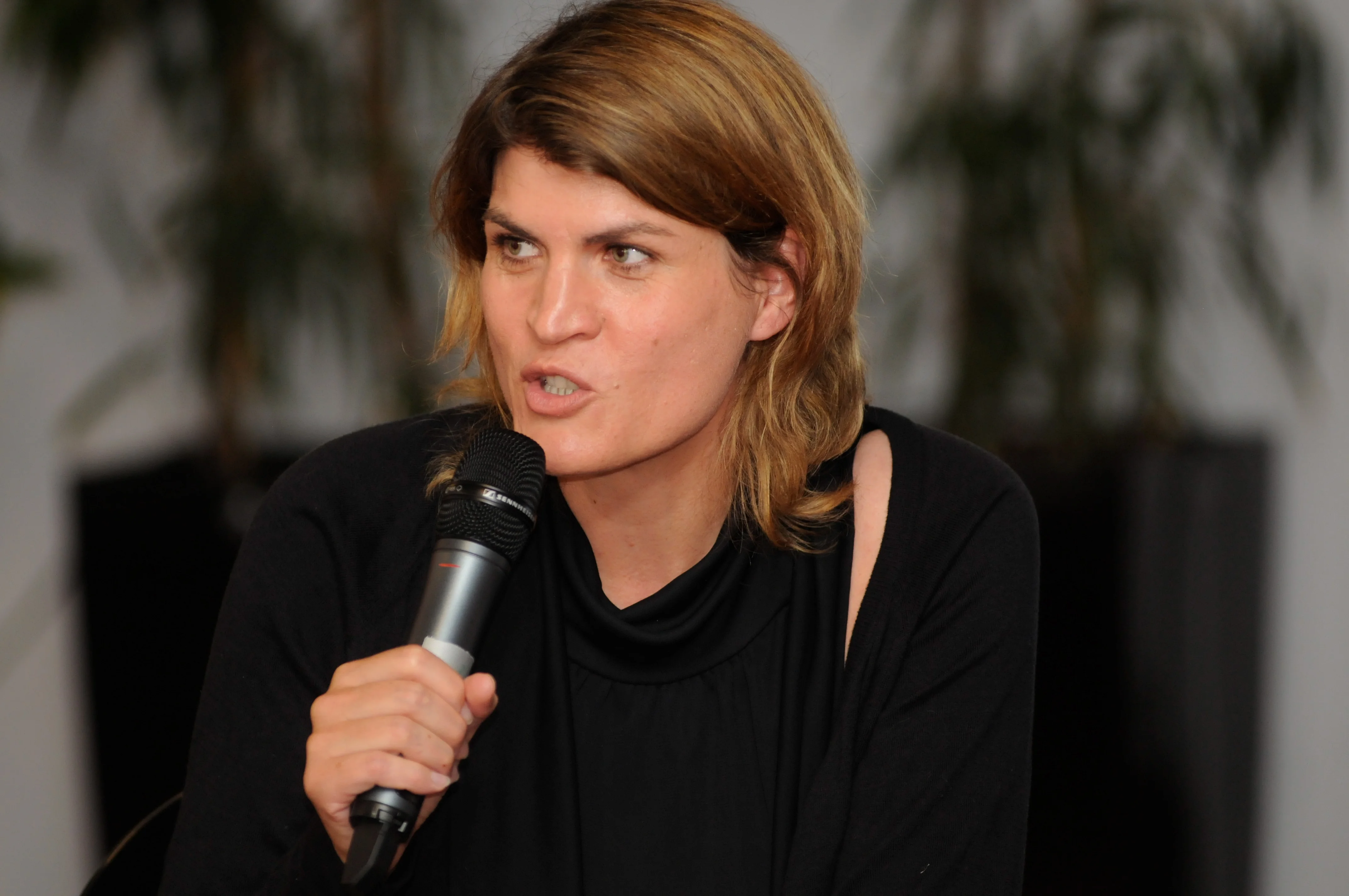
Image from Wikipedia
Image from Wikipedia
Claudia Stamm – a Political Voice with Courage, Conviction, and Impact
A Defining Personality of Bavarian Political Culture
Claudia Stamm, born on October 8, 1970, in Würzburg, has been shaping the political public sphere in Bavaria since the 2000s – first as a journalist, then as a member of the state parliament, and finally as a co-founder of the party mut. Her career embodies citizen-oriented discourse, clear values, and the willingness to leave institutional paths to open new political spaces. Her name is associated with themes like social justice, civil rights, ecological responsibility, and a dialogical, people-centered politics.
Growing up in a politically engaged family, the politician combines analytical sharpness with practical experience from media work and parliament. This blend of research competence, rhetoric, and parliamentary routine gives her public presence substance. Anyone looking to understand the political culture in Bavaria cannot overlook Claudia Stamm as an actor, source of inspiration, and bridge-builder between civil society and institutions.
Biographical Roots: Würzburg, International Perspectives, and Journalistic Training
Early years in Würzburg, an exchange year in Illinois, and study stays in Eichstätt-Ingolstadt, Cologne, and Salamanca shaped Claudia Stamm's international outlook. Her studies in political science with a focus on women's and gender studies fueled her interest in equality, human rights, and democratic participation. She became engaged in associations early on, before joining Bayerischer Rundfunk in 1999 as a freelance author and editor – a professional step that honed her skills in language, factual orientation, and precision in public discourse.
The journalistic training sharpened her ability to present complex issues understandably. This competence remained evident in her later political work: Stamm relies on evidence, comprehensible argumentation, and the willingness to include diverse perspectives. Her communicative profile – clear, dialogical, and approachable – thus became a hallmark of her stage presence in political life.
Transition to State Politics: Parliamentary Experience and Profile Development
On April 3, 2009, Claudia Stamm was elected to the Bavarian State Parliament as a member of Bündnis 90/Die Grünen. There, she worked on budgetary and social policy issues, always focusing on citizen engagement, transparency, and sustainable financial policy. She does not have a music career; instead, her political career represents artistic development in a figurative sense: the work on a “composition” of social concerns, ecological goals, and the rule of law that takes shape in parliamentary “arrangements” and political “production.”
She established herself as a persistent but constructive voice. Her working method combined research, hearings, on-site conversations, and cross-faction exchange. This interplay of expertise and practical relevance made her one of the most prominent voices of her faction until ideological differences arose, leading to a public rupture.
Departure, New Beginning, and Independence: From the Greens to mut
In March 2017, Claudia Stamm left the Greens and continued her mandate until October 2018 as an independent member. The departure was not only a party-political event but also culturally relevant: it made visible how much the programmatic lines, grassroots connections, and strategic orientation of democratic parties are in flux. Stamm justified her step with the necessity to live values not only in party programs but also in political practice more clearly and closer to the citizens.
In June 2017, the founding of the party mut followed – an attempt to bundle social justice, diversity, dignified asylum policies, peace politics, and ecological sustainability in a new organizational form. The new beginning raised questions about political innovation in the federal system: What spaces exist beyond established formations? How can programs, participation, and campaigns be “produced” in a way that resonates?
Between Party Work and Non-partisan Practice
After leaving the state parliament, Stamm remained politically active – within the party mut, in municipal political contexts, and as a voice in public discourse. Her interim stations, including work in parliamentary contexts outside her own party, demonstrate a practice-oriented approach: politics as an “arrangement” of concrete concerns, not as the dogma of a single organizational line. This non-partisan working method reflects professional attitude and personal integrity.
At the center is the experiential knowledge gained from years in the state parliament: legislative processes, budget logic, interfaces between administration and the public, and the dynamics of committees – all of which are part of her artistic development in terms of political formation. Experience, expertise, and a robust core of values intertwine to form a profile that provides guidance in debates.
Themes, Style, and Political “Handwriting”
Stamm's thematic focus revolves around social justice, equality, civil rights, and sustainable financial policy. Stylistically, she prefers a direct, respectful language without polemics. She understands discussions as dialogue – with the aim of making complex matters transparent while still positioning herself clearly. Her “production” of political content follows the primacy of comprehensibility: problem definition, evidence, options, decisions.
Characteristic is a values-bound pragmatism. She connects fundamental positions – dignified asylum and social policy, ecological responsibility – with the willingness to seek compromises, as long as they do not dilute substance. This creates a profile that carries beyond slogans and engenders trust: politics as serious work for the common good.
Public Perception and Media Work
Claudia Stamm understands the logic of the media – and uses it without sacrificing her content to the rhythm of the news cycle. Press reports about her party departure, the founding of mut, as well as stationary and digital formats document her presence in the political public sphere. Interviews and background discussions portray her as a debater who is enthusiastic yet fact-based and does not shy away from conflict, while relying on respect and clarity.
Her journalistic background strengthens this position: she knows how attention is created – and how to channel it for substantive work. The goal is not the headline, but the substance behind the catchphrase. In this way, she shapes a style that offers orientation during times of fragmented public discourse.
Cultural Impact: Democracy as Lived Practice
Political culture thrives on actors who demonstrate conviction, know procedures, and engage people. Stamm embodies a democratic culture that takes participation seriously, protects minorities, and acknowledges ecological limits. In Bavaria, where politics has been shaped by strong party traditions for decades, her work presents a counterpoint: encouragement to participate, openness to new ideas, and courage for dissent.
This influence is not bound to mandates. It manifests in initiatives, discussion formats, and in the patience to continue working even when polls or majority conditions pose challenges. Thus, a sustainable contribution to the resilience of democratic public life emerges – a cultural value that extends beyond election cycles.
Family and Influence: Continuity and Personal Profile
As the daughter of long-time CSU politician and President of the State Parliament Barbara Stamm, Claudia Stamm was introduced to political work at an early age. This background explains her sensitivity to institutional processes – but does not replace her own profile. Her career marks emancipation in substance: preserving a core of values, forging new paths, and assuming responsibility. The connection between tradition and renewal is not a pose but a lived practice.
The early loss of her husband, Hajü Staudt, had a personal impact on her. At the same time, she remained publicly present and engaged – with the attitude of understanding political work as a service to society. In this blend of rootedness, experience, and personal resilience lies a source of her credibility.
Current Projects and Public Activities
Claudia Stamm works on issues relevant to both Bavaria and the federal level: fair tax policy, social infrastructure, equality, anti-discrimination, and political education. Her contributions arise in lectures, commentaries, party work, and civil society collaborations. Pointed public interventions – such as those relating to memorial and commemoration culture, democratic participation, or the evaluation of political events – demonstrate the breadth of her work between analysis and engagement.
The party mut develops programmatic offers and local initiatives within this framework. Even without significant institutional resources, this approach relies on impact through arguments, networks, and practical projects. Politics as “indie production” – small-scale, close to everyday reality, aiming to initiate concrete improvements.
Conclusion: Why Claudia Stamm Remains Important
Claudia Stamm shows how political authorship emerges: through experience, expertise, and public responsibility. She does not have a music career – instead, there is a political career whose “discography” consists of initiatives, debates, legislative proposals, party work, and civil society alliances. Her artistic development in terms of political formation convinces with clear values, dialogical methods, and the willingness to think against the grain.
Those who want to experience political culture rather than just describe it should see Claudia Stamm where she operates: in direct conversations, on platforms, in workshops, and citizen forums. Her appearances show that democracy is not a backdrop but a stage for participation. It is worth experiencing this presence live – for the arguments, the attitude, and the respectful culture of debate.
Voices of Fans
The reactions from fans clearly indicate: Claudia Stamm inspires people who desire approachable, fact-based, and values-driven politics. On Facebook, it says: “Finally someone who finds clear words and still listens.” On YouTube, one reads: “Thank you for the clarification – this makes politics understandable.” On Twitter/X, a user writes: “Consistent in substance, open in dialogue – this is how democratic culture should be.”
Official Channels of Claudia Stamm:
- Instagram: No official profile found
- Facebook: https://www.facebook.com/claudia.stamm.94
- YouTube: https://www.youtube.com/user/ClaudiaStammWaehler
- Spotify: No official profile found
- TikTok: No official profile found
Sources:
- Claudia Stamm – Official Website
- Wikipedia – Claudia Stamm
- WELT – "Claudia Stamm: Spectacular Departure from the Greens"
- Süddeutsche Zeitung – Report on professional experience outside her own party
- Rosenheim24 – Social Media Accounts and Online Communication in the Election Campaign (2013)
- Wikipedia – mut (Party)
- Wikipedia: Image and text source