
Claus von Wagner
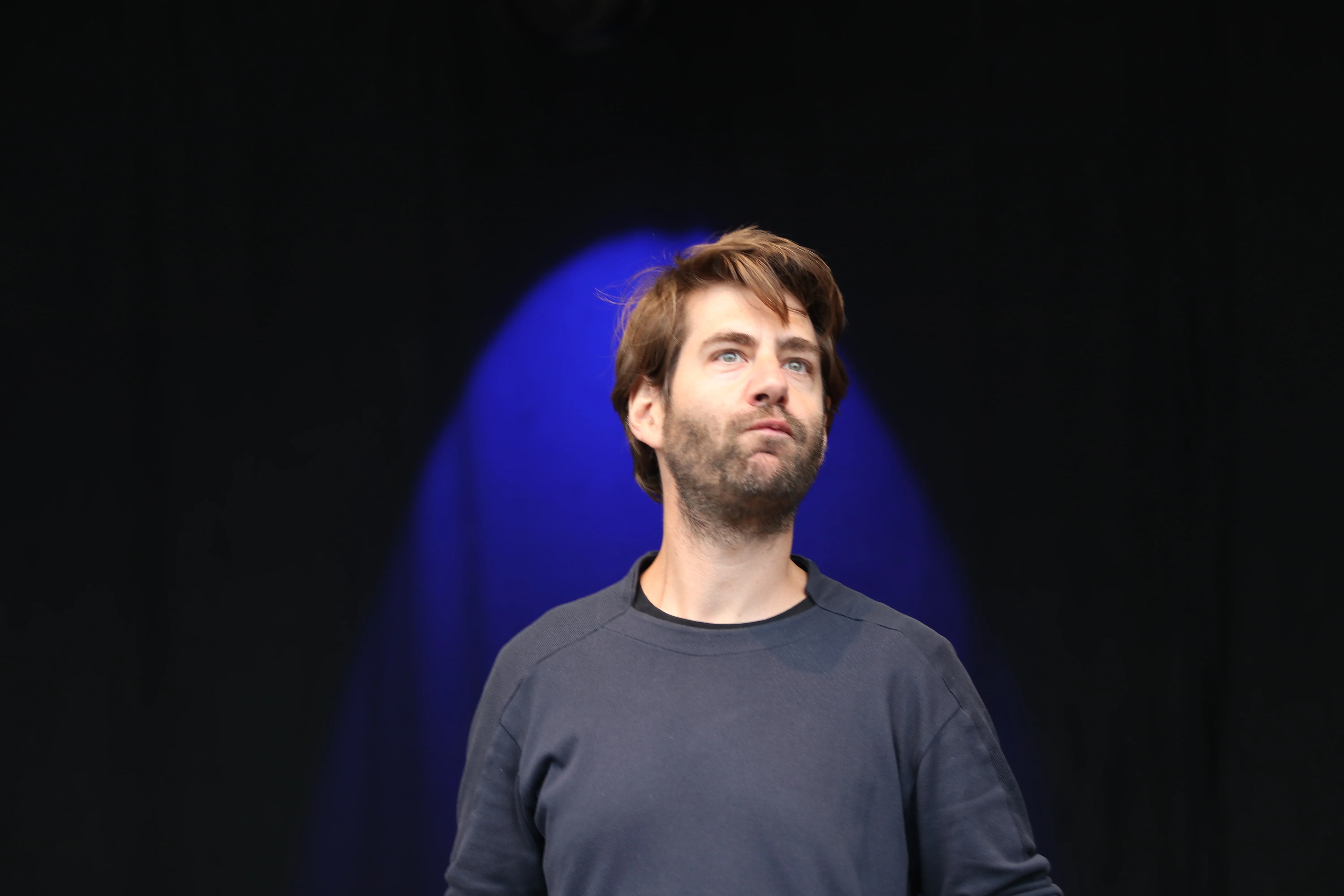
Image from Wikipedia
Image from Wikipedia
Claus von Wagner – Political Sharpness, Dramatic Power, and the Art of Cabaret
A cabaret artist explaining Germany – and making us laugh about what matters
Claus von Wagner, born on November 28, 1977, in Munich, has been one of the defining voices of German political cabaret for years. His stage presence, precise linguistic sensibility, and artistic development from a student satirist to the multiple award-winning host of one of the most influential satire shows on German television mark an extraordinary musical career in a metaphorical sense: a career on stage, underpinned by timing, dramaturgy, and thematic composition. Experiencing von Wagner live immediately communicates the blend of analytical sharpness and empathetic observation that makes his work so distinctive. His style combines dramaturgical arrangement with the pointed production of thoughts – cabaret as the "sound" of political debates.
Biography: From Miesbach to the big stages
Growing up in Miesbach, Claus von Wagner studied Communication Science, Modern and Contemporary History, and Media Law at LMU Munich, graduating with a Master of Arts. Even in his master's thesis, he dedicated himself to the subject of "Political Cabaret on German Television" – an early confession to the stage as a public resonance space. His first solo program premiered in 1997, laying the foundation for his artistic development. At the same time, he gained journalistic experience, ultimately opting entirely for cabaret. This combination of theoretical foundation and stage practice continues to shape his signature: societal analysis, linguistic precision, and an unerring instinct for the dramaturgy of the evening. (ZDF Press Portal Biography; Wikipedia)
Career Path: Ensemble Spirit and Media Reach
Between 2004 and 2014, von Wagner toured with the "First German Forced Ensemble" alongside Mathias Tretter and Philipp Weber – a trio project that early on brought him audiences, awards, and a sharpened sense of ensemble. From 2012, he became a permanent member of the ZDF heute-show ensemble. Since 2014, he has co-hosted "Die Anstalt" with Max Uthoff, a political satire that sparks discourse and translates fact-checking into entertainment. In 2024, the format celebrated its ten-year anniversary – a testament to its relevance, audience engagement, and the endurance of a television cabaret that continuously explores new registers. In 2025, Maike Kühl expanded the core cast, while individual episodes marked significant thematic milestones, underscoring the role of the show as a platform for political enlightenment. (ZDF Press Portal, ZDF Program Notes, TV Databases)
Stage Programs: From "Theorie der feinen Menschen" to "Projekt Equilibrium"
Claus von Wagner is a storyteller with a political compass. "Theorie der feinen Menschen" became a signature program in which he dissects the mechanisms of financial capitalism, depicts characters, and leads the audience through complex topics with economic expertise, much like a cleverly composed stage concert. In 2025/2026, he returned with "Projekt Equilibrium" – a solo performance about balance in times of distortion, addressing debt brakes, special assets, the climate crisis, and inequality. Press reviews attest to the program's rapid pace, fact-based clarity, and dramatic power; it merges the tradition of American stand-up with German cabaret tradition and brings dry political fields to life. This is the art of arranging arguments: smart setlists of punchlines, facts, and roles. (Official Website and Press Reviews)
"Die Anstalt": Laboratory of Political Satire
As the host of "Die Anstalt," von Wagner shapes a stage that translates facts into dramatic tableaux: fact-checks, role plays, interviews, and musically framed transitions create a production that makes political themes accessible. The ensemble work – from gags to research to the final staging – resembles a studio album with guests: each episode has a focus, and each role has its own timbre. The stated goal: to ignite debates, unravel complexities, and leave one's comfort zone. Over several seasons, von Wagner has shaped iconic figures, indirectly confronted decision-makers through satire, and created moments that regularly resonate in newspaper columns and on panels. (ZDF Press Portal, ZDF Program Information, Episode Archive)
Discography in a Broader Sense: Audio Releases and Live Documents
Although von Wagner is primarily a cabaret artist, a significant "discography" exists consisting of live recordings, audiobooks, and stage recordings. His key audio releases include "Im Feld" (2007), "Der Rest ist Schweigen – eine Zwischenbilanz," "Drei Sekunden Gegenwart," and "Theorie der feinen Menschen" (as a radio play/audiobook). Published by various labels such as WortArt and available on common platforms, these productions show how his stage sound can be translated into the abstraction of listening: voice modulation, pause placement, narrative arcs – everything feels like finely tuned studio work. For listeners, the albums provide an excellent introduction to his stage world, while live DVDs and recordings make visible the physical presence and role changes. (WortArt Shop, Apple Music, Storytel/Audible Listings)
Musicality of Cabaret: Timing, Text, and Tone
The work of Claus von Wagner is highly musical without being music in the strict sense. His timing in punchlines, voice modulation, and the architecture of tension arcs all follow aesthetic principles known from composition and arrangement. Themes such as economic narratives, democratic culture, or disinformation are addressed in sentences built rhythmically. The shifts between characters – from lobbyist to overwhelmed citizen – create harmonic and dissonant "chords" of discourse. Thus arises a sound of political education that conveys knowledge and engages.
Critical Reception and Awards
Von Wagner's artistic authority stems from years of stage practice, outstanding reviews, and prestigious awards. The team of "Die Anstalt" has received the Grimme Prize and the German Television Award, among others. Claus von Wagner himself was awarded the Dieter-Hildebrandt Prize in 2016 – a recognition for ambitious, socially relevant cabaret. In 2025, he was awarded the Bavarian Cabaret Prize (Main Prize), accompanied by extensive media coverage and interviews emphasizing his stance: enlightenment instead of insults, hope instead of cynicism. Already in the 2000s, he collected central awards for newcomers (including Bavarian Cabaret Prize, German Cabaret Prize – Promotion Prize, Salzburg Stier with the Forced Ensemble). This chain of awards documents a continuous artistic development and a clear position in the cultural and political field. (Dieter-Hildebrandt Prize, BR/Management Profiles, Wikipedia, Coverage 2025)
Current Projects 2024–2026: Tour, TV, and New Emphases
The years 2024 to 2026 mark a productive phase. "Die Anstalt" celebrated ten years on air in February 2024 – with reflections on a decade of political satire. In 2025, ZDF continued the series with regular episodes documented in program notes, media libraries, and episode guides. Simultaneously, von Wagner's tour "Projekt Equilibrium" runs with numerous sold-out nights; the 2026 schedule shows a dense sequence of dates in Germany, Austria, and Switzerland. This dual track – television work and solo program – ensures reach and artistic freedom, as the stage remains his place for experiments, longer arcs, and deeper analyses. (ZDF Press, ZDF Show Pages, Official Website/Tour Schedule, ARD Media Library)
Cultural Influence: Cabaret as a Democratic Practice
Claus von Wagner embodies cabaret that thinks politically, examines journalistically, and narrates theatrically. His performances demonstrate how to translate complex concepts – debt brakes, inheritance tax, climate policy – into narrative storytelling without losing analytical sharpness. This resonates in media, educational debates, and live culture. "Die Anstalt" serves as the regular showcase in the mainstream, while the solo programs function as works that comment on one another over the years, akin to a songwriter's discography. In this way, authority is established: experience in the hall, expertise in the material, responsibility in presentation.
Style Analysis: Roles, Registers, Research
Von Wagner's artistic method rests on three pillars. Firstly, character work: figures are not caricatures but coherent compositions that make moral dilemmas audible. Secondly, register shifts: from quiet, private tones to political attacks – always with a sense of rhythm and dramatic curve. Thirdly, research: many passages are based on substantiated sources, numbers, and studies, often later accompanied by fact-checks within the context of the show. This builds trust – a core of trustworthiness – and a quality promise that makes his programs relevant beyond the evening.
Cooperations, Ensemble History, and Media Presence
Years in the "First German Forced Ensemble" sharpened his sense of collaboration. In "Die Anstalt," he transfers this knowledge to a TV setting where guests, core ensemble, and editorial team react to one another like soloists and rhythm sections. In the heute-show, von Wagner plays the role of the pointed observer as a reporter and conversational partner, whose questions possess timing and subtext. This versatility allows him to "arrange" content in different formats – from a five-minute TV bit to a hundred-minute solo. Media appearances in cultural magazines and talk formats complete the picture of an artist who not only comments on the present but curates it.
Contextualizing: Tradition and Present of Political Satire
Historically, Claus von Wagner stands in line with great German-speaking political satirists, without copying their forms. He carries the tradition into the digital and fragmented public sphere of the 2020s: less finger-pointing, more explanatory storytelling; less camp thinking, more invitation to think along. This strengthens democratic culture as a practice – not as a pose. His emphasis in interviews on not insulting people, but examining arguments, shows the attitude behind the punchline: humanism instead of scorn, enlightenment instead of alarmism.
Conclusion: Why You Should Experience Claus von Wagner
Claus von Wagner creates cabaret that lingers. His programs have the energy of a good live production and the precision of a studio album: strong script, clever dramaturgy, resonant pauses. Anyone wishing to perceive political education as an artistic experience will find a reference work here. Whether on television or on tour – von Wagner convinces with experience, expertise, authority, and trustworthiness. Recommendation: Experience live, as this is where the full resonance space of his work unfolds – with all the nuances where the present suddenly makes sense.
Official Channels of Claus von Wagner:
- Instagram: No official profile found
- Facebook: No official profile found
- YouTube: No official profile found
- Spotify: No official profile found
- TikTok: No official profile found
Sources:
- ZDF Press Portal – Biography of Claus von Wagner
- ZDF – Ten Years of "Die Anstalt" (Announcement, 07.02.2024)
- ZDF – "Die Anstalt" Episode Page (07.10.2025)
- Claus von Wagner – Official Website: Dates
- Claus von Wagner – Official Website: Projekt Equilibrium (Press Reviews)
- Claus von Wagner – Official Website: TV
- WortLaut Culture Office – Artist Profile & Awards
- Wikipedia – Claus von Wagner
- Wikipedia – Dieter-Hildebrandt Prize (Awarded 2016: Claus von Wagner)
- BR – Capriccio: Claus von Wagner · Projekt Equilibrium (22.05.2025)
- BR – Ringlstetter with Claus von Wagner (10.04.2025)
- Apple Music – Claus von Wagner (Audio Releases)
- WortArt – Theorie der feinen Menschen (DVD/Program)
- Joyn – Bavarian Cabaret Prize 2025 (Report)
- Wikipedia: Image and text source
Upcoming Events
Claus von Wagner – Project Equilibrium
Clever political satire live at the Inselhalle Lindau: Project Equilibrium by Claus von Wagner. 12.02.2026, 20:00, free seating, from €36.30, barrier-free. Laugh, think, go home better. Secure tickets now! #PoliticalSatire
Claus von Wagner
Munich gets an evening full of punchlines, attitude, and fine cabaret: Claus von Wagner in Project Equilibrium at Circus Krone. 24.04.2026, from 44 €. #Comedy
Claus von Wagner: Project Equilibrium
Strong cabaret in Starnberg: Claus von Wagner presents Project Equilibrium with razor-sharp punchlines and great stage presence. 14.05.2026, Tickets starting from 45 Euros. #Comedy
Claus von Wagner – Project Equilibrium
Munich experiences an evening full of satire, pace, and clever punchlines: Claus von Wagner plays Project Equilibrium at the Lustspielhaus. June 29, 2026, 8:00 PM. #Cabaret
Wagner's Opera 'Rienzi' at the Bayreuth Festival
Visit the performance of Wagner's “Rienzi” at the Bayreuth Festival 2026. A highlight in the anniversary year!
Claus von Wagner – Project Equilibrium
Claus von Wagner brings satire, tempo, and clever punchlines to the stage at Lustspielhaus Munich. Project Equilibrium on 29.07.2026. #Cabaret
Claus von Wagner: Project Equilibrium in Munich
Munich laughs and thinks simultaneously: Claus von Wagner brings Project Equilibrium to the Lustspielhaus. Satire, pace, and great punchlines on 30.07.2026. #Cabaret
Claus von Wagner: Project Equilibrium
Bayreuth laughs intelligently: Claus von Wagner brings satire, timing, and political punchlines to the stage with Project Equilibrium. 28.10.2026, from 33.60 €. #Comedy
Claus von Wagner - Project Equilibrium in Landshut
Political satire with style: Claus von Wagner brings Project Equilibrium to the Town Hall Prunksaal. An evening full of punchlines, suspense, and laughter. #Cabaret