
Fatma Aydemir
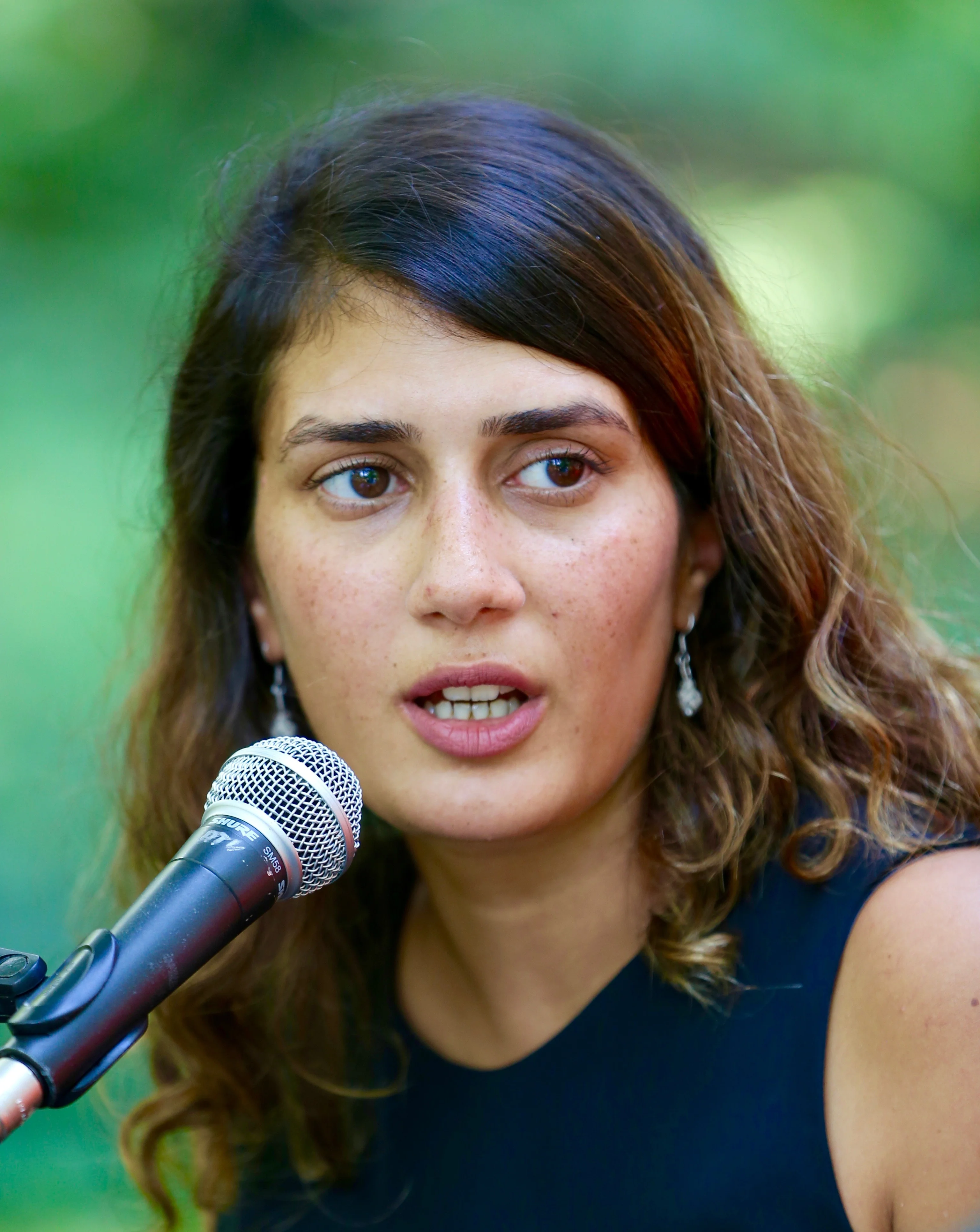
Image from Wikipedia
Image from Wikipedia
Fatma Aydemir – a formative voice in contemporary German-language literature
Between journalism, novel, and stage: The compelling career of Fatma Aydemir
Fatma Aydemir, born in 1986 in Karlsruhe, has emerged in Berlin as one of the most distinctive voices in the German literary and media landscape. As a journalist, editor, author, playwright, and columnist, she combines literary precision with political clarity and a unique perspective on migration, class, origin, and social power dynamics. Her work represents a contemporary literature that is emotionally resonant while remaining analytically sharp. ([de.wikipedia.org](https://de.wikipedia.org/wiki/Fatma_Aydemir))
Biography: Origins, education, and the path to Berlin
Aydemir grew up in Baden-Württemberg and studied German and American studies in Frankfurt am Main as well as at San Diego State University in California. This academic background informs her later writing, in which language, power, and cultural translation play a central role. Since 2012, she has lived in Berlin, where she works as a journalist and author. ([kunststiftung.de](https://www.kunststiftung.de/short-portrait/fatma-aydemir.html))
From early on, Aydemir combined journalistic work with literary ambition. She became known as an editor at taz, where she focused on pop culture, literature, and Turkey, and she was a co-initiator of the bilingual web portal taz.gazete. This step reflects her clear cultural stance: literature and journalism do not appear to her as separate spheres, but rather as mutually enriching forms of public intellectualism. ([de.wikipedia.org](https://de.wikipedia.org/wiki/Fatma_Aydemir))
Career in the media world: Critique, stance, and literary public life
As a freelance author, Aydemir also wrote for Spex and Missy Magazine. This positioned her early at the intersections of pop, feminism, contemporary critique, and cultural analysis. Since 2023, she has been a columnist for the European edition of the Guardian, where she interprets European politics and social conflicts from a clear progressive perspective. Her role as a public commentator has sharpened her profile well beyond the literary scene. ([de.wikipedia.org](https://de.wikipedia.org/wiki/Fatma_Aydemir))
Her journalistic presence is also evident in formats beyond traditional literature sections. Together with Hengameh Yaghoobifarah, Enrico Ippolito, and Miryam Schellbach, she has been publishing the literary magazine Delfi since September 2023. In the winter semester of 2024/2025, she also taught at the German Literature Institute in Leipzig, which further underscores her authority as a literary mediator. ([de.wikipedia.org](https://de.wikipedia.org/wiki/Fatma_Aydemir))
The literary breakthrough: Ellbogen and the first major resonance space
With her novel Ellbogen, which was published in 2017 by Hanser, Aydemir came into the spotlight of German-language literary criticism. The debut was perceived as powerful, angry, and socially insightful; it explores the life of a young woman whose experience of exclusion and self-assertion becomes a literary indictment of hypocritical liberalism. Early on, Aydemir was described as a voice that embodies a rare combination of empathy and discomfort in literature. ([zeit.de](https://www.zeit.de/2018/35/fatma-aydemir-autorin-fruehstuecksei))
The success of Ellbogen was not only critical but also culturally significant. The novel opened a space for characters that had long been underrepresented in contemporary German literature, making Aydemir an important narrator of migrant, urban, and feminist life realities. This authority is derived less from pose and more from precise observation, dialogical toughness, and an acute sensitivity to social friction. ([zeit.de](https://www.zeit.de/2018/35/fatma-aydemir-autorin-fruehstuecksei))
Dschinns: Family novel, polyphony, and literary force
With Dschinns, Aydemir released a novel in 2022 that solidified her literary position. The book tells the story of a German-Turkish family, whose cohesion is put to the test after the father's death in Istanbul. The jury of the German Book Prize praised the precise and sensitive exploration of identity, gender, origin, racism, and rootlessness; the novel was on the shortlist for the year 2022. ([deutscher-buchpreis.de](https://www.deutscher-buchpreis.de/en/archive/author/250-aydemir/?utm_source=openai))
Dschinns showcases Aydemir's special strength in composing perspectives. The novel employs a multi-voiced narrative that makes familial conflicts readable as historical, social, and emotional burdens. At the same time, the book has garnered strong international resonance: it has been translated into several languages, including Arabic, Bosnian, English, Finnish, French, Italian, Croatian, and Polish. ([de.wikipedia.org](https://de.wikipedia.org/wiki/Fatma_Aydemir))
Awards and recognition: Critical authority with substance
The list of her awards demonstrates how early and consistently Aydemir's work was recognized. In 2017, she received the Klaus-Michael Kühne Prize from the Harbour Front Literature Festival for the best debut novel of the year and was the German recipient of the Franz Hessel Prize. This was followed by an annual scholarship from the state of Baden-Württemberg, a scholarship from the Villa Aurora in Los Angeles, the Robert Gernhardt Prize in 2020, a place on the shortlist for the German Book Prize in 2022, the LiteraTour Nord Prize in 2023, and in 2024 the Frankfurt Book Fair Award for the best adaptation together with Aslı Özarslan for the film Ellbogen. ([de.wikipedia.org](https://de.wikipedia.org/wiki/Fatma_Aydemir))
These awards not only testify to literary quality but also to cultural relevance. Aydemir's texts navigate confidently between contemporary diagnosis and artistic form, between political sharpness and psychological nuance. Her authority lies precisely in this: she writes about social conflicts without simplifying them. ([de.wikipedia.org](https://de.wikipedia.org/wiki/Fatma_Aydemir))
Style and themes: Pop culture, feminism, migration, and power
Aydemir's style is clear, pointed, and often characterized by a controlled intensity. Her prose seeks not ornamentation but condensation; her sentences carry tension, social observation, and political intuition. In her texts, pop culture and theory, everyday dialogue and literary composition intersect, creating a tone that is both accessible and demanding. ([de.wikipedia.org](https://de.wikipedia.org/wiki/Fatma_Aydemir))
Central themes remain migration, belonging, gender roles, and the contradictions of German self-images. Particularly in the novel Dschinns, it becomes apparent how Aydemir uses family history as a mirror of social conflicts. Her work on Doktormutter Faust, the first play, also demonstrates a pronounced eagerness for friction, power critique, and feminist reinterpretation of classical materials. ([suhrkamp.de](https://www.suhrkamp.de/buch/fatma-aydemir-doktormutter-faust-t-9783518432099?utm_source=openai))
Current projects: New texts, theater, and literary presence
Among her recent works is the magazine project Delfi 02 Fleisch – Magazin für neue Literatur, which she co-edits and was released in 2024. In addition, her first play Doktormutter Faust was published in 2024, which reexamines the classic from a power-critical and feminist perspective. This development shows an author who continuously expands her oeuvre and experiments with new forms. ([de.wikipedia.org](https://de.wikipedia.org/wiki/Fatma_Aydemir))
As a public voice, Aydemir also remains present. The Guardian continues to feature her as a columnist for the European edition, and her essays and commentary address issues of press freedom, right-wing shifts, gender politics, and cultural belonging. Thus, she remains not only a literary but also a discursive figure among the most important German-speaking authors of her generation. ([theguardian.com](https://www.theguardian.com/profile/fatma-aydemir?utm_source=openai))
Cultural influence: Why Fatma Aydemir is so important
Fatma Aydemir has expanded German-language literature by a perspective that has long received too little space: the perspective of a Muslim-influenced, migrant-read, urban, and feminist contemporary. Her books reveal how deeply identity is shaped by class, origin, and language power. For this reason, her texts read not only as literature but also as cultural intervention. ([zeit.de](https://www.zeit.de/2018/35/fatma-aydemir-autorin-fruehstuecksei))
Her influence extends beyond novels. Through her journalistic work, her editorial roles, and her columns, she shapes debates about literature, pop culture, and politics in Germany and Europe. Those who read her texts encounter not a comfortable pose, but an author with conviction, analytical sharpness, and a clear poetic line. ([de.wikipedia.org](https://de.wikipedia.org/wiki/Fatma_Aydemir))
Conclusion: An author who condenses and expands contemporary literature
Fatma Aydemir is exciting because she combines literary form and social analysis at the highest level. Her novels and texts possess emotional depth, political precision, and a linguistic power that resonates long after reading. Those seeking contemporary literature that is relevant, vibrant, and uncompromising will find in her one of the central voices of German-speaking culture. ([de.wikipedia.org](https://de.wikipedia.org/wiki/Fatma_Aydemir))
Anyone who can experience Fatma Aydemir live should seize the opportunity: her readings, conversations, and public appearances display the intensity of an author who not only writes but fills the space with thoughts, rhythm, and stance. This is precisely where her special fascination lies. ([de.wikipedia.org](https://de.wikipedia.org/wiki/Fatma_Aydemir))
Official channels of Fatma Aydemir:
- Instagram: No official profile found
- Facebook: No official profile found
- YouTube: No official profile found
- Spotify: No official profile found
- TikTok: No official profile found
Sources:
- Wikipedia – Fatma Aydemir
- Kunststiftung Baden-Württemberg – Fatma Aydemir
- LEO-BW – Fatma Aydemir
- Kulturaustausch – Fatma Aydemir
- The Guardian – Fatma Aydemir
- The Guardian – Heavy metal and macho writers: how Germany’s #MeToo moment is finally taking off
- Suhrkamp Verlag – Doktormutter Faust
- Deutscher Buchpreis – Fatma Aydemir, Shortlist 2022
- DIE ZEIT – Fatma Aydemir: Prosaisch harter Chiajoghurt
- LovelyBooks – Reviews of Fatma Aydemir