
Gioachino Rossini
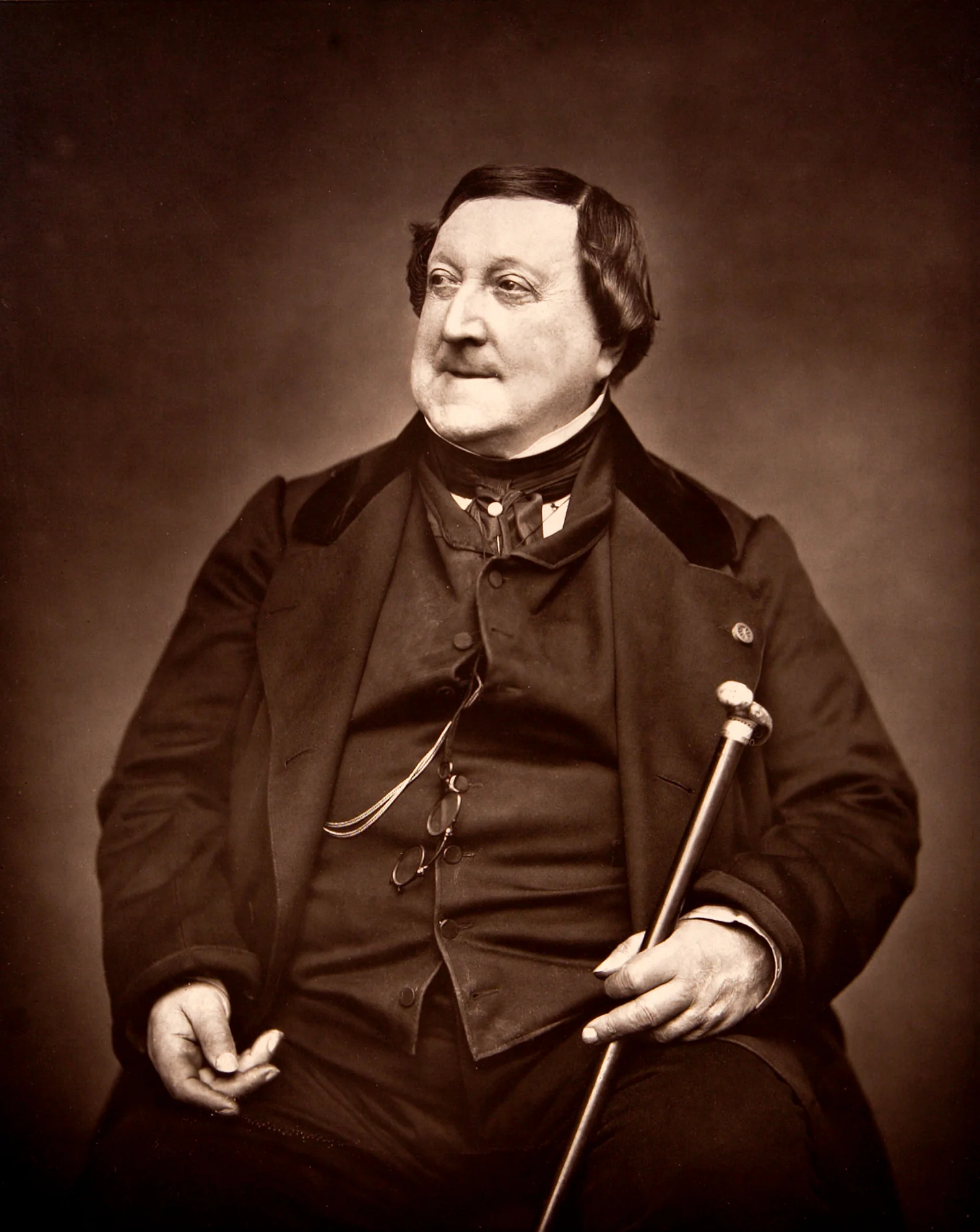
Image from Wikipedia
Image from Wikipedia
Gioachino Rossini – The Shining Architect of Belcanto and Master of Opera Comedy
A Composer Who Electrified Opera
Gioachino Rossini is one of the defining figures in the history of Italian music and one of those rare composers whose name is not only associated with individual works but with an entire aesthetic. Born on February 29, 1792, in Pesaro and died on November 13, 1868, in Passy near Paris, he became the central voice of Italian opera in the first half of the 19th century. His operas Il barbiere di Siviglia, L’italiana in Algeri, La Cenerentola, and William Tell are still part of the standard repertoire of opera houses today. ([britannica.com](https://www.britannica.com/summary/Gioachino-Rossini?utm_source=openai))
Rossini combined technical virtuosity, melodic inventiveness, and dramatic impact into a distinctive musical language. He brought not just elegance and wit to the world of opera but also a new sense of tempo, ensemble direction, and orchestral tension. Music historians describe him as a composer who brought the Belcanto era to its peak while simultaneously opening the door to later developments in opera. ([britannica.com](https://www.britannica.com/summary/Gioachino-Rossini?utm_source=openai))
Early Years in Pesaro and Bologna
Rossini's background was shaped by music and theater. His father Giuseppe played the trumpet in various ensembles, while his mother Anna Guidarini was a singer in smaller roles; thus, Rossini grew up immersed in the world of the stage. As a child, he sang in church and in small opera roles, and at the age of 14, he entered the Philharmonic School of Bologna, where he initially focused mainly on sacred music. ([britannica.com](https://www.britannica.com/biography/Gioachino-Rossini?utm_source=openai))
The early years show an artist who quickly understood the practical conditions of musical life. Even as a teenager, he learned the violin, horn, and harpsichord, sang publicly, and worked as an accompanist and conductor after his voice broke. His first opera seria, Demetrio e Polibio, was composed early on and marked the beginning of a career that led to the forefront of European opera in remarkably little time. ([britannica.com](https://www.britannica.com/biography/Gioachino-Rossini?utm_source=openai))
The Breakthrough: Rossini Becomes the Engine of Italian Opera
From 1812 onwards, Rossini composed operas at a high rate and quickly became the dominant name in Italian opera. Works like Tancredi, L’italiana in Algeri, and especially Il barbiere di Siviglia set the standard for both comic and serious musical theater. The breakthrough was not solely based on luck but on a precise understanding of dramatic emphasis, vocal brilliance, and musical economy. ([britannica.com](https://www.britannica.com/biography/Gioachino-Rossini?utm_source=openai))
Especially, Il barbiere di Siviglia became a touchstone for buffo opera and ensemble art. The opera premiered in 1816 in Rome and quickly found success despite an initial scandal; today, it is regarded as one of the most popular operas ever. Similarly, La Cenerentola and Semiramide demonstrate how Rossini combined comedic lightness with formal sophistication and great stylistic discipline. ([britannica.com](https://www.britannica.com/topic/The-Barber-of-Seville-opera-by-Rossini?utm_source=openai))
Style, Form, and the Rossini Crescendo
Rossini's name is synonymous with a style that elevates brilliance and movement to dramatic power. His music features rapid figurations, concise rhythms, and long, fluid melodic lines that demand remarkable virtuosity from singers. Sources emphasize that he broke traditional opera forms, employed unusual rhythms, and brought the orchestra more prominently to the forefront. ([eno.org](https://www.eno.org/composers/gioachino-rossini?utm_source=openai))
Also characteristic is the famous Rossini crescendo, which is driven by repeated motifs, increasing dynamics, and intensified orchestral texture. This technique generates excitement, humor, or triumph without losing musical clarity. In practice, Rossini became the master of controlled excess: His compositions feel light yet remain highly constructed. ([britannica.com](https://www.britannica.com/summary/Gioachino-Rossini?utm_source=openai))
Naples, Paris, and the Late Monumental Style
Rossini's career reached a new dimension in Naples and later in Paris. In Naples, he regularly worked for the Teatro di San Carlo, whose management and environment significantly influenced his development. There, works were created that further refined his operatic language and brought the French Grand Opéra within reach. ([classicals.de](https://www.classicals.de/rossini?utm_source=openai))
From 1824 onwards, Rossini spent a lot of time in Paris, where he composed his greatest late musical theater work, William Tell, in 1829. This work marks not only his peak but also a stylistic transition: the opera combines heroic dimensions, French formal strictness, and a broadly drawn dramatic architecture. For many listeners, William Tell remains the moment when Rossini fused Italian elegance with a new, epic power. ([britannica.com](https://www.britannica.com/summary/Gioachino-Rossini?utm_source=openai))
Withdrawal, Illness, and a Quiet Late Work
After 1832, Rossini's health deteriorated, and his productivity significantly declined. Biographical sources describe this phase of life as a long retreat from the operatic competition of European stages, in which he composed very little. Nevertheless, significant pieces continued to emerge in the later years, including the collection Sins of My Old Age and selected sacred and chamber music works. ([britannica.com](https://www.britannica.com/summary/Gioachino-Rossini?utm_source=openai))
This second half of his life has significantly shaped the reception of Rossini. It shows an artist who achieved fame early and then, with remarkable self-discipline, left behind the myth of the omnipresent operatic genius. His biography thus consists of two contrasting chapters: the triumphant storm of youth and the controlled, almost aristocratic silence of old age. ([ricordi.com](https://www.ricordi.com/it-IT/Critical-Editions/Rossini-Gioachino-Critical-Editions.aspx?utm_source=openai))
Discography, Repertoire, and Critical Reception
Although Rossini is not a "discography" artist in the modern sense, his work can be clearly described through the core pieces of his repertoire. The central operas include Il barbiere di Siviglia, L’italiana in Algeri, La Cenerentola, Semiramide, and William Tell. In addition, there are numerous other operas, as well as chamber music, songs, and sacred works that showcase his contributions far beyond mere operatic fame. ([britannica.com](https://www.britannica.com/biography/Gioachino-Rossini?utm_source=openai))
The critical reception consistently highlights Rossini's originality. Britannica describes him as a composer who transformed the conventions of older opera into a language of wit, virtuosity, and musical immediacy. The opera reception of the 19th and 20th centuries also saw him as a pioneer of late Belcanto and for that type of opera in which the voice is not only a vessel of expression but also an instrument of the highest dramatic precision. ([britannica.com](https://www.britannica.com/summary/Gioachino-Rossini?utm_source=openai))
Cultural Influence and Contemporary Rossini Advocacy
Rossini's cultural influence remains remarkably vibrant, as his works are still performed worldwide and simultaneously inspire new musical research. The Rossini Opera Festival in Pesaro sees itself as an international institution solely dedicated to Rossini and announces its 47th edition from August 11 to 23, 2026. That a festival of this scale remains permanently committed to his work speaks to the ongoing relevance of his operas. ([rossinioperafestival.it](https://www.rossinioperafestival.it/?utm_source=openai))
Editorial projects also underline his significance. Ricordi includes Rossini in its Critical Editions, thus referencing the continued philological work on his oeuvre. This shows that Rossini is not only a part of repertoire history, but a living field for research, performance practice, and stylistic reassessment. ([ricordi.com](https://www.ricordi.com/en-US/Critical-Editions/Rossini-Gioachino-Critical-Editions.aspx?utm_source=openai))
Conclusion: Why Gioachino Rossini Continues to Electrify
Gioachino Rossini captivates because he elevated opera with intelligence, tempo, and rhythmic elegance to a new height. His music combines charm and precision, humor and dramatic energy, vocal brilliance and orchestral clarity. Those who experience Rossini live encounter a composer who has not only shaped musical theater but infused it with irresistible vitality. ([britannica.com](https://www.britannica.com/summary/Gioachino-Rossini?utm_source=openai))
Especially in live performance, Rossini showcases his full class: the buoyant timing, explosive ensemble artistry, and sparkling vocal virtuosity. His operas are not museum relics but brilliant machines of tempo, wit, and emotion. Anyone with the opportunity to see a Rossini production should seize it—because few other composers make the stage vibrate so precisely and so passionately. ([rossinioperafestival.it](https://www.rossinioperafestival.it/?utm_source=openai))
Official Channels of Gioachino Rossini:
- Instagram: no official profile found
- Facebook: no official profile found
- YouTube: no official profile found
- Spotify: no official profile found
- TikTok: no official profile found