
Laibach (Band)
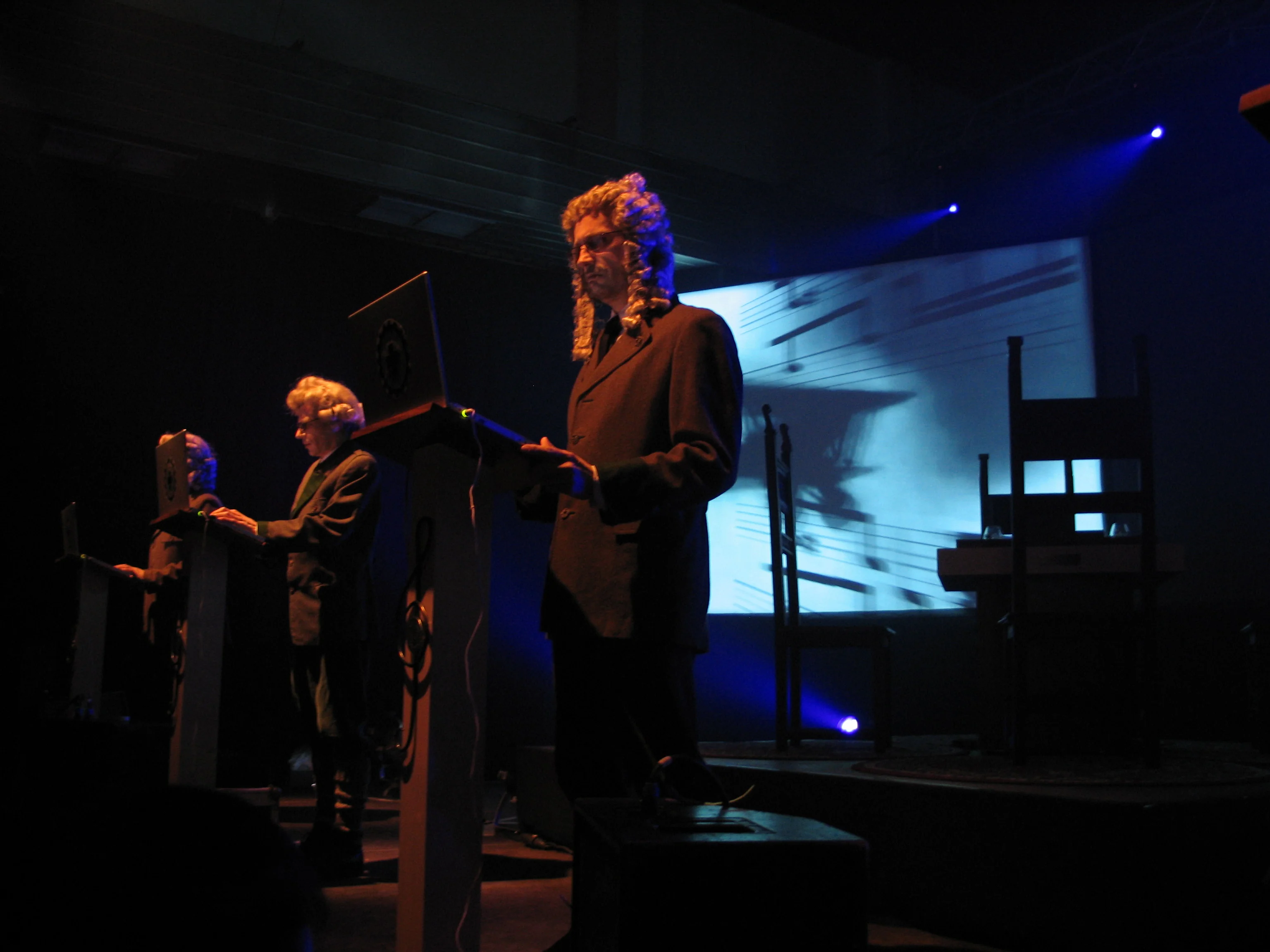
Image from Wikipedia
Image from Wikipedia
Laibach: The Uncompromising Avant-Garde from Slovenia
Between Industrial Aesthetics, Political Provocation, and Musical Monumentality
Laibach is one of the few bands in Europe that has not only co-written music history but actively challenged it. The Slovenian group was formed in 1980 in Trbovlje and early on developed into an interdisciplinary art project that merged sound, image, performance, and ideology into a consciously irritating total work of art. The name refers to the German designation of Ljubljana and has marked since the beginning the artistic tension between local identity, historical memory, and calculated provocation. ([laibach.org](https://www.laibach.org/bio/))
The Early Years: Industrial Location, Countercultures, and Artistic Friction
The roots of Laibach lie in Trbovlje, a city shaped by mining, industry, and political activity. The band responded to the uncertainty in Yugoslavia after Tito's death with an aesthetics that placed authoritarian imagery, socialist symbolism, and nationalist codes in a highly critical context. Even the first actions and poster campaigns elicited reactions because Laibach did not choose the path of adaptation but consciously generated friction. ([laibach.org](https://www.laibach.org/bio/))
From this early phase emerged the idea of a "total work of art": Laibach worked not only with music but also with collages, posters, videos, installations, and performances. This positioned the group from the outset beyond classical band biographies and closer to the tradition of political art collectives. The connection with IRWIN and Gledališče Sester Scipion Nasice in the New Slovenian Art from 1984 solidified this approach and gave Laibach an aesthetic and theoretical depth that remains unmistakable to this day. ([laibach.org](https://www.laibach.org/bio/))
The Breakthrough: From "Opus Dei" to International Attention
The decisive career boost came in the mid-1980s. After early releases, including the international debut "Rekapitulacija 1980–1984" and "Nova Akropola," the band signed with Mute Records and released "Opus Dei" in 1987. This album made Laibach known far beyond the art scene, as the group transformed pop and rock material into martial, bombastic, and simultaneously ironic sound architectures. Particularly the reinterpretation of Queen and "Live Is Life" into anthemic industrial constructions permanently shaped the public image of the band. ([laibach.org](https://www.laibach.org/bio/))
The reception was immediately divided: for some, Laibach was a radical performance collective, while for others, it represented an unsettling, dangerously provocative projection surface. This very ambivalence became the core brand of the group. The band worked with totalitarian symbols, but not as affirmation, rather as an analytical and satirical mirror of political power aesthetics. The fact that "Opus Dei" was included in the collection "1001 Albums You Must Hear Before You Die" underscores the album's status as a key work in industrial and avant-garde history. ([laibach.org](https://www.laibach.org/bio/))
The 1990s and 2000s: From Industrial Manifesto to Conceptual Grand Form
In the 1990s, Laibach expanded its palette between technoid structures, sample-based industrial, and monumental sound design. Works like "Kapital" and "Jesus Christ Superstars" showcased a band that did not smooth its style but rather condensed it. Instead of classic rock dramaturgy, Laibach relied on hard rhythms, dark sound colors, and a strictly controlled stage presence that made each concert feel like a political production. ([open.spotify.com](https://open.spotify.com/artist/7l4LQfvN4yz8zbK4WY0AAg?utm_source=openai))
With "WAT" in 2003, the group made a powerful return, negotiating themes like war, terrorism, and modern crises. The single "Tanz mit Laibach" became a minor hit and simultaneously referenced the influence of DAF, that European electro-punk entity that has shaped Laibach's relationship with rhythm, coldness, and reduction. This was followed in 2006 by "Volk," a concept album with interpretations of national anthems that captured the band's political core: Laibach dissects collective myths by transforming them into sound. ([laibach.org](https://www.laibach.org/bio/))
The official biography describes this approach as a critical engagement with pop, nation, and ideology. Laibach has always presented itself as a collective rather than a collection of individual stars. This strength reinforces the band's authority: not personality but stance, method, and recognizable form determine their music career. The work on Bach's "The Art of Fugue" and later orchestral and cinematic projects also illustrated how flexibly Laibach navigates between electronics, classical music, industrial, and conceptual art. ([laibach.org](https://www.laibach.org/bio/))
Discography as a History of Ideas: From Anthems to Dystopia
Laibach's discography reads like a catalog of musical interventions. Key stops include "Laibach," "Rekapitulacija 1980–1984," "Nova Akropola," "Opus Dei," "Kapital," "NATO," "Jesus Christ Superstars," "Volk," "The Sound of Music," "Spectre," "Wir sind das Volk," "Sketches of the Red Districts," and the film and project works surrounding "Iron Sky." The band adheres to a model in which each album is not merely a collection of songs but a self-contained statement. ([open.spotify.com](https://open.spotify.com/artist/7l4LQfvN4yz8zbK4WY0AAg?utm_source=openai))
The more recent releases underscore this continuity. On the official website, "Opus Dei Revisited," "I Want To Know What Love Is," "S topom te bom ciljal moja mala," "LAIBACH : ALAMUT," "Kanone," "YOM KIPPUR," and finally, the new studio album "MUSICK" are listed for 2024 and 2025. These releases showcase a band that does not conserve its own archive but continually reinterprets and transposes it into current contexts. ([laibach.org](https://www.laibach.org/))
Particularly remarkable is the range of current works. "LAIBACH : ALAMUT" connects to literary and historical themes, while "Opus Dei Revisited" re-examines the group's catalog with remixes and reinterpretations. The release of "MUSICK" in 2026 continues this line and demonstrates that Laibach, even after decades, functions not as a nostalgia project but as an active production machine for politically charged art music. ([laibach.org](https://www.laibach.org/))
Sound Image and Style: Martial, Electronic, Neoclassical
Laibach's style is instantly recognizable: heavy beats, military march figures, resounding electronics, dramatic choirs, and a voice that declaims rather than sings. The music often feels like a tribunal of rhythm and symbolism, confronting pop music with authoritarian gestures. At the same time, the ensemble possesses a remarkable musical precision that never falls into the arbitrary, even in its exaggeration. ([latimes.com](https://www.latimes.com/archives/la-xpm-1997-03-22-ca-40767-story.html))
The official biography emphasizes the Wagnerian horns, martial beats, atonal orchestral colors, and samples of patriotic speeches as the fundamental components of early Laibach sound. This developed into an aesthetic often described as industrial, martial industrial, or neoclassical avant-garde. However, Laibach is more than a genre: the band works with production as a bearer of meaning, with arrangement as an ideological tool, and with stage as a platform for power criticism. ([laibach.org](https://www.laibach.org/bio/))
Cultural Influence: Provocation with Long-Term Impact
Laibach has profoundly influenced European industrial music and fundamentally changed the handling of political iconography in pop. The band demonstrated early on that provocation need not be an end in itself but can serve as an instrument of analysis. This strategy developed particular explosive power, especially in a post-Yugoslav context marked by upheavals. ([latimes.com](https://www.latimes.com/archives/la-xpm-1997-03-22-ca-40767-story.html))
Internationally, Laibach has also been perceived as a reference for performance art, conceptual art, and radical pop criticism. The group has collaborated with theater, film, and symphony orchestras, played over 100 concerts in a single tour phase, and always remained in a tension field of irony, seriousness, and monumentality. This authority is not due to an image shift but to the consistent development of an artistic idea over decades. ([laibach.org](https://www.laibach.org/bio/))
Voices of the Fans
The web search yielded official channels and current project information but no verified, individually quotable fan comments from social networks that could be reliably and compliant reproduced. Therefore, this article deliberately avoids fabricated fan quotes and remains focused on the verifiable facts surrounding the work, reception, and public presence of the band. ([laibach.org](https://www.laibach.org/?utm_source=openai))
Conclusion: Why Laibach Remains Fascinating
Laibach remains intriguing because the band molds music, art, and power critique into a form that is simultaneously intimidating, intelligent, and aesthetically highly unique. The group has proven over decades that artistic consistency is more powerful than short-lived trends. Those who experience Laibach live do not see just a concert, but a precisely constructed political-musical ritual that eludes simplistic interpretation and reveals its greatness in doing so. ([latimes.com](https://www.latimes.com/archives/la-xpm-1997-03-22-ca-40767-story.html))
Official Channels of Laibach:
- Instagram: https://www.instagram.com/laibachofficial/
- Facebook: https://www.facebook.com/Laibach
- YouTube: https://www.youtube.com/channel/UCE1VRNkKm2u6xI_No7SCKVQ
- Spotify: https://open.spotify.com/artist/7l4LQfvN4yz8zbK4WY0AAg
- TikTok: No official profile found
Sources:
- Wikipedia – Laibach (Band)
- Laibach – Official Website
- Laibach – Biography
- Laibach – Timeline
- Gramodesky.cz – Laibach Profile with official channel references
- The Guardian – Laibach Review, November 28, 2006
- Los Angeles Times – Laibach Hits Bleak Notes of Oppression, March 22, 1997
- ReGen Magazine – Laibach revisiting iconic 1987 album, September 12, 2024
- Laibach – News/Project page with Facebook embed
- Wikipedia: Image and text source