
Lea Ypi
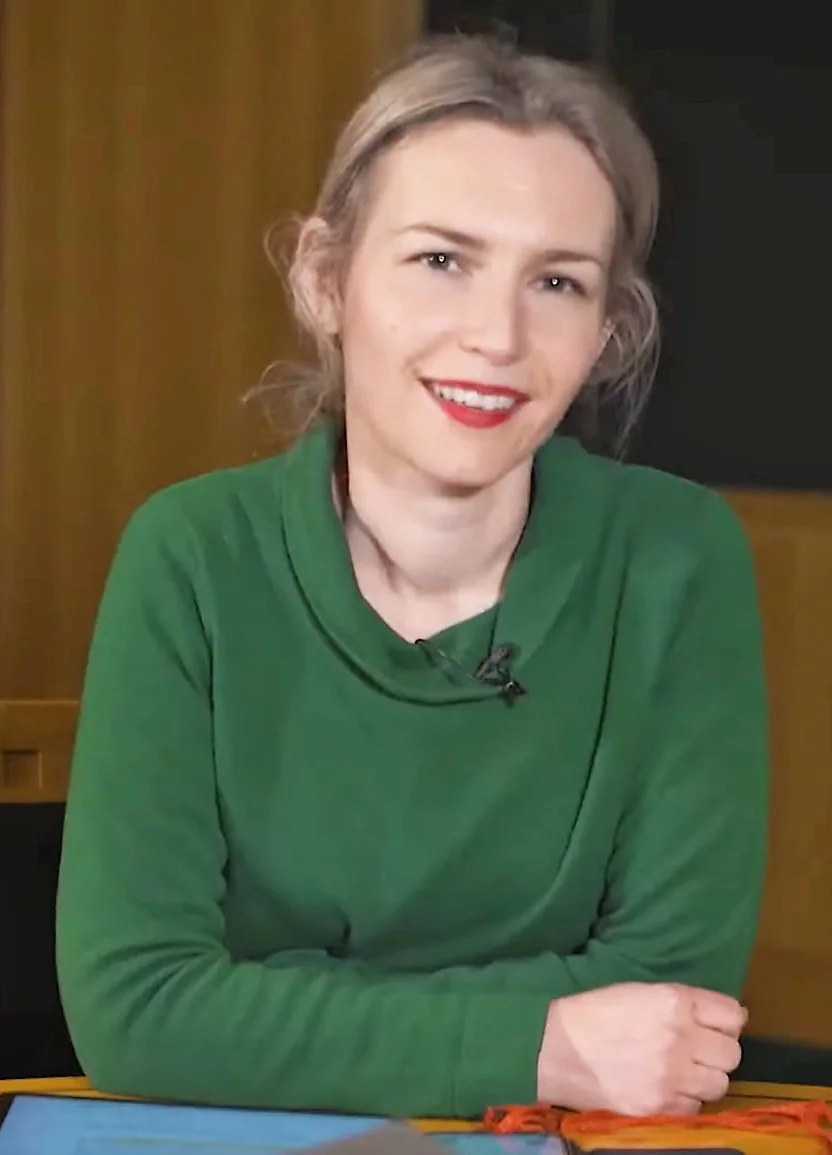
Image from Wikipedia
Image from Wikipedia
Lea Ypi – Political Theory, Literary Memory, and One of Europe's Most Precise Voices
Lea Ypi: From Intellectual Border-Crossing to International Authority
Lea Ypi is an Albanian-British political scientist, philosopher, and author whose work connects personal memory, political theory, and European contemporary history in a rarely dense way. Born in 1979 in Tirana, she grew up in a country that remained isolated under communist rule and entered a phase of radical upheaval after 1990. Today, she serves as a professor of political theory at the London School of Economics and is one of the most prominent public intellectuals of her generation. ([literaturfestival.com](https://literaturfestival.com/authors/lea-ypi/))
Her profile combines academic expertise with literary strength. Ypi writes not only about freedom, justice, migration, and democracy but also makes significant political questions accessible through familial history, biographical disruptions, and historical experience. This gives her work its unique tension: theoretical precision meets narrative clarity, personal perspective pairs with intellectual depth. ([leaypi.com](https://leaypi.com/research/?utm_source=openai))
Biographical Background: Albania as a Spiritual Starting Point
Lea Ypi's thinking is hardly understandable without the political and social history of Albania. The family history that recurs in her books is closely tied to the upheavals of the 20th century: monarchy, fascism, communism, and the collapse of state certainties shape the backdrop of her writing. Her biography thus points to an experiential space where history does not remain abstract but continues to live on in family, everyday life, and self-understanding. ([en.wikipedia.org](https://en.wikipedia.org/wiki/Lea_Ypi))
Ypi studied philosophy and literature at Sapienza University in Rome, later earning a Master of Research and a PhD in Political Theory at the European University Institute in Florence. Before her professorship at the London School of Economics, she worked as a post-doctoral research fellow at Nuffield College, Oxford. This academic career explains the unique dual competence of her texts: analytically engaging, literarily expressive, and historically sensitive in addressing political realities. ([en.wikipedia.org](https://en.wikipedia.org/wiki/Lea_Ypi))
Career at the London School of Economics and in International Debate
As a professor of political theory at LSE, Lea Ypi has established a position that extends far beyond the campus. Her research focuses on normative political theory, democratic theory, issues of justice, migration, and territorial rights, as well as political enlightenment, Kant, Marxism, critical theory, and the intellectual history of the Balkans. This places her at an intersection where theory is not an end in itself but intervenes in contemporary issues. ([en.wikipedia.org](https://en.wikipedia.org/wiki/Lea_Ypi))
Her public presence is also remarkable. On her official website, she documents lectures at universities and institutions such as Oxford, Cambridge, Harvard, Columbia, Princeton, the University of Chicago, the University of Vienna, and the University of Munich. This international lecture and debate practice underscores her authority as a thinker whose work resonates in both academic and cultural-political arenas. ([leaypi.com](https://leaypi.com/lectures-publications/))
Breakthrough with “Free”
Her memoir Free: Coming of Age at the End of History, published in 2021 and released in German in 2022 as Frei. Erwachsenwerden am Ende der Geschichte, marked a broad breakthrough beyond the academic community. The book recounts Ypi's childhood and adolescence during Albania's upheaval and sharply questions what freedom concretely means when political upheavals destroy social security. The work won the Ondaatje Prize, the Slightly Foxed First Biography Prize, and was nominated for several other prestigious awards. ([literaturfestival.com](https://literaturfestival.com/authors/lea-ypi/))
This success has made Ypi a sought-after voice in debates about memory, transformation, and post-socialist experiences. The international reception ranged from literary reviews to cultural-political essays, and the translations into numerous languages highlighted how universal her theme is. It is in this tension between personal memory and political analysis that her true strength as an author lies. ([leaypi.com](https://leaypi.com/books/?utm_source=openai))
Current Projects: “Indignity” and Continuing a Family Story
With Indignity: A Life Reimagined, Ypi continues her exploration of origin, loss, and political upheaval. The book is set to be published in various editions in 2025 and 2026 and connects to her family history, this time focusing on the figure of her grandmother Leman. The publisher describes the work as a multi-layered reconstruction of a past world between Ottoman heritage, modern Greece and Albania, as well as the political catastrophes of the 20th century. ([penguin.co.uk](https://www.penguin.co.uk/books/458930/indignity-by-ypi-lea/9781802064124?utm_source=openai))
The accompanying response is also strong. On her official website, Ypi references book presentations, readings, and announcements of new publications; it is also noted that her current books and events are communicated through her official channels. Additionally, there is a planned or ongoing academic publication Territorial Justice, which adds another important building block to her theoretical research. ([leaypi.com](https://leaypi.com/?utm_source=openai))
Bibliography: Theory, Essay, Memoir
Lea Ypi's body of work is broad yet clearly defined. Among her most important publications are Global Justice and Avant-Garde Political Agency, The Meaning of Partisanship with Jonathan White, Migration in Political Theory with Sarah Fine, and The Architectonic of Reason. These books mark her long-standing engagement with political philosophy, normative order, and the conditions for democratic participation. ([leaypi.com](https://leaypi.com/research/?utm_source=openai))
Her literarily inspired books Free and Indignity possess particular radiance. While Free examines the upheaval in Albania from the perspective of a young narrator, Indignity works on a familial genealogy that spans multiple historical epochs and political systems. Ypi combines historiographical precision with philosophical reflection, creating a rare form of the intellectual memoir. ([leaypi.com](https://leaypi.com/books/?utm_source=openai))
Style and Thinking: Bridging Kant, Marx, and the Experience of Freedom
Ypi's style is characterized by clarity, argumentative discipline, and a pronounced historical sensitivity. Her texts have an impact because they do not treat grand concepts like freedom, dignity, participation, or justice abstractly but rather relate them to concrete realities of life. This gives her work a rare density: academically precise yet never dry, reflective while remaining narratively open. ([en.wikipedia.org](https://en.wikipedia.org/wiki/Lea_Ypi))
Intellectually, she navigates between Kantian enlightenment, Marxist critique, and questions of political belonging. Particularly striking is her ability to present political theory not as an elitist specialty, but as a tool for interpreting everyday life, family, and societal transformation. This is precisely where her authority lies: she thinks of philosophy as a public practice. ([leaypi.com](https://leaypi.com/research/?utm_source=openai))
Critical Reception and Cultural Influence
The reception of Lea Ypi shows a remarkable range. Her work has been reviewed in esteemed media such as The Observer, The Economist, The New York Times, The Washington Post, and Frankfurter Allgemeine Zeitung; Indignity also appeared on several year-end best lists and became a bestseller in European markets. The accolades and the international translation practices highlight her standing as an author with global reach. ([en.wikipedia.org](https://en.wikipedia.org/wiki/Lea_Ypi))
Ypi is also highly recognized institutionally. She was elected to the Academia Europaea in 2020 and appointed a Fellow of the British Academy in 2024. Previously, she received the British Academy "Brian Barry" Prize and the Leverhulme Prize; in 2022, Prospect magazine named her one of the ten most important thinkers in the world. These honors reflect not only scholarly excellence but also cultural relevance. ([en.wikipedia.org](https://en.wikipedia.org/wiki/Lea_Ypi))
Voices of the Fans
On Lea Ypi's official channels, a particular audience emerges that appreciates her precise analyses, her readings, and the connection between philosophy and personal memory. The resonance notably often revolves around freedom, origin, political transformation, and the literary form of her books. This blend of intellectual depth and emotional accessibility makes her work so attractive to readers worldwide. ([leaypi.com](https://leaypi.com/?utm_source=openai))
Conclusion: A Thinker Who Makes History Tangible
Lea Ypi is fascinating because she masterfully connects philosophy, literature, and contemporary history at the highest level. Her books are not mere memoirs but intellectual events: they negotiate political freedom, social justice, and the burden of the past with extraordinary clarity. Those who want to understand how European history reverberates in family biographies and how theory is transformed into narrative will find an indispensable voice in Lea Ypi. Experiencing her live is to encounter an author who does not explain thinking but demonstrates it. ([penguin.co.uk](https://www.penguin.co.uk/books/458930/indignity-by-ypi-lea/9781802064124?utm_source=openai))
Official Channels of Lea Ypi:
- Instagram: https://www.instagram.com/lea.ypi/
- Facebook: https://www.facebook.com/Lea.L.Ypi
- YouTube: no official profile found
- Spotify: no official profile found
- TikTok: no official profile found
- Twitter/X: https://twitter.com/lea_ypi
- Bluesky: https://bsky.app/profile/leaypi.bsky.social
Sources:
Upcoming Events
Books in Discussion: Free by Lea Ypi
A literary morning in Landshut: Lea Ypi's Free is at the center of the conversation with Roswitha Metz. 07.05.2026, 11 AM, 2 Euros. #Literature
BRAWO OPEN: LEA – Pop, Poetry & Great Emotions
Enjoy LEA live in Bürgerpark Braunschweig at the BRAWO OPEN. An evening full of pop, poetry & great emotions awaits you.