
Luciano Pavarotti
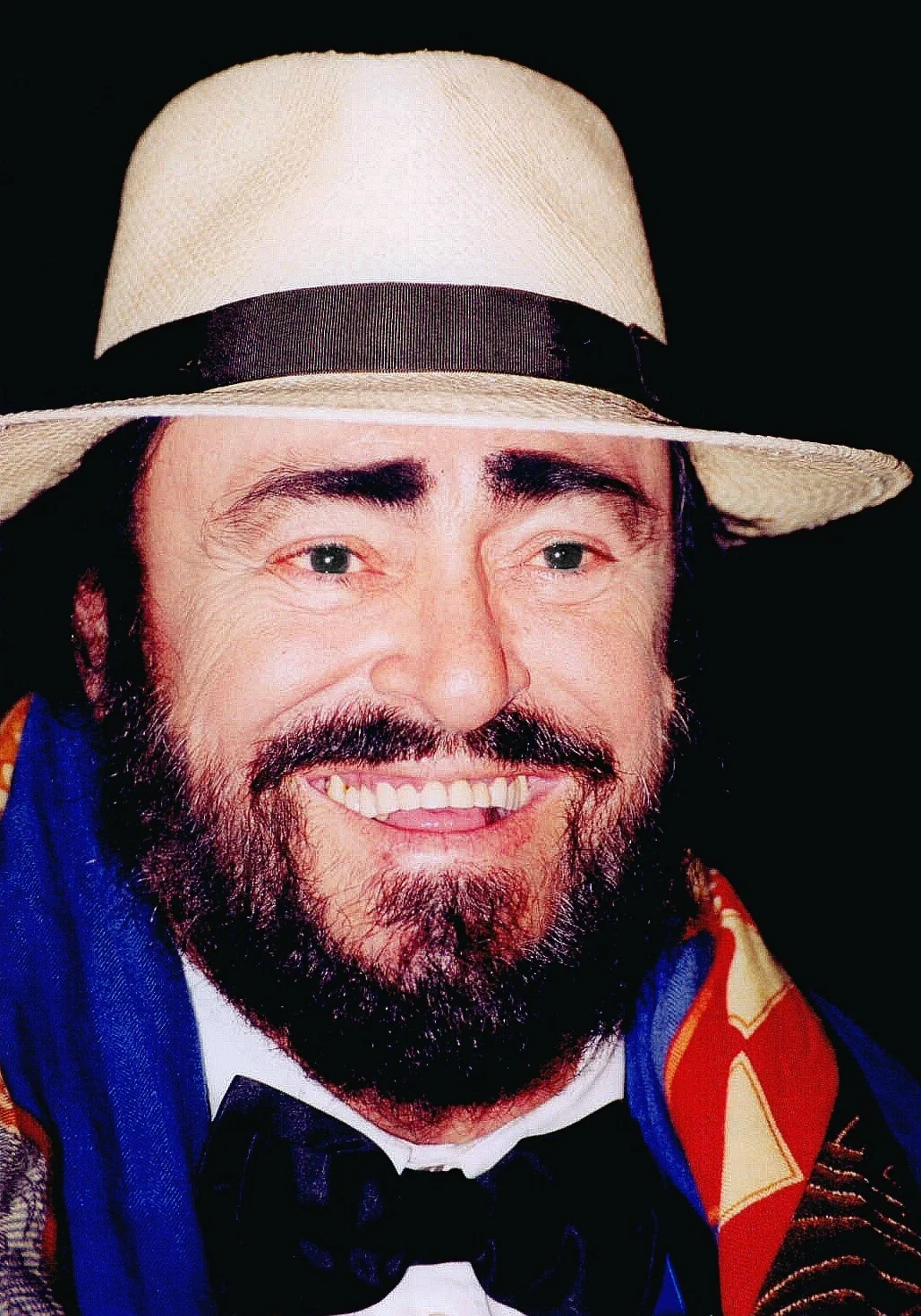
Image from Wikipedia
Image from Wikipedia
Luciano Pavarotti – The Tenor Who Conquered the World
The Voice That Made Opera History – and Touched Pop Culture
Luciano Pavarotti (1935–2007) embodied the epitome of the Italian opera tenor and made the power of bel canto accessible worldwide. His music career took him from the teaching profession in Modena to the greatest opera houses in the world; his stage presence filled stadiums, and his artistic development bridged tradition and modernity. As a member of the legendary Three Tenors and a partner to pop icons, he shaped generations of listeners – using his fame for humanitarian causes. Pavarotti was more than just a voice: he was a cultural event.
Background and Early Years: From the Classroom to the Opera Stage
Growing up in Modena as the son of a baker and choir singer, Pavarotti discovered his love for opera early on. After training to become a teacher, he made a decisive shift to vocal training, studying from the mid-1950s with Arrigo Pola and Ettore Campogalliani, and winning an international singing competition in Reggio Emilia in 1961. In the same year, he debuted as Rodolfo in Puccini’s La Bohème – a role that immediately showcased his lyrical phrasing and cultivated, bright tenor. These foundations shaped his understanding of the genre, his repertoire choices, and his path to an international career.
The Path to the Great Stages: Breakthrough and International Career
By the mid-1960s, he achieved international breakthrough: guest performances in Amsterdam and London, an Australia tour with Joan Sutherland, debuts at La Scala in Milan, and in 1968 at the Metropolitan Opera in New York. From 1971 onward, the "Met" became an artistic home where Pavarotti masterfully portrayed the great roles of the 19th century. His interpretation of the Donizetti fireworks in La fille du régiment with the notorious high Cs solidified his reputation as the "King of the High C’s." His music career thereafter represented the highest vocal precision, nuanced phrasing, and a charismatic stage presence that made operatic evenings events. This artistic evolution led to global recognition: records, TV broadcasts, and live recordings reached audiences far beyond the opera house.
A Global Pop Culture Moment: The Three Tenors and “Nessun dorma”
The summer of 1990 changed the perception of classical music: as a member of the Three Tenors alongside Plácido Domingo and José Carreras, Pavarotti blurred the lines between high culture and mass event. “Nessun dorma” from Puccini's Turandot became a signature piece – an aria where vocal projection, breath economy, and legato culture merge. The phenomenon unfolded in stadiums and on television; Pavarotti's stage presence proved that opera could thrive not only in concert halls but also outdoors and in front of hundreds of thousands. This moment created a new public for the genre and demonstrated how artistic excellence resonates across cultures.
Discography, Charts, and Awards
Pavarotti’s discography is a panorama of opera history and its reception: studio recordings, live performances, aria recitals, and later compilations form a body of work that appeals to both connoisseurs and curious listeners. Among posthumous bestsellers are collections like “Pavarotti Forever” and “The Ultimate Collection,” which compile his defining interpretations of Verdi, Puccini, and Donizetti. His recordings remained present in international charts – an indicator of lasting impact across generations. In addition to numerous awards, five Grammy Awards and the Kennedy Center Honors (2001) signify the authority of his career. Such recognitions from the classical music scene and cultural public affirm his standing as one of the most significant tenors of the 20th century and attest to his reputation in the press and institutions.
Voice Type, Technique, and Repertoire: Belcanto as a Benchmark
Pavarotti’s voice combined metallic cutting power with a silvery sheen in the high register, supported by meticulous breath control and exemplary diction. His focus lay in the lyric-dramatic field of Italian opera – Tonio (La fille du régiment), Rodolfo (La Bohème), the Duke (Rigoletto), Radamès (Aida), and Arturo (I puritani) became reference points. In his interpretations, he placed emphasis on text-based accents, organic crescendos, and sustainable pianissimo. His production adhered to the principle: beauty of sound in the service of expression. This stylistic analysis explains why many recordings still serve as references today and frequently appear in critical reception as "benchmark-setting."
Crossover, Collaborations, and “Pavarotti & Friends”
Beyond opera, Pavarotti made a mark in crossover music. He recorded popular Italian songs, released the album “Ti adoro” in 2003, and collaborated with artists from pop and rock. A prominent example: “Live Like Horses” with Elton John – a single that charted in the Top 10 in the UK, showing how Pavarotti could transition his timbre identity into a pop musical arrangement. In benefit formats such as “Pavarotti & Friends,” he brought stars from various genres to the stage without compromising musical integrity. Thus, he bridged repertoire tradition and contemporary sound aesthetics – a production stance that created links to mainstream audiences and expanded the cultural reach of classical music.
Humanitarian Engagement: Music as a Social Force
Pavarotti consistently leveraged his popularity for social causes. His grand galas and benefit concerts were geared toward international aid projects, often in partnership with prominent guests. This aspect of his career – artistic authority coupled with responsibility – strengthened his public image as a cultural ambassador. For his cross-border impact, his efforts to make opera more accessible, and his charity work, he received high honors that recognized his life’s work.
Later Years, Legacy, and Posthumous Releases
Pavarotti gave his last opera performance in 2004; his final major appearance was at the opening ceremony of the 2006 Winter Olympics in Turin, singing “Nessun dorma.” After his death in 2007, the discography remained vibrant: newly curated editions, sonically improved remasters, and previously unreleased recordings expand the image of the artist. In 2024, a comprehensive double-CD release featuring new remastering will consolidate iconic arias, popular canzoni, and duets. To mark the tenor’s 90th birthday on October 12, 2025, his label will release the retrospective “Novanta” – a “Greatest Hits” edition with rarities and newly discovered recordings that trace his artistic development over decades. Additionally, historical concerts will be made available as Blu-ray and digital formats; classical programs and documentaries will keep his work present in cultural memory. These projects show that Pavarotti’s relevance is not an archival phenomenon but a continuous dialogue between past and present.
Chart Resonance in the Streaming Age
Even in the streaming age, Pavarotti represents reach: works like “Nessun dorma,” “La donna è mobile,” or “’O sole mio” are among the most listened-to tracks in his online discography. Curated catalog projects promote his reception among younger listeners and make his interpretive artistry readily accessible. In this transformation from vinyl to stream, Pavarotti maintains his position as the most popular operatic tenor – a testament to the timeless quality of his timbre, phrasing, and style.
Historical Context in Music and Cultural Influence
Pavarotti stands in the tradition of great Italian tenors, but he renewed this lineage through media presence and repertoire strategy for the late modern era. He preserved the heritage of bel canto while opening channels to pop culture. His career demonstrates how artistry, human warmth, and communicative intelligence can transform a genre. In opera history, he marks the synthesis of technical mastery, dramatic instinct, and public impact – a connection that secures him a firm place in the canon. His legacy is therefore twofold: the reference recordings in the discography and the cultural memory of the singer who brought opera into the hearts of a global audience.
Conclusion
Luciano Pavarotti remains the voice against which generations measure themselves. His music career demonstrates how consistent artistic development, wise repertoire choices, and captivating stage presence can bring classical music into the mainstream. Anyone who wishes to love opera cannot bypass Pavarotti – and those who discover him understand why this art form is timeless. Listen to the great arias, the canzoni, the duets – and experience live in the concert hall or through broadcasts how a tenor makes the world breathe.
Official Channels of Luciano Pavarotti:
- Instagram: No official profile found
- Facebook: No official profile found
- YouTube: No official profile found
- Spotify: https://open.spotify.com/artist/0Y8KmFkKOgJybpVobn1onU
- TikTok: No official profile found
Sources:
- Pavarotti Official – Artist Page (Decca)
- Decca Classics Store – Novanta (Release, October 10, 2025)
- Encyclopaedia Britannica – Luciano Pavarotti (Biography, Awards)
- Wikipedia – Luciano Pavarotti (Biography, Career, Legacy)
- Luciano Pavarotti – Official Store (Decca/UMG)
- Kworb – Luciano Pavarotti Spotify Statistics
- Wikipedia – Pavarotti Forever (Compilation, Chart Impact)
- Britannica – Career Highlights, Awards
- Apple Music – Artist Profile and Catalog Overview
- Wikipedia – The Ultimate Collection (Tracklist, Context)
- Wikipedia – Live Like Horses (Single with Elton John, Chart Data)
- PBS – Great Performances: Pavarotti and the Italian Tenor (Program Note)
- Wikipedia: Image and Text Source
Upcoming Events
Luciano - 3 Tenors Celebrate a Legend
Experience the magical homage to Luciano. An evening full of operatic masterpieces at the Concert Church Neubrandenburg.
Luciano – three tenors celebrate a legend
Visit the enchanting concert in honor of Pavarotti on October 3, 2026, at Theater Am Hagen with three exceptional tenors.
Luciano - 3 Tenors Celebrate Opera Arias
Experience an evening with famous opera arias and Italian songs, presented by three tenors at the Regentenbau.