
Ludovico Einaudi
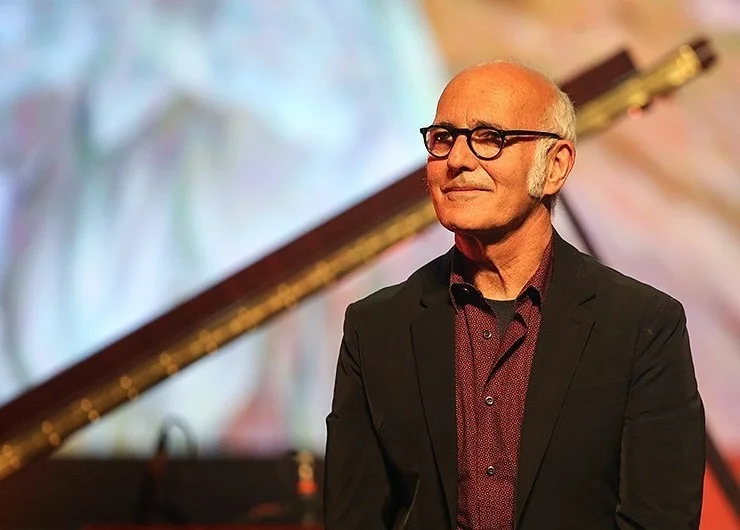
Image from Wikipedia
Image from Wikipedia
Ludovico Einaudi – Poet of the Quiet Resonance Space
How Ludovico Einaudi Conquered the World with Minimalist Sound Language – From the Turin Conservatory to Global Streaming Records
Ludovico Maria Enrico Einaudi was born on November 23, 1955, in Turin, and grew up in a family where culture, literature, and music were part of everyday life. Educated at the Conservatorio Giuseppe Verdi in Milan, he refined his compositional craft under the guidance of Luciano Berio. Today, the composer and pianist is recognized as one of the most influential voices in contemporary piano music: His reduced motifs, delicate crescendos, and cinematic arcs of tension appeal to a global audience – in concert halls as well as on streaming platforms.
Einaudi's music career shows a continuous artistic evolution: from his classical early works through an openness to pop, folk, and world music to a uniquely recognizable sound signature. Whether in solo projects, chamber music formations, or film scores – his pieces create a resonance space where melody, pulse, and silence breathe together.
Biographical Roots and Artistic School
The early closeness to literature and political history (his grandfather Luigi Einaudi was the President of Italy, and his father Giulio was a prominent publisher) sharpened his awareness of narratives – a sensitivity he later translated into sound. At the Milan Conservatory, Einaudi earned his composition diploma in 1982; a scholarship took him to Tanglewood. Berio's teaching opened his eyes to orchestral colors, structure, and sound architecture and encouraged him to cross genre boundaries. This openness continues to shape his understanding of composition, arrangement, and production today.
Stylistically, Einaudi connects to minimalistic traditions without repeating them epigonically. Instead of strict pattern motorics, he opts for breathing phrases, organic repetition, and harmonic nuances. His stage presence appears concentrated, almost chamber music intimate – a counterpoint to the spectacular virtuoso display that radically focuses on timbre and form. His performances often develop as dramatic arcs: gentle beginnings, careful layering, a warm glow at the climax, followed by reverberating silence.
Career Breakthrough and the Path to Mainstream
In the 1990s, Einaudi found his own voice: Albums like “Le Onde” and “I Giorni” mark the shift towards a reduced, melody-driven piano language. The title “I Giorni” even reached the British singles charts in 2011 – a rare phenomenon for a contemplative piano piece – opening him up to a mass audience beyond the classical framework. “Una Mattina” and “Divenire” also broadened his audience; in 2013, “In a Time Lapse” established a popular focal point with the anthemic, pulsating “Experience,” which was streamed millions of times and used in countless videos.
Simultaneously, his music became an emotional amplifier in film and television – from successful European productions to international festival favorites. This interplay of recording studio, stage, and screen creates the cultural visibility that anchors Einaudi's oeuvre as a contemporary sound canon in the everyday lives of many listeners.
Discography Overview: Stations of a Sound Aesthetic
The discography precisely mirrors Einaudi's artistic development: “Le Onde” (1996) and “I Giorni” (2001) define the intimate solo voice, “Una Mattina” (2004) and “Divenire” (2006) sharpen the symphonic breathing style, while “In a Time Lapse” (2013) perfects dramatic condensation. With “Elements” (2015), Einaudi expands the sonic palette with rhythmically defined structures; the seven-part suite “Seven Days Walking” (2019) explores thematic variations like a musical logbook. “Underwater” (2022) returns as a pure solo album to the essence of his handwriting – touching, transparent, concentrated.
His curator albums, such as “Cinema,” compile film scores and distinctive themes, while new recordings, reworks, and live documents demonstrate the adaptability of his compositions. The form-conscious handling of sound space – whether in the studio or in large halls – showcases Einaudi's sovereignty as a producer and musical director of his own works.
Current Projects 2024–2026: New Works, Tours, Resonances
With “The Summer Portraits” (release date: January 31, 2025), Einaudi presents a work that paints memories of childhood summers in music: bright, clearly contoured phrases oscillating between nostalgia and the present, recorded in Abbey Road among other places. Singles like “Rose Bay,” “Pathos,” or “Jay” demonstrate how strong his melodies remain and how finely he layers textures. The album received broad attention in the music press and shaped his live programs in 2025. Additionally, an extensive North American tour has been announced for fall 2025, featuring venues from Chicago to Los Angeles and New York; “The Summer Portraits” will be at the dramatic center of the setlists.
In 2026, Einaudi continues his international presence: announced residencies and special venues underscore how strongly his music attracts live audiences. He confirms his status as one of the most streamed living composers through sustained high scores in the classical segment – and through chart successes that bring longtime listeners and new discoverers together.
Film Music, Cultural Presence, and Social Highlights
Einaudi has composed for cinema and television – including works that fueled his global breakthrough. His sound language is well suited for film not only because of its melodic clarity; it primarily creates that emotional depth which supports images without overwhelming them. Thus, his work becomes the semantic framework within which characters and landscapes breathe, memories resonate, and time becomes tangible. This ability makes him equally attractive to directors and editors.
Moreover, his connection of art and activism is noteworthy: With the performance “Elegy for the Arctic” on a floating platform before a glacier, he drew attention to the vulnerability of the Arctic in 2016 – an iconic moment where artistic expression, sound aesthetics, and political messaging came together.
Style Analysis: Form, Harmony, and Sound as Narrative
Einaudi's music operates at the intersection of minimal music, neoclassicism, and contemporary film music aesthetics. Characteristic features include cyclical motifs, ostinato bass figures, gentle rubato, and finely calibrated arcs of tension. In composition, he frequently works with principles of addition and subtraction: voices emerge, densify the texture, then dissolve again. Harmonically, he prefers modal colors, simple changes of degree, and surprising deviations that sharpen emotional focus rather than scatter it through complex voicings.
This “economy of expression” is not a lack of material but a conscious reduction. It allows for a high degree of projection space: listeners fill the gaps between the notes with their own experiences. It is precisely here that Einaudi's authorship unfolds – in the balance of recognition and change, of static pulse and melodic memory.
Stage Aesthetics and Live Music Career
On stage, Einaudi works with a concentrated lighting design that directs focus to the piano, while strings and subtle electronics open the sound image. The arrangements remain transparent: phrases and echoes are allowed to stand. In large halls, this dramaturgy creates a surprising intimacy – a shared, quiet listening experience that culminates in an eruptive final applause. Many concerts are dramaturgically curated like a cycle: from the first strike to the last breath of a tone.
As a bandleader, Einaudi has relied on a close ensemble for years. This collaboration ensures stylistic continuity while allowing for subtle variations in dynamics, articulation, and sense of space. Thus, his live sound becomes a unique production aesthetic that oscillates between studio precision and improvisational freedom.
Reception, Charts, and Awards
Although parts of the classical establishment criticized his music as being too accessible, Einaudi's approach resonated with the audience. Listener surveys, streaming numbers, and live resonance demonstrate lasting effectiveness. In 2025, several Einaudi albums dominated the German classical year charts – an indication of how strongly his catalog titles continue to perform and how new releases complement this allure. The international press repeatedly acknowledges his ability to connect emotion and form – from cultural reviews to pop critiques.
Last but not least, extensive tours, sold-out residencies, and media presence in cultural formats attest to the authority of his work. Einaudi has transitioned in public perception from a niche phenomenon to a reference point for contemplative piano music – without sacrificing his quiet, personal tone language.
Collaborations and Generational Dialogue
Einaudi's artistic development is also nourished by collaborations – such as with musicians from other traditions. These encounters expand his sound vocabulary without blurring the core. Recently, he intensified his collaboration with his son Leo, whose perspectives as a producer and musician have shaped reworks and new interpretations. The dialogue between generations lends fresh contours to familiar themes and shows how adaptable Einaudi's compositions are.
Cultural Influence: Soundtrack of the Present
Einaudi's music accompanies study nights, moments of mourning, weddings, road trips – it has become the sonic archive of personal biographies. On social media, millions of listeners connect through his pieces; algorithms place his music in new contexts, yet the enduring value lies in the intensity of immediate experience. His pieces' prevalence in film and advertising is directly related to this universal readability: they give emotion a form that remains open without becoming arbitrary.
Voices of the Fans
Fan reactions clearly show: Ludovico Einaudi fascinates people worldwide. On Instagram, a listener raves: “This music feels like sunrise within.” On Facebook, a visitor writes: “Live, each motif creates an entire landscape.” Under YouTube videos, one often reads: “A single chord – and time stands still.” Such feedback reflects what defines Einaudi's music: emotional clarity, calm, and a distinctive handwriting.
Conclusion: Why You Should Experience Einaudi
Ludovico Einaudi combines compositional discipline with poetic lightness. His pieces are carefully constructed – in form, harmony, and sound balance – while being immediately accessible. Those who experience his music live feel the carefulness of dynamics, the quality of sound, the conscious relationship between silence and movement. Whether as an entry point into the world of contemporary piano music or as a home port for experienced listeners: Einaudi's work opens spaces where one can breathe, remember, and hope. Recommendation: secure tickets in advance – and prepare for an evening that resonates long after.
Official Channels of Ludovico Einaudi:
- Instagram: https://www.instagram.com/ludovicoeinaudi/
- Facebook: https://www.facebook.com/ludovicoeinaudi
- YouTube: https://www.youtube.com/@LudovicoEinaudi
- Spotify: No official profile found
- TikTok: No official profile found
Sources:
- Ludovico Einaudi – Official Website
- Decca Records – The Summer Portraits (CD), Tracklist & Release Date
- Decca Records – The Summer Portraits (Sheet Music), Statement & Context
- Universal Music Canada/Pressparty – North America Tour 2025 & Album Announcement
- Official German Charts – Classical Year-End Rankings 2025
- Le Monde – Portrait & Classification (06.21.2025)
- NPR/KCRW – Feature: One of the Most Streamed Composers (06.25.2025)
- The Australian – Announced Residencies & Reach (2026)
- Greenpeace International – Elegy for the Arctic (2016)
- The Guardian – Minimal Piano & Reception (08.08.2024)
- Wikipedia – Biographical Databases
- Wikipedia – “I Giorni” Chart Resonance (UK)
- Linktree – Official Link Compilation of the Artist
- Facebook – Einaudi vs Einaudi: Statement
Upcoming Events
The Music of Ludovico Einaudi
Ludovico Einaudi Tribute by Candlelight
The Music of Ludovico Einaudi - Tribute Piano Concert
Sensual Tribute to Ludovico Einaudi by Candlelight - SOLD OUT -
Candlelight: The Best of Ludovico Einaudi
The Music of Ludovico Einaudi: Tribute-Klavierkonzert in Bielefeld
Tribute to Ludovico Einaudi
Ludovico Einaudi
Ludovico Einaudi live in Munich - Herkulessaal der Residenz Concert 2026