
Maria Imma Mack
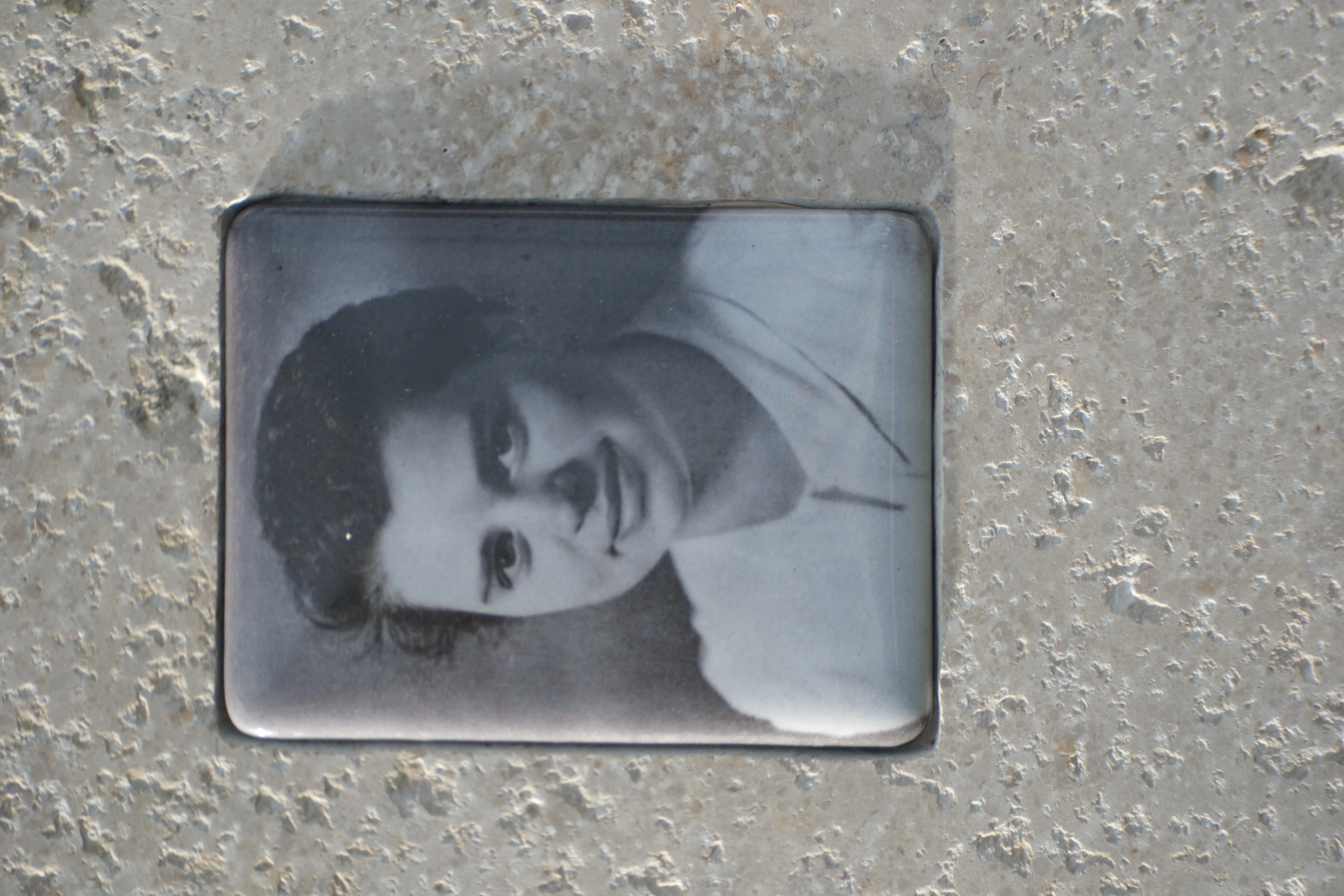
Image from Wikipedia
Image from Wikipedia
Maria Imma Mack – Courage, Humanity, and a Legacy of Civil Courage
A nun who became a symbol of lived charity in the shadow of Dachau
Maria Imma Mack, born Josefa Mack on February 10, 1924, in Möckenlohe near Eichstätt and died on June 21, 2006, in Munich, is one of the most impressive figures in German contemporary history. Her life embodies quiet determination, religious calling, and a courage that had concrete, life-saving consequences in an extreme historical exceptional situation. As a nun of the Congregation of the Poor School Sisters of Our Lady, she secretly supported inmates of the Dachau concentration camp under the alias "Mädi" with food, letters, and liturgical items. ([de.wikipedia.org](https://de.wikipedia.org/wiki/Maria_Imma_Mack?utm_source=openai))
Early Years and Spiritual Influence
Josefa Mack grew up in Upper Bavaria and joined the community of the Poor School Sisters in 1940 as a candidate. Since 1942, she worked as an assistant in the order's children's home in Freising, thus already connecting her spiritual path with practical responsibility during this life phase. This early socialization in a monastic community shaped her attitude: attention to the needy, discipline in everyday life, and a strong ethical awareness. ([de.wikipedia.org](https://de.wikipedia.org/wiki/Maria_Imma_Mack?utm_source=openai))
From today's perspective, it is particularly remarkable how early a young religious candidate transformed into a woman who translated moral consequence into concrete action. She did not act out of abstract symbolism but out of immediate awareness of need. Her biography thus illustrates how religious calling and historical responsibility can intertwine. ([de.wikipedia.org](https://de.wikipedia.org/wiki/Maria_Imma_Mack?utm_source=openai))
The Turning Point: Dachau and the Decision to Act
In 1944, she received her first assignment to purchase plants and flowers at the Dachau concentration camp's gardening facility. On-site, she witnessed the condition of the prisoners and began to withhold food for smuggling. What started as a seemingly harmless work assignment evolved into a risky aid operation that placed her in close proximity to one of the central sites of Nazi terror for months. ([de.wikipedia.org](https://de.wikipedia.org/wiki/Maria_Imma_Mack?utm_source=openai))
From May 1944 to April 1945, she regularly traveled to the Dachau concentration camp, using her bicycle in summer and pulling a sled in winter. She brought food, maintained contact between prisoners and their families, and smuggled letters out of the camp. The fact that she knew that smuggling letters carried the death penalty makes the significance of her actions unmistakably clear. ([de.wikipedia.org](https://de.wikipedia.org/wiki/Maria_Imma_Mack?utm_source=openai))
Help at the Risk of Her Life: Letters, Food, and Liturgical Items
What is particularly striking is that Maria Imma Mack did not limit her help to material support. Through the imprisoned priest Ferdinand Schönwälder, she received orders to bring liturgical items into the camp. She smuggled hosts, Mass wine, candles, oils, and vestments to Dachau, thereby supporting a secret priestly ordination under the conditions of the concentration camp. This form of assistance combines spiritual practice with historical resistance in a rarely seen consistency. ([de.wikipedia.org](https://de.wikipedia.org/wiki/Maria_Imma_Mack?utm_source=openai))
Her role illustrates how powerful small, determined acts could be in a totalitarian system. In memory culture, Maria Imma Mack is therefore not only perceived as a nun but also as a helper and witness to human dignity. This makes her actions relevant even today: they stand for responsibility, compassion, and civil courage under conditions of maximum threat. ([de.wikipedia.org](https://de.wikipedia.org/wiki/Maria_Imma_Mack?utm_source=openai))
Post-War Period, Religious Life, and Personal Development
In 1945, she entered the novitiate of the Poor School Sisters and took the religious name Maria Imma. A year later, she made her profession, thus remaining part of the community that had already provided her with support during the war years for the rest of her life. In 1951, she passed the master examination to become a women's tailor, a detail that complements her pragmatic, craft-oriented lifestyle. ([de.wikipedia.org](https://de.wikipedia.org/wiki/Maria_Imma_Mack?utm_source=openai))
Her later publication Why I Love Azaleas compiled her memories of trips to the Dachau camp from May 1944 to April 1945. The book made her experiences visible to a broader public and contributed to ensuring that her actions did not vanish into the archives but remained present as a historical testimony. Thus, a personal memory became a historical document of lasting value. ([de.wikipedia.org](https://de.wikipedia.org/wiki/Maria_Imma_Mack?utm_source=openai))
Awards, Honors, and Public Remembrance
For her commitment, Maria Imma Mack received several honors, including the Bavarian Order of Merit in 1986 and induction into the French Legion of Honor as a Knight in 2004. This was followed by the Federal Cross of Merit 1st Class and the Honor Cross Pro Ecclesia et Pontifice in 2005. These awards reflect that her actions held significance far beyond a local commemorative framework. ([stadt.muenchen.de](https://stadt.muenchen.de/dam/jcr%3A0a9dcd66-fade-4e56-8af6-fc0df1fa3b6f/Seite7.pdf?utm_source=openai))
Her name has remained visible in the urban space as well. In Munich, there is the Imma-Mack-Weg, named in 2009, and in her hometown of Möckenlohe, a commemorative plaque was mounted in 2024 on the occasion of her 100th birthday. Such places of remembrance make biographies tangible in public space and anchor her legacy permanently in regional cultural history. ([stadt.muenchen.de](https://stadt.muenchen.de/infos/imma-mack-weg.html?utm_source=openai))
Cultural Influence and Historical Significance
Maria Imma Mack exemplifies those women whose resistance was not expressed through grand political gestures but through meticulous, life-affirming help. Her story connects religious life, the history of resistance, memory culture, and the question of how conscience behaves in times of crisis. It is precisely in this tension that her historical significance lies: she helped not abstractly but concretely, and she did so at the risk of her own life. ([de.wikipedia.org](https://de.wikipedia.org/wiki/Maria_Imma_Mack?utm_source=openai))
For today's readers, she remains a figure of extraordinary moral clarity. Her life reminds us that solidarity is possible even where fear and violence dominate everyday life. The strength of this biography lies in its quiet consistency: Maria Imma Mack became famous not through loudness but through integrity, steadfastness, and love for humanity. ([gerhardinger.org](https://gerhardinger.org/about/history/history-sister-m-imma-mack/?utm_source=openai))
Context of the Preserved Works and Documents
In a narrower sense, Maria Imma Mack does not have a discography, charts, or music releases; her documented work is biographically and culturally shaped by memory. The central written reference point is her memoir Why I Love Azaleas, which records her trips to Dachau and her experiences during the Nazi era. For a serial artist page, this would be a special case in a musician's biography; however, it forms the core of the preserved estate. ([de.wikipedia.org](https://de.wikipedia.org/wiki/Maria_Imma_Mack?utm_source=openai))
It is precisely this uniqueness that makes the presentation important: Not every biography can be squeezed into music market categories such as album, single, or tour. In the case of Maria Imma Mack, cultural relevance lies in witnessing, memory, and social action. Those who read her story encounter not a stage career, but a life achievement that is historically as significant as the work of great artists. ([de.wikipedia.org](https://de.wikipedia.org/wiki/Maria_Imma_Mack?utm_source=openai))
Conclusion: Why Maria Imma Mack Resonates Even Today
Maria Imma Mack fascinates because her life demonstrates how faith can translate into concrete help. She acted in a situation where every sign of humanity was dangerous, yet preserved consistency, warmth, and courage. This is precisely where the enduring strength of her biography lies: it serves as an example of lived responsibility and dignity in the darkest of times. ([stadt.muenchen.de](https://stadt.muenchen.de/infos/imma-mack-weg.html?utm_source=openai))
Those who get to know her story gain insight not only into the history of the Dachau concentration camp and religious communities but also into the question of what moral courage means in everyday life. Maria Imma Mack deserves recognition as a historical witness, as a woman of action, and as a name that will be remembered. A visit to her memorial sites or an in-depth reading of her legacy is worthwhile because her legacy continues to inspire to this day. ([stadt.muenchen.de](https://stadt.muenchen.de/infos/strassenneubenennungen2009-uebersicht.html?utm_source=openai))
Official Channels of Maria Imma Mack:
- Instagram: No official profile found
- Facebook: No official profile found
- YouTube: No official profile found
- Spotify: No official profile found
- TikTok: No official profile found
Sources:
- Wikipedia – Maria Imma Mack
- City of Munich – Imma-Mack-Weg
- DOMRADIO.DE – 100 Years Ago, Sister Imma Mack Was Born
- Congregational Website gerhardinger.org – Sister M. Imma Mack
- Congregational Website gerhardinger.org – Commemorative Plaque for Sister M. Imma Mack
- katholisch.de – With Bike and Sledge: How a Nun Helped Concentration Camp Prisoners
- Donaukurier – Adelschlag Commemorates Its Great Daughter Sister Imma Mack