
Maria Ward
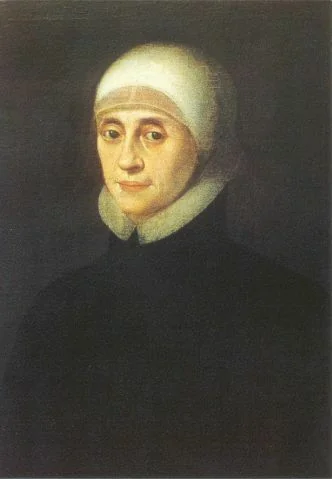
Image from Wikipedia
Image from Wikipedia
Maria Ward – Pioneer of Education and Visionary Founder of the Congregatio Jesu
A 17th-century woman who revolutionized the world of female education
Maria Ward, born in 1585 in Mulwith near Newby in Yorkshire, embodies courage, vision, and an unwavering dedication to education as a societal force. During a time of persecution of Catholics in Elizabethan England, she shaped a new understanding of religious life for women that was to be active, apostolic, and worldly. Her life's work culminated in the founding of a community free from strict enclosure, focused on the education of girls, which continues today as the Congregatio Jesu. In 2009, she was posthumously honored with the title "Venerable Servant of God" – a late but significant ecclesiastical acknowledgment of her heroic virtues.
Early Years and Calling: Resilience in the Shadow of Persecution
Growing up in a Catholic noble family, Ward experienced church and culture as realms that represented both safety and danger. Early on, she displayed intellectual maturity and a strong religious inclination that brought her into conflict with societal expectations regarding marriage and proper conduct. The political situation following the Gunpowder Plot of 1605 intensified pressure on English Catholics and shaped Ward's decision to clarify her calling on the European mainland. This biographical context explains her later determination to regard female education as a civilizational necessity.
Ignatian Influence: Spiritual Architecture of a New Women's Movement
Ward's artistic development in terms of spiritual creativity was nourished by Ignatian spirituality, whose practice of discernment and mission inspired her concept of an active, mobile women's order. Instead of strict enclosure, she advocated for availability, education, and apostolic presence – a "composition" of religious life that was structurally, "arranged," and "produced" closer to the real-life experiences of girls and women. This bold transformation of religious "form language" broke conventions and became the guiding motif of her musical career of the spirit: the world as a stage, the school as a resonance space, pastoral care as a dynamic live experience of female competence.
Between Monastery and World: The First Foundations in Saint-Omer and Gravelines
After a brief, clarifying period with the Poor Clares in Saint-Omer, Ward left the contemplative setting to establish a new form of female religious life around 1609. In Gravelines and later in other cities, communities emerged that educated girls both academically and religiously – a practice that combined didactic "arrangements" with practical "production." The early institutional architecture was experimental: teaching, education, and spiritual guidance were methodically interconnected to not only measure educational success but to make it culturally effective.
Conflicts with Roman Authorities: Vision versus Regulation
Ward's demand for a women's order without enclosure, modeled on the Jesuits, provoked resistance. The Roman apparatus viewed this "other way" (the "Other") as a challenge to traditional religious law. Legal proceedings, dissolutions, and even temporary imprisonment occurred – biographical breaks that sharpened rather than weakened her stage presence as a spiritual leader. Her artistic development in terms of intellectual creativity involved interpreting the regulations without compromising the mission: education for girls as the core repertoire.
Continental Expansion: Munich, Vienna, Rome, and the Journey Back to England
With diplomatic skill and the support of prominent individuals, Ward solidified the geographical reach of her institute. In Munich, Vienna, and Rome, the project took shape; in Rome, she repeatedly negotiated for approval. After her return to England in 1637, she continued educational initiatives in London, supported by a network of companions who flexibly adapted the "score" of female education into local "arrangements." This flexible, location-sensitive model explains the remarkable resilience of the institute despite Roman skepticism.
Curriculum, Method, and Style: Why Ward's Educational Vision Sounds Modern
Ward's "composition" of religious education integrated general education, character formation, and faith practice. Her style was practical, dialogical, and intellectually demanding, with clear references to Ignatian pedagogy: reflection, conscience formation, and the promotion of judgment. This methodological "sound" enabled girls to participate socio-culturally – an emancipatory impulse that understood education as artistic self-empowerment and set new standards in many countries.
The "Painted Life" and Sources: Instead of a Discography, a Visual Oeuvre
A "discography" in the musical sense does not exist; however, the "Painted Life" – a cycle of fifty large-scale paintings depicting Ward's journey – serves as a visual album that tracks her spiritual drama in scenes. Letters, instructions, and reports document the composition of her work: the connection between educational practice, commitment to the common good, and spiritual leadership. These sources form a robust foundation for research, museum mediation, and ongoing reception in schools and communities worldwide.
Cultural Influence: Schools, Identity, and the Grammar of Female Leadership
Over the centuries, Ward's influence has remained palpable – in the founding of schools, in educational practice, and in the self-understanding of women in church and society. The Bar Convent in York, the oldest surviving convent in Great Britain, makes this history publicly accessible and positions Ward as a protagonist in a British-European narrative of conscience freedom and educational justice. The Loreto Sisters (Institute of the Blessed Virgin Mary) and the Congregatio Jesu carry her DNA into a global educational network, whose "repertoire" ranges from teaching to social work.
Ecclesiastical Recognition: From Rehabilitation to "Venerable Servant of God"
After centuries of ambivalence, significant ecclesiastical steps followed: In 2009, Pope Benedict XVI declared Mary Ward a "Venerable Servant of God" – the first stage in the canonization process. With this, the Church officially acknowledged her heroic virtues and the prophetic power of a life’s work that once faced resistance. This recognition strengthened the authority of her history and motivated the global network to promote the cause of canonization.
Present and Realignment: The Unification of CJ and IBVM
In November 2025, the Congregatio Jesu and the Loreto Sisters (IBVM) united in Loyola, Spain, to form a joint body: a historic step that spiritually and organizationally brings the Mary Ward family together. This "merger" understands itself as a consistent continuation of Ward's original intention to take "the same as the Society of Jesus," but for women and in service to education and justice. The united community is active today in education, pastoral care, healthcare, anti-human trafficking projects, and social advocacy – a modern, global "production" of its charism.
York as a Site of Memory: Bar Convent, Museum, and Public Engagement
At the Bar Convent in York, Ward's legacy materializes as a vibrant exhibition. Visitors experience stories of secrecy, espionage, and religious perseverance – a narrative space that makes visible the risks of the 17th century and the creative response of the founders. This curated memory provides Ward's educational project with a strong museum stage, arranging historical facts, artifacts, and contemporary interpretations.
Musical Historical Placement? A Different Kind of "Sound"
Although Ward was not a musician, her work unfolds a kind of sound image: the "sound" of emancipation through education that resonates even today. The educational grammar of her approach follows the logic of complex compositions: theme, variation, counterpoint between spirituality and social practice. This cultural "sound space" turned students into multipliers – an echo spanning continents that continues to shape educational identities.
Awards, Reception, and "Chart Successes" in History
Instead of awards and charts, Ward's impact registers successes in historical reception: ecclesiastical recognition, institutional growth, and a dense landscape of schools that open educational opportunities for girls worldwide. Early critical voices have given way to later accolades that place Ward as an early architect of female leadership in the Church. Today, her "critiques" arise in historiography, spirituality research, and educational science – predominantly with a positive, often admiring tone.
Conclusion: Why Maria Ward Remains Relevant Today
Maria Ward's musical career of the spirit – her presence on stage in school, pastoral care, and society – makes her a key figure in European educational history. She combined Ignatian depth with strategic foresight and created a practice that shaped girls and women into self-determined actors. Those who wish to experience her impact live can find it in the classrooms, archives, and museums of her community – an ongoing "concert" of hope that invites participation.
Official Channels of Maria Ward:
- Instagram: No official profile found
- Facebook: No official profile found
- YouTube: No official profile found
- Spotify: No official profile found
- TikTok: No official profile found
Sources:
- Wikipedia – Maria Ward
- Congregatio Jesu – Official Website
- Congregatio Jesu – Mary Ward
- Bar Convent, York – Official Website
- IBVM US – Information on the Merger with Congregatio Jesu
- The Times of India – Report on the Merger (05.11.2025)
- IBVM – The Cause for Mary Ward’s Canonization
- Congregatio Jesu – Germany
- Wikipedia: Image and Text Source