
Markus (Evangelist)
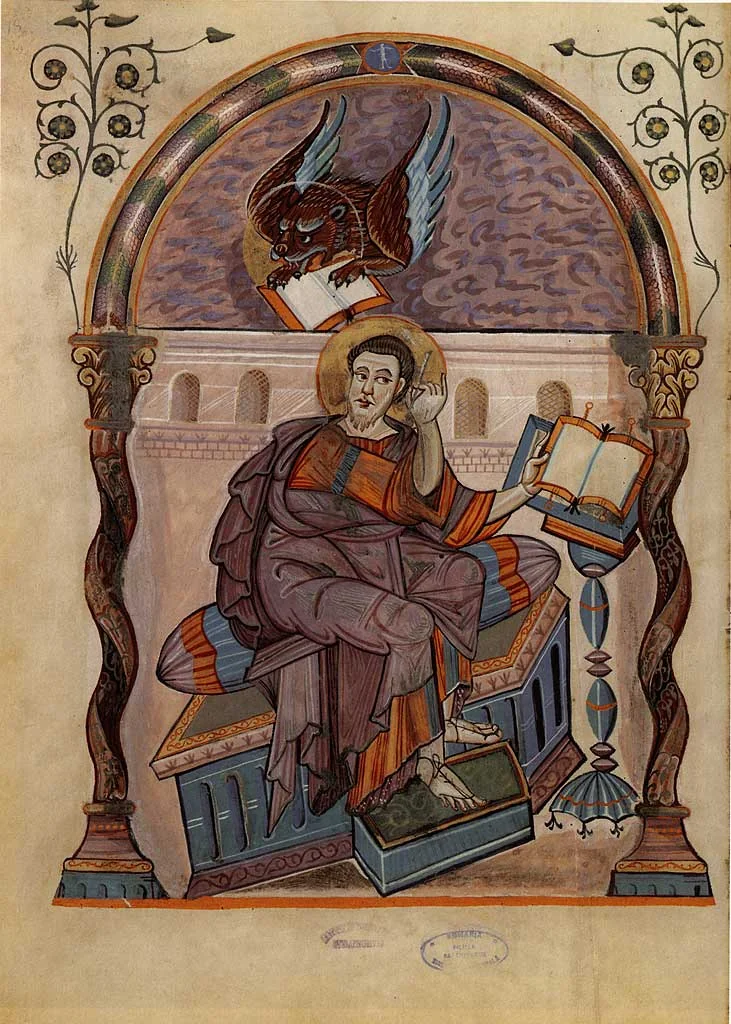
Image from Wikipedia
Image from Wikipedia
Markus (Evangelist) – the Anonymous Narrator of the Oldest Gospel and His Lasting Impact
Classification of a Biblical Author Who Shaped the Christian Narrative Tradition
Markus is the name given by early church tradition to the author of the likely oldest gospel. The name does not appear in the text itself; the gospel remains anonymous and derives its authority not from a self-presentation but from its content, its dramaturgy, and its history of impact. This tension between tradition and historical criticism makes Markus one of the most fascinating figures in early Christian literature. His symbol is the Lion of Markus, which continues to identify him as an evangelist to this day. ([en.wikipedia.org](https://en.wikipedia.org/wiki/Mark_the_Evangelist?utm_source=openai))
Tradition associates Markus with the early church, with the proclamation of the gospel, and with the development of a literarily dense, concentrated narrative about Jesus. Modern biblical scholarship concurrently emphasizes that the text itself does not name an author and that the attribution of "Markus" is a later convention. This does not weaken it; rather, it makes it historically more interesting: Markus stands at the intersection of faith tradition, text history, and theological interpretation. ([en.wikipedia.org](https://en.wikipedia.org/wiki/Mark_the_Evangelist?utm_source=openai))
Biographical Tradition and Historical Caution
The early church tradition identified the evangelist Markus with a person from the circle of the early church, often in connection with John Markus from the New Testament writings. However, the evangelist does not mention his name himself, and modern research remains cautious when it comes to a secure historical biography. Therefore, the name “Markus” is used as a convention in scholarly literature, not as an automatically verified life description. ([en.wikipedia.org](https://en.wikipedia.org/wiki/Mark_the_Evangelist?utm_source=openai))
Historically significant is primarily the reception: early on, the gospel gained an authority explained by its closeness to apostolic proclamation. Traditional voices linked the text with Peter’s testimony; critical research, on the other hand, points to the anonymity of the work and the complexity of its origins. This dual perspective continues to shape the profile of the evangelist today. ([biblegateway.com](https://www.biblegateway.com/passage/intro/?search=Mark&version=NCB&utm_source=openai))
The Gospel of Markus as a Literary Turning Point
Many experts consider the Gospel of Markus to be the shortest of the four canonical gospels and also the earliest that has influenced the later gospels. It narrates Jesus' actions with a high degree of narrative density, rapid pace, and a clear focus on action, conflict, and passion. This concentrated form grants the text an immediate power that is unique in the history of Christian literature. ([biblegateway.com](https://www.biblegateway.com/passage/intro/?search=Mark&version=NABRE&utm_source=openai))
The style of the Gospel of Markus is particularly striking: the narrative often unfolds in brief, decisive scenes that portray Jesus as an actor and closely link his words with his deeds. The text opens with the introduction of the "good news" and quickly leads into the conflict lines of Jesus' public ministry. This dramaturgy makes Markus an author whose influence extends far beyond theology and also attracts attention in literary studies and cultural history. ([biblegateway.com](https://www.biblegateway.com/passage/intro/?search=Mark&version=NABRE&utm_source=openai))
Tradition, Symbol, and Iconographic Impact
In Christian iconography, Markus is represented by the winged lion. This symbol is part of the Tetramorph of the evangelists and is widely present in art, liturgy, and church spaces. The Lion of Markus represents not only an evangelist but also the entire cultural impact of the Markus text, which has been read, interpreted, and visually depicted for centuries. ([en.wikipedia.org](https://en.wikipedia.org/wiki/Mark_the_Evangelist?utm_source=openai))
Liturgy also reflects the lasting significance of the evangelist. April 25 is celebrated as the feast day of Saint Markus in several Christian traditions. Papal addresses and Vatican texts repeatedly refer back to the Gospel of Markus, demonstrating how alive its relevance remains in the church and theology. ([en.wikipedia.org](https://en.wikipedia.org/wiki/Mark_the_Evangelist?utm_source=openai))
Textual History Debates and Scholarly Reception
Research largely agrees today that the Gospel of Markus was written anonymously. The old attribution to Markus remains a strong church tradition, but it is not simply taken as established in scholarly circles. Some works connect the text with Peter’s context, while others keep authorship open and deliberately speak of the unknown author of the gospel. ([en.wikipedia.org](https://en.wikipedia.org/wiki/Mark_the_Evangelist?utm_source=openai))
For the history of impact, this openness is productive. Precisely because the text is not tied to a strongly elaborated author figure, it could be re-read in various epochs: as testimony of the early community, as a literary prototype of the gospel, and as a theological key text regarding the passion of Jesus. This complexity explains why Markus remains present in both academic and church contexts alike. ([en.wikipedia.org](https://en.wikipedia.org/wiki/Gospel_of_Mark?utm_source=openai))
Cultural Influence and Lasting Significance
The Gospel of Markus continues to shape the Christian worldview to this day. Its concise, direct narrative style, its focus on Jesus' path through conflict and suffering, and its condensation of events have profoundly shaped the subsequent gospel tradition. Matthew and Luke clearly build upon Markus, thereby making his text a cornerstone of the canonical tradition. ([en.wikipedia.org](https://en.wikipedia.org/wiki/Gospel_of_Mark?utm_source=openai))
Culturally, Markus does not act as a "star" in the modern sense, but as the creator of a narrative form that continues to live on in liturgy, art, and theology. The figure of the evangelist Markus represents an early Christian authority arising from textual strength, closeness to tradition, and iconographic presence. Anyone engaging with the roots of Christian storytelling will encounter Markus as a key figure. ([en.wikipedia.org](https://en.wikipedia.org/wiki/Mark_the_Evangelist?utm_source=openai))
Current Projects and Publications
There are no current music projects, albums, or tours for Markus as an evangelist. His "work" is the gospel itself, whose influence is evident in ongoing reading, exegesis, and liturgical use. The timeless presence of the Markus text replaces any form of modern publication logic here. ([biblegateway.com](https://www.biblegateway.com/passage/intro/?search=Mark&version=NABRE&utm_source=openai))
Conclusion: Why Markus Remains Fascinating Today
Markus fascinates because, as an anonymous author, he still ranks among the most influential voices of the Christian tradition. His gospel connects concise language, narrative energy, and theological depth into a text that has profoundly shaped the history of faith. Readers of Markus do not just encounter an early evangelist but a foundational text of European cultural history. ([biblegateway.com](https://www.biblegateway.com/passage/intro/?search=Mark&version=NABRE&utm_source=openai))
This tension between tradition and historical criticism makes him so intriguing: Markus cannot be reduced to a biography but acts as a name, a symbol, and a text. Those interested in the origins of the gospels should choose Markus as a starting point and rediscover his special role in the history of Christianity. ([byustudies.byu.edu](https://byustudies.byu.edu/online-book/the-gospel-according-to-mark/appendix-a-authorship-and-date-106?utm_source=openai))
Official Channels of Markus (Evangelist):
- Instagram: no official profile found
- Facebook: no official profile found
- YouTube: no official profile found
- Spotify: no official profile found
- TikTok: no official profile found
Sources:
- Wikipedia – Markus (Evangelist)
- Vatican.va – Mass for Tawadros II (25 April 2017)
- Vatican.va – Stemma of Pope John Paul I.
- Bible Gateway – Introduction to the Gospel According to Mark
- Bible Gateway – The Gospel According to Mark
- Encyclopaedia Britannica – Gospel According to Mark
- Vatican.va – Regina Cæli, 25 April 2011