
Coburg
Wiesenstraße 30, 96450 Coburg, Deutschland
Dr. Eugen Stocke Stadium | Coburg & Images
The Dr. Eugen Stocke Stadium in Coburg is one of the most traditional sports facilities in Upper Franconia, combining football culture, school and club sports, as well as athletics at a single location on Wiesenstraße. Those looking for images and impressions will find a facility with a classic main grandstand, a surrounding running track, and an attractively modernized environment, where alongside the natural grass pitch, an artificial turf with floodlights is available for evening training sessions. The location near the Itz River and the city center allows for easy access, while the interplay of school use, club operations, and urban infrastructure keeps the area lively year-round. This guide consolidates verified facts about capacity, seating and standing areas, access and parking, use by clubs and schools, as well as the recent renovation of the changing rooms – supplemented with information on where to find official details and current impressions. ([coburg.de](https://www.coburg.de/presseinformationen/mai/spatenstich-funktionsgebaeude-sportgelaende-wiesenstrasse.php))
Images and Impressions of the Dr. Eugen Stocke Stadium
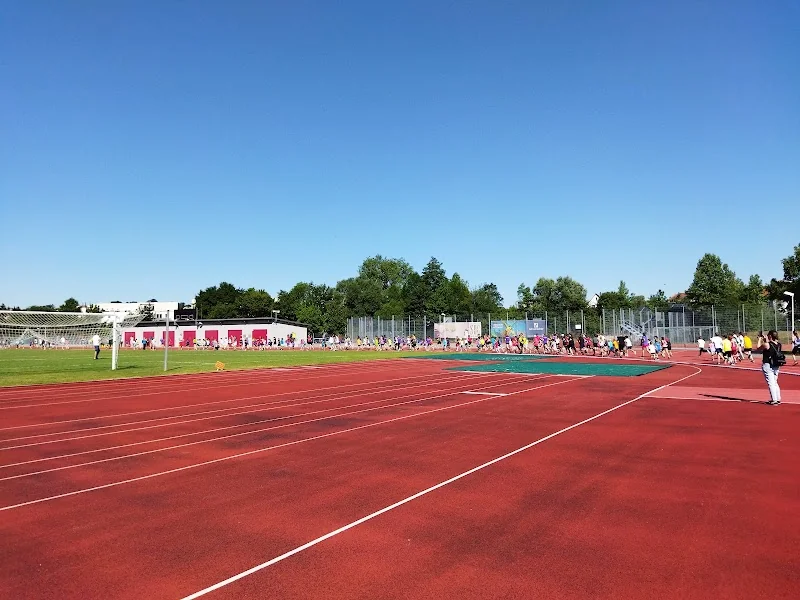
Many specifically search for “images of the Dr. Eugen Stocke Stadium” to get a feel for the grandstand, running track, and field edge in advance. Informative motifs are provided by official city announcements as well as regional media reports: Photos from the groundbreaking and the topping-out ceremony of the new functional building show the location right next to the main grandstand and the surrounding area, where changing rooms, showers, and barrier-free units will be located in the future. These images convey the urban integration of the facility into Wiesenstraße and simultaneously document the modernization push that the sports facility has been experiencing since 2024/2025. For those who prefer to see the reality of usage instead of atmospheric images, club announcements provide information about the two main playing fields at the location: In addition to the natural grass pitch, an artificial turf pitch with floodlights has been added for evening training – an important addition for weather-independent sessions in the amateur and youth sectors. Groundhopper and football portals also list the stadium with basic data and typical stadium views; there, characteristic elements such as the covered main grandstand, the surrounding running track, and the predominantly standing-oriented capacity are visible. Together, this creates a reliable picture: the “Stocke” is a classic, open stadium facility, predestined for football matches from amateur to youth levels, school sports, and athletics training – with the peculiarity that the running track increases the distance between the grandstand and the field, which surprises many outsiders in photos or during their first visit. ([coburg.de](https://www.coburg.de/presseinformationen/mai/spatenstich-funktionsgebaeude-sportgelaende-wiesenstrasse.php))
Access and Parking on Wiesenstraße
Access to the stadium is possible by car, bicycle, or public transport. For drivers, navigating to “Wiesenstraße, 96450 Coburg” is effective; clubs even recommend house numbers in the range of 30–34 for navigation devices, as the sports fields extend over several properties. The parking situation is important: As part of the new functional building, additional parking spaces are being created directly on the premises. Additionally, the centrally located Anger large parking lot serves as a reliable alternative – with around 481 parking spaces and simple, affordable rates (first 15 minutes free, then €0.60 per 30 minutes, maximum €4 per 24 hours). The Anger is easily accessible for those with disabilities, operates with license plate recognition instead of tickets, and the city provides online information about available spaces in the parking guidance system. During holiday and festival times, the Anger may be temporarily closed (e.g., during the Samba festival and shooting festival in summer); during these phases, one can use parking garages like Mauer, Zinkenwehr, Post, or the Albertsplatz underground garage. For cyclists, covered bike parking spaces are planned along Wiesenstraße parallel to the new building, making the facility well-equipped for sustainable arrivals. Those arriving by train have bus connections to the northern districts from the station; the city’s websites and the parking guidance system consolidate the current information. Practically: The interplay of new parking spaces at the stadium and the large buffer at Anger alleviates demand during training and match times – especially on weekends. ([coburg.de](https://www.coburg.de/presseinformationen/mai/spatenstich-funktionsgebaeude-sportgelaende-wiesenstrasse.php))
A historical context regarding the parking situation also clarifies why alternative options in Coburg are valued: As early as 2019, regional press reported on bottlenecks around Wiesenstraße – especially during home games – and recommended using paid parking spaces within reach. These hints have been partially alleviated today by the new parking spaces on the premises but remain useful for major sports days or events. Current closure or detour information – especially during the summer months – is regularly published by Wohnbau Stadt Coburg for the Anger; therefore, a quick look at the city’s information before arriving is worthwhile. ([np-coburg.de](https://www.np-coburg.de/inhalt.coburg-parkplatzmangel-in-der-wiesenstrasse-verschaerft-sich.9162daeb-e4ec-4e25-8ff6-9afd7853abcf.html?utm_source=openai))
Capacity, Seating, Grandstand, and “Room Plan” in Stadium Context
Stadium portals list a total capacity of around 4,500 seats for the Dr. Eugen Stocke Stadium. Typical for facilities with a running track are predominantly standing places on expansive mounds as well as a prominent, covered main grandstand with seating. The profiles also mention the natural grass as the main surface and confirm the running track – a detail that makes the multipurpose use (football and athletics) visible. In practice, the “room plan” corresponds more to a sectoral allocation: centrally on the main grandstand, one sits weather-protected with the best overview; standing areas along the straight offer proximity to the coaching zone and the benches; curve areas are traditionally meeting points for youth teams and families. Those traveling with strollers or as wheelchair users can orient themselves to the level accesses on the main side; the new sanitary and changing areas further improve accessibility here. For matches with higher attendance, it is advisable to arrive early at the facility to secure preferred seats in the grandstand; the standing areas are generously distributed around the oval. The fact that photos make distances appear larger is related to the running track – on the grandstand, the sightline remains clear, which is particularly noticeable during daytime matches. Those who plan their arrival can thus enjoy the advantages of both worlds: the overview of an athletics stadium and the atmosphere of an amateur football match. ([transfermarkt.de](https://www.transfermarkt.de/fc-coburg/stadion/verein/5149?utm_source=openai))
History and Special Features: From Johann-Leopold Sports Field to Modern School Sports Facility
The venue on Wiesenstraße was inaugurated on November 30, 1913, as Johann-Leopold Sports Field – named after the then heir prince of Saxony-Coburg and Gotha. In 1928, the stadium received a grandstand, and in 1965, on the occasion of Dr. Eugen Stocke's 70th birthday, it was renamed Dr.-Stocke-Stadium. In the 2000s, the city of Coburg acquired the facility and transformed it into a school sports facility in 2009; as part of this, the opposite seating grandstand and ticket offices were removed, the main grandstand was renovated, and the running track was modernized. This development reflects the dual mandate of the facility: it is both a place of remembrance for over a hundred years of football tradition and a contemporary venue for physical education and club training. In local media, critical discussions about details of the athletics facility were also held in 2008 in the run-up to the redesign – a hint at how attentively the Coburg sports community follows its “Stocke.” Today, further investments – artificial turf with floodlights, new functional building – show that the city is strengthening the site in the long term and adapting it to real usage needs (youth, schools, clubs). ([de.wikipedia.org](https://de.wikipedia.org/wiki/DVV_Coburg?utm_source=openai))
Clubs, Training, and Program: FC Coburg, DFB Training Center, and Athletics
The spectrum of users is broad: The city names schools, clubs, and the youth performance center as regular users of the facility; FC Coburg plays home games and training sessions here and explicitly locates its venues on Wiesenstraße. Additionally, a DFB training center utilizes the facility – an indication of the structural role of the “Stocke” in regional talent development. Athletics groups from several clubs train on the running track; fixed training times – such as track training on Thursdays – are publicly accessible and demonstrate the facility's integration into the weekly rhythm of Coburg athletics. For interested parties, this means: Those who want to see a football match orient themselves to the publications of FC Coburg; those who want to run or participate in a trial training session can find entry points through the club pages. Thanks to the artificial turf with floodlights, training operations can also be well represented in the darker seasons; the city’s information notes that this field has recently been newly added – a real added value, especially for youth teams. The combination of natural grass, artificial turf, and athletics track makes Wiesenstraße a versatile sports campus, where school sports, club operations, and occasional match operations alternate on weekdays. ([coburg.de](https://www.coburg.de/presseinformationen/mai/spatenstich-funktionsgebaeude-sportgelaende-wiesenstrasse.php))
New Functional Building, Comfort, and Accessibility
One of the most important current measures is the new two-story functional building directly next to the main grandstand. The official groundbreaking took place on May 24, 2024; the start of use is planned for the 2025/26 school year, with the overall completion of the construction measure scheduled for summer 2026. Inside, six changing rooms and three washrooms will be created; two changing rooms will be barrier-free, and additional sanitary facilities will also be available for visitors. Alongside the building, 21 new parking spaces for cars are planned; additionally, numerous covered bike parking spaces (55 are mentioned in city information) will facilitate the switch to cycling. The city is investing around €3.3 million for this; an amount that has been extensively discussed in committees regarding various options and modular construction. With the new building, Coburg closes a functional gap that has been criticized for years and creates contemporary conditions for league matches, school lessons, and training routines. For visitors, this means: More comfort upon arrival, better pathways between the grandstand, sanitary, and changing areas, and an overall more robust facility for weather-independent use. Meanwhile, the artificial turf with floodlights remains a central component for evening operations, solidifying the Dr.-Eugen-Stocke facility's status as the sporting heart of Wiesenstraße. ([coburg.de](https://www.coburg.de/presseinformationen/mai/spatenstich-funktionsgebaeude-sportgelaende-wiesenstrasse.php))
Practical Tips for Visiting the Stadium: Best Seats, Times of Day, and Service
Those visiting the “Stocke” for the first time can benefit from a few practical tips. For the best view, the central section of the covered main grandstand is recommended – here, ball paths and tactical shifts are easy to read, and the roof provides protection in changeable weather. Standing fans prefer to position themselves along the straight; those who want to experience the coaching zone choose the area near the benches. Since the running track increases the distance to the field, it is worth arriving early and choosing a central row on the grandstand; photos from media and city communications convey this impression well. For families with children, the spacious standing zones are practical; strollers can be easily maneuvered along the level paths on the main side. When arriving by car, the rule is: first check the parking spaces at the facility, then – if occupied – divert to the Anger; for summer festivals, pay attention to closure notices. Cyclists find covered parking options at the facility; public transport users should plan with a little buffer from the station/city center to Wiesenstraße. Those specifically looking for images will find the best, authentic selection in the official city contributions (groundbreaking, topping-out ceremony) and current reports from local press. And for match or training visits, it’s worth checking the FC Coburg’s club notices; home game dates and information about venues and training times are documented directly from the source. ([coburg.de](https://www.coburg.de/presseinformationen/mai/spatenstich-funktionsgebaeude-sportgelaende-wiesenstrasse.php))
Sources:
- City of Coburg – New Changing Rooms and Showers for the Dr.-Stocke Facility (Press Release)
- City of Coburg – Topping-Out Ceremony Wiesenstraße: Functional Building with Parking Spaces and Bicycle Parking Facility
- Neue Presse Coburg – Dr.-Stocke Facility: New Changing Building is Finished (12.12.2025)
- FC Coburg – Venues: Dr.-Eugen-Stocke Facility (Wiesenstraße)
- weltfussball.com – Stadium Profile: Dr.-Eugen-Stocke-Stadium (Capacity)
- Wikipedia – DVV Coburg: Stadium History (Inauguration 1913, Renaming 1965, Renovation 2009)
- TV 1848 Coburg – Athletics: Training Times at Dr. Stocke Stadium
- Wohnbau Stadt Coburg – Large Parking Lot Anger: Rates, Spaces, Information
Mehr anzeigenWeniger anzeigen
Dr. Eugen Stocke Stadium | Coburg & Images
The Dr. Eugen Stocke Stadium in Coburg is one of the most traditional sports facilities in Upper Franconia, combining football culture, school and club sports, as well as athletics at a single location on Wiesenstraße. Those looking for images and impressions will find a facility with a classic main grandstand, a surrounding running track, and an attractively modernized environment, where alongside the natural grass pitch, an artificial turf with floodlights is available for evening training sessions. The location near the Itz River and the city center allows for easy access, while the interplay of school use, club operations, and urban infrastructure keeps the area lively year-round. This guide consolidates verified facts about capacity, seating and standing areas, access and parking, use by clubs and schools, as well as the recent renovation of the changing rooms – supplemented with information on where to find official details and current impressions. ([coburg.de](https://www.coburg.de/presseinformationen/mai/spatenstich-funktionsgebaeude-sportgelaende-wiesenstrasse.php))
Images and Impressions of the Dr. Eugen Stocke Stadium
Many specifically search for “images of the Dr. Eugen Stocke Stadium” to get a feel for the grandstand, running track, and field edge in advance. Informative motifs are provided by official city announcements as well as regional media reports: Photos from the groundbreaking and the topping-out ceremony of the new functional building show the location right next to the main grandstand and the surrounding area, where changing rooms, showers, and barrier-free units will be located in the future. These images convey the urban integration of the facility into Wiesenstraße and simultaneously document the modernization push that the sports facility has been experiencing since 2024/2025. For those who prefer to see the reality of usage instead of atmospheric images, club announcements provide information about the two main playing fields at the location: In addition to the natural grass pitch, an artificial turf pitch with floodlights has been added for evening training – an important addition for weather-independent sessions in the amateur and youth sectors. Groundhopper and football portals also list the stadium with basic data and typical stadium views; there, characteristic elements such as the covered main grandstand, the surrounding running track, and the predominantly standing-oriented capacity are visible. Together, this creates a reliable picture: the “Stocke” is a classic, open stadium facility, predestined for football matches from amateur to youth levels, school sports, and athletics training – with the peculiarity that the running track increases the distance between the grandstand and the field, which surprises many outsiders in photos or during their first visit. ([coburg.de](https://www.coburg.de/presseinformationen/mai/spatenstich-funktionsgebaeude-sportgelaende-wiesenstrasse.php))
Access and Parking on Wiesenstraße
Access to the stadium is possible by car, bicycle, or public transport. For drivers, navigating to “Wiesenstraße, 96450 Coburg” is effective; clubs even recommend house numbers in the range of 30–34 for navigation devices, as the sports fields extend over several properties. The parking situation is important: As part of the new functional building, additional parking spaces are being created directly on the premises. Additionally, the centrally located Anger large parking lot serves as a reliable alternative – with around 481 parking spaces and simple, affordable rates (first 15 minutes free, then €0.60 per 30 minutes, maximum €4 per 24 hours). The Anger is easily accessible for those with disabilities, operates with license plate recognition instead of tickets, and the city provides online information about available spaces in the parking guidance system. During holiday and festival times, the Anger may be temporarily closed (e.g., during the Samba festival and shooting festival in summer); during these phases, one can use parking garages like Mauer, Zinkenwehr, Post, or the Albertsplatz underground garage. For cyclists, covered bike parking spaces are planned along Wiesenstraße parallel to the new building, making the facility well-equipped for sustainable arrivals. Those arriving by train have bus connections to the northern districts from the station; the city’s websites and the parking guidance system consolidate the current information. Practically: The interplay of new parking spaces at the stadium and the large buffer at Anger alleviates demand during training and match times – especially on weekends. ([coburg.de](https://www.coburg.de/presseinformationen/mai/spatenstich-funktionsgebaeude-sportgelaende-wiesenstrasse.php))
A historical context regarding the parking situation also clarifies why alternative options in Coburg are valued: As early as 2019, regional press reported on bottlenecks around Wiesenstraße – especially during home games – and recommended using paid parking spaces within reach. These hints have been partially alleviated today by the new parking spaces on the premises but remain useful for major sports days or events. Current closure or detour information – especially during the summer months – is regularly published by Wohnbau Stadt Coburg for the Anger; therefore, a quick look at the city’s information before arriving is worthwhile. ([np-coburg.de](https://www.np-coburg.de/inhalt.coburg-parkplatzmangel-in-der-wiesenstrasse-verschaerft-sich.9162daeb-e4ec-4e25-8ff6-9afd7853abcf.html?utm_source=openai))
Capacity, Seating, Grandstand, and “Room Plan” in Stadium Context
Stadium portals list a total capacity of around 4,500 seats for the Dr. Eugen Stocke Stadium. Typical for facilities with a running track are predominantly standing places on expansive mounds as well as a prominent, covered main grandstand with seating. The profiles also mention the natural grass as the main surface and confirm the running track – a detail that makes the multipurpose use (football and athletics) visible. In practice, the “room plan” corresponds more to a sectoral allocation: centrally on the main grandstand, one sits weather-protected with the best overview; standing areas along the straight offer proximity to the coaching zone and the benches; curve areas are traditionally meeting points for youth teams and families. Those traveling with strollers or as wheelchair users can orient themselves to the level accesses on the main side; the new sanitary and changing areas further improve accessibility here. For matches with higher attendance, it is advisable to arrive early at the facility to secure preferred seats in the grandstand; the standing areas are generously distributed around the oval. The fact that photos make distances appear larger is related to the running track – on the grandstand, the sightline remains clear, which is particularly noticeable during daytime matches. Those who plan their arrival can thus enjoy the advantages of both worlds: the overview of an athletics stadium and the atmosphere of an amateur football match. ([transfermarkt.de](https://www.transfermarkt.de/fc-coburg/stadion/verein/5149?utm_source=openai))
History and Special Features: From Johann-Leopold Sports Field to Modern School Sports Facility
The venue on Wiesenstraße was inaugurated on November 30, 1913, as Johann-Leopold Sports Field – named after the then heir prince of Saxony-Coburg and Gotha. In 1928, the stadium received a grandstand, and in 1965, on the occasion of Dr. Eugen Stocke's 70th birthday, it was renamed Dr.-Stocke-Stadium. In the 2000s, the city of Coburg acquired the facility and transformed it into a school sports facility in 2009; as part of this, the opposite seating grandstand and ticket offices were removed, the main grandstand was renovated, and the running track was modernized. This development reflects the dual mandate of the facility: it is both a place of remembrance for over a hundred years of football tradition and a contemporary venue for physical education and club training. In local media, critical discussions about details of the athletics facility were also held in 2008 in the run-up to the redesign – a hint at how attentively the Coburg sports community follows its “Stocke.” Today, further investments – artificial turf with floodlights, new functional building – show that the city is strengthening the site in the long term and adapting it to real usage needs (youth, schools, clubs). ([de.wikipedia.org](https://de.wikipedia.org/wiki/DVV_Coburg?utm_source=openai))
Clubs, Training, and Program: FC Coburg, DFB Training Center, and Athletics
The spectrum of users is broad: The city names schools, clubs, and the youth performance center as regular users of the facility; FC Coburg plays home games and training sessions here and explicitly locates its venues on Wiesenstraße. Additionally, a DFB training center utilizes the facility – an indication of the structural role of the “Stocke” in regional talent development. Athletics groups from several clubs train on the running track; fixed training times – such as track training on Thursdays – are publicly accessible and demonstrate the facility's integration into the weekly rhythm of Coburg athletics. For interested parties, this means: Those who want to see a football match orient themselves to the publications of FC Coburg; those who want to run or participate in a trial training session can find entry points through the club pages. Thanks to the artificial turf with floodlights, training operations can also be well represented in the darker seasons; the city’s information notes that this field has recently been newly added – a real added value, especially for youth teams. The combination of natural grass, artificial turf, and athletics track makes Wiesenstraße a versatile sports campus, where school sports, club operations, and occasional match operations alternate on weekdays. ([coburg.de](https://www.coburg.de/presseinformationen/mai/spatenstich-funktionsgebaeude-sportgelaende-wiesenstrasse.php))
New Functional Building, Comfort, and Accessibility
One of the most important current measures is the new two-story functional building directly next to the main grandstand. The official groundbreaking took place on May 24, 2024; the start of use is planned for the 2025/26 school year, with the overall completion of the construction measure scheduled for summer 2026. Inside, six changing rooms and three washrooms will be created; two changing rooms will be barrier-free, and additional sanitary facilities will also be available for visitors. Alongside the building, 21 new parking spaces for cars are planned; additionally, numerous covered bike parking spaces (55 are mentioned in city information) will facilitate the switch to cycling. The city is investing around €3.3 million for this; an amount that has been extensively discussed in committees regarding various options and modular construction. With the new building, Coburg closes a functional gap that has been criticized for years and creates contemporary conditions for league matches, school lessons, and training routines. For visitors, this means: More comfort upon arrival, better pathways between the grandstand, sanitary, and changing areas, and an overall more robust facility for weather-independent use. Meanwhile, the artificial turf with floodlights remains a central component for evening operations, solidifying the Dr.-Eugen-Stocke facility's status as the sporting heart of Wiesenstraße. ([coburg.de](https://www.coburg.de/presseinformationen/mai/spatenstich-funktionsgebaeude-sportgelaende-wiesenstrasse.php))
Practical Tips for Visiting the Stadium: Best Seats, Times of Day, and Service
Those visiting the “Stocke” for the first time can benefit from a few practical tips. For the best view, the central section of the covered main grandstand is recommended – here, ball paths and tactical shifts are easy to read, and the roof provides protection in changeable weather. Standing fans prefer to position themselves along the straight; those who want to experience the coaching zone choose the area near the benches. Since the running track increases the distance to the field, it is worth arriving early and choosing a central row on the grandstand; photos from media and city communications convey this impression well. For families with children, the spacious standing zones are practical; strollers can be easily maneuvered along the level paths on the main side. When arriving by car, the rule is: first check the parking spaces at the facility, then – if occupied – divert to the Anger; for summer festivals, pay attention to closure notices. Cyclists find covered parking options at the facility; public transport users should plan with a little buffer from the station/city center to Wiesenstraße. Those specifically looking for images will find the best, authentic selection in the official city contributions (groundbreaking, topping-out ceremony) and current reports from local press. And for match or training visits, it’s worth checking the FC Coburg’s club notices; home game dates and information about venues and training times are documented directly from the source. ([coburg.de](https://www.coburg.de/presseinformationen/mai/spatenstich-funktionsgebaeude-sportgelaende-wiesenstrasse.php))
Sources:
- City of Coburg – New Changing Rooms and Showers for the Dr.-Stocke Facility (Press Release)
- City of Coburg – Topping-Out Ceremony Wiesenstraße: Functional Building with Parking Spaces and Bicycle Parking Facility
- Neue Presse Coburg – Dr.-Stocke Facility: New Changing Building is Finished (12.12.2025)
- FC Coburg – Venues: Dr.-Eugen-Stocke Facility (Wiesenstraße)
- weltfussball.com – Stadium Profile: Dr.-Eugen-Stocke-Stadium (Capacity)
- Wikipedia – DVV Coburg: Stadium History (Inauguration 1913, Renaming 1965, Renovation 2009)
- TV 1848 Coburg – Athletics: Training Times at Dr. Stocke Stadium
- Wohnbau Stadt Coburg – Large Parking Lot Anger: Rates, Spaces, Information
Dr. Eugen Stocke Stadium | Coburg & Images
The Dr. Eugen Stocke Stadium in Coburg is one of the most traditional sports facilities in Upper Franconia, combining football culture, school and club sports, as well as athletics at a single location on Wiesenstraße. Those looking for images and impressions will find a facility with a classic main grandstand, a surrounding running track, and an attractively modernized environment, where alongside the natural grass pitch, an artificial turf with floodlights is available for evening training sessions. The location near the Itz River and the city center allows for easy access, while the interplay of school use, club operations, and urban infrastructure keeps the area lively year-round. This guide consolidates verified facts about capacity, seating and standing areas, access and parking, use by clubs and schools, as well as the recent renovation of the changing rooms – supplemented with information on where to find official details and current impressions. ([coburg.de](https://www.coburg.de/presseinformationen/mai/spatenstich-funktionsgebaeude-sportgelaende-wiesenstrasse.php))
Images and Impressions of the Dr. Eugen Stocke Stadium
Many specifically search for “images of the Dr. Eugen Stocke Stadium” to get a feel for the grandstand, running track, and field edge in advance. Informative motifs are provided by official city announcements as well as regional media reports: Photos from the groundbreaking and the topping-out ceremony of the new functional building show the location right next to the main grandstand and the surrounding area, where changing rooms, showers, and barrier-free units will be located in the future. These images convey the urban integration of the facility into Wiesenstraße and simultaneously document the modernization push that the sports facility has been experiencing since 2024/2025. For those who prefer to see the reality of usage instead of atmospheric images, club announcements provide information about the two main playing fields at the location: In addition to the natural grass pitch, an artificial turf pitch with floodlights has been added for evening training – an important addition for weather-independent sessions in the amateur and youth sectors. Groundhopper and football portals also list the stadium with basic data and typical stadium views; there, characteristic elements such as the covered main grandstand, the surrounding running track, and the predominantly standing-oriented capacity are visible. Together, this creates a reliable picture: the “Stocke” is a classic, open stadium facility, predestined for football matches from amateur to youth levels, school sports, and athletics training – with the peculiarity that the running track increases the distance between the grandstand and the field, which surprises many outsiders in photos or during their first visit. ([coburg.de](https://www.coburg.de/presseinformationen/mai/spatenstich-funktionsgebaeude-sportgelaende-wiesenstrasse.php))
Access and Parking on Wiesenstraße
Access to the stadium is possible by car, bicycle, or public transport. For drivers, navigating to “Wiesenstraße, 96450 Coburg” is effective; clubs even recommend house numbers in the range of 30–34 for navigation devices, as the sports fields extend over several properties. The parking situation is important: As part of the new functional building, additional parking spaces are being created directly on the premises. Additionally, the centrally located Anger large parking lot serves as a reliable alternative – with around 481 parking spaces and simple, affordable rates (first 15 minutes free, then €0.60 per 30 minutes, maximum €4 per 24 hours). The Anger is easily accessible for those with disabilities, operates with license plate recognition instead of tickets, and the city provides online information about available spaces in the parking guidance system. During holiday and festival times, the Anger may be temporarily closed (e.g., during the Samba festival and shooting festival in summer); during these phases, one can use parking garages like Mauer, Zinkenwehr, Post, or the Albertsplatz underground garage. For cyclists, covered bike parking spaces are planned along Wiesenstraße parallel to the new building, making the facility well-equipped for sustainable arrivals. Those arriving by train have bus connections to the northern districts from the station; the city’s websites and the parking guidance system consolidate the current information. Practically: The interplay of new parking spaces at the stadium and the large buffer at Anger alleviates demand during training and match times – especially on weekends. ([coburg.de](https://www.coburg.de/presseinformationen/mai/spatenstich-funktionsgebaeude-sportgelaende-wiesenstrasse.php))
A historical context regarding the parking situation also clarifies why alternative options in Coburg are valued: As early as 2019, regional press reported on bottlenecks around Wiesenstraße – especially during home games – and recommended using paid parking spaces within reach. These hints have been partially alleviated today by the new parking spaces on the premises but remain useful for major sports days or events. Current closure or detour information – especially during the summer months – is regularly published by Wohnbau Stadt Coburg for the Anger; therefore, a quick look at the city’s information before arriving is worthwhile. ([np-coburg.de](https://www.np-coburg.de/inhalt.coburg-parkplatzmangel-in-der-wiesenstrasse-verschaerft-sich.9162daeb-e4ec-4e25-8ff6-9afd7853abcf.html?utm_source=openai))
Capacity, Seating, Grandstand, and “Room Plan” in Stadium Context
Stadium portals list a total capacity of around 4,500 seats for the Dr. Eugen Stocke Stadium. Typical for facilities with a running track are predominantly standing places on expansive mounds as well as a prominent, covered main grandstand with seating. The profiles also mention the natural grass as the main surface and confirm the running track – a detail that makes the multipurpose use (football and athletics) visible. In practice, the “room plan” corresponds more to a sectoral allocation: centrally on the main grandstand, one sits weather-protected with the best overview; standing areas along the straight offer proximity to the coaching zone and the benches; curve areas are traditionally meeting points for youth teams and families. Those traveling with strollers or as wheelchair users can orient themselves to the level accesses on the main side; the new sanitary and changing areas further improve accessibility here. For matches with higher attendance, it is advisable to arrive early at the facility to secure preferred seats in the grandstand; the standing areas are generously distributed around the oval. The fact that photos make distances appear larger is related to the running track – on the grandstand, the sightline remains clear, which is particularly noticeable during daytime matches. Those who plan their arrival can thus enjoy the advantages of both worlds: the overview of an athletics stadium and the atmosphere of an amateur football match. ([transfermarkt.de](https://www.transfermarkt.de/fc-coburg/stadion/verein/5149?utm_source=openai))
History and Special Features: From Johann-Leopold Sports Field to Modern School Sports Facility
The venue on Wiesenstraße was inaugurated on November 30, 1913, as Johann-Leopold Sports Field – named after the then heir prince of Saxony-Coburg and Gotha. In 1928, the stadium received a grandstand, and in 1965, on the occasion of Dr. Eugen Stocke's 70th birthday, it was renamed Dr.-Stocke-Stadium. In the 2000s, the city of Coburg acquired the facility and transformed it into a school sports facility in 2009; as part of this, the opposite seating grandstand and ticket offices were removed, the main grandstand was renovated, and the running track was modernized. This development reflects the dual mandate of the facility: it is both a place of remembrance for over a hundred years of football tradition and a contemporary venue for physical education and club training. In local media, critical discussions about details of the athletics facility were also held in 2008 in the run-up to the redesign – a hint at how attentively the Coburg sports community follows its “Stocke.” Today, further investments – artificial turf with floodlights, new functional building – show that the city is strengthening the site in the long term and adapting it to real usage needs (youth, schools, clubs). ([de.wikipedia.org](https://de.wikipedia.org/wiki/DVV_Coburg?utm_source=openai))
Clubs, Training, and Program: FC Coburg, DFB Training Center, and Athletics
The spectrum of users is broad: The city names schools, clubs, and the youth performance center as regular users of the facility; FC Coburg plays home games and training sessions here and explicitly locates its venues on Wiesenstraße. Additionally, a DFB training center utilizes the facility – an indication of the structural role of the “Stocke” in regional talent development. Athletics groups from several clubs train on the running track; fixed training times – such as track training on Thursdays – are publicly accessible and demonstrate the facility's integration into the weekly rhythm of Coburg athletics. For interested parties, this means: Those who want to see a football match orient themselves to the publications of FC Coburg; those who want to run or participate in a trial training session can find entry points through the club pages. Thanks to the artificial turf with floodlights, training operations can also be well represented in the darker seasons; the city’s information notes that this field has recently been newly added – a real added value, especially for youth teams. The combination of natural grass, artificial turf, and athletics track makes Wiesenstraße a versatile sports campus, where school sports, club operations, and occasional match operations alternate on weekdays. ([coburg.de](https://www.coburg.de/presseinformationen/mai/spatenstich-funktionsgebaeude-sportgelaende-wiesenstrasse.php))
New Functional Building, Comfort, and Accessibility
One of the most important current measures is the new two-story functional building directly next to the main grandstand. The official groundbreaking took place on May 24, 2024; the start of use is planned for the 2025/26 school year, with the overall completion of the construction measure scheduled for summer 2026. Inside, six changing rooms and three washrooms will be created; two changing rooms will be barrier-free, and additional sanitary facilities will also be available for visitors. Alongside the building, 21 new parking spaces for cars are planned; additionally, numerous covered bike parking spaces (55 are mentioned in city information) will facilitate the switch to cycling. The city is investing around €3.3 million for this; an amount that has been extensively discussed in committees regarding various options and modular construction. With the new building, Coburg closes a functional gap that has been criticized for years and creates contemporary conditions for league matches, school lessons, and training routines. For visitors, this means: More comfort upon arrival, better pathways between the grandstand, sanitary, and changing areas, and an overall more robust facility for weather-independent use. Meanwhile, the artificial turf with floodlights remains a central component for evening operations, solidifying the Dr.-Eugen-Stocke facility's status as the sporting heart of Wiesenstraße. ([coburg.de](https://www.coburg.de/presseinformationen/mai/spatenstich-funktionsgebaeude-sportgelaende-wiesenstrasse.php))
Practical Tips for Visiting the Stadium: Best Seats, Times of Day, and Service
Those visiting the “Stocke” for the first time can benefit from a few practical tips. For the best view, the central section of the covered main grandstand is recommended – here, ball paths and tactical shifts are easy to read, and the roof provides protection in changeable weather. Standing fans prefer to position themselves along the straight; those who want to experience the coaching zone choose the area near the benches. Since the running track increases the distance to the field, it is worth arriving early and choosing a central row on the grandstand; photos from media and city communications convey this impression well. For families with children, the spacious standing zones are practical; strollers can be easily maneuvered along the level paths on the main side. When arriving by car, the rule is: first check the parking spaces at the facility, then – if occupied – divert to the Anger; for summer festivals, pay attention to closure notices. Cyclists find covered parking options at the facility; public transport users should plan with a little buffer from the station/city center to Wiesenstraße. Those specifically looking for images will find the best, authentic selection in the official city contributions (groundbreaking, topping-out ceremony) and current reports from local press. And for match or training visits, it’s worth checking the FC Coburg’s club notices; home game dates and information about venues and training times are documented directly from the source. ([coburg.de](https://www.coburg.de/presseinformationen/mai/spatenstich-funktionsgebaeude-sportgelaende-wiesenstrasse.php))
Sources:
- City of Coburg – New Changing Rooms and Showers for the Dr.-Stocke Facility (Press Release)
- City of Coburg – Topping-Out Ceremony Wiesenstraße: Functional Building with Parking Spaces and Bicycle Parking Facility
- Neue Presse Coburg – Dr.-Stocke Facility: New Changing Building is Finished (12.12.2025)
- FC Coburg – Venues: Dr.-Eugen-Stocke Facility (Wiesenstraße)
- weltfussball.com – Stadium Profile: Dr.-Eugen-Stocke-Stadium (Capacity)
- Wikipedia – DVV Coburg: Stadium History (Inauguration 1913, Renaming 1965, Renovation 2009)
- TV 1848 Coburg – Athletics: Training Times at Dr. Stocke Stadium
- Wohnbau Stadt Coburg – Large Parking Lot Anger: Rates, Spaces, Information
Upcoming Events
No events found
Frequently Asked Questions
Reviews
Alex Schätz
20. July 2025
A nice little stadium with a roof over the stands, very family-friendly. Unfortunately, there's a running track around it, so you're always quite far away from the football 🥲 The football tourists Röthenbach
Fried Rich
8. May 2025
A historic stadium. Football matches with thousands of spectators have taken place here. But that was quite a while ago (about 50 years).
Stefan Hauck
2. May 2025
Wonderful view over the wine island
Andreas Weidl
2. June 2024
Very poor organization, hardly any restrooms, they feel like 2 km away from the stands, 1 concession stand for 1500 spectators, and just one pathetic sausage stand in front of the stadium. The grill seller was the only bright spot. She gets the star, not FC Coburg.
Susanne Steuerwald
6. July 2023
It's just a football ⚽️ field with an additional artificial turf pitch and currently the home of the local FC Coburg. There is still a stand, but no clubhouse.