
Coburg
Schloßpl. 1, 96450 Coburg-Ketschendorf, Deutschland
Schlossplatz Coburg | Events & Parking
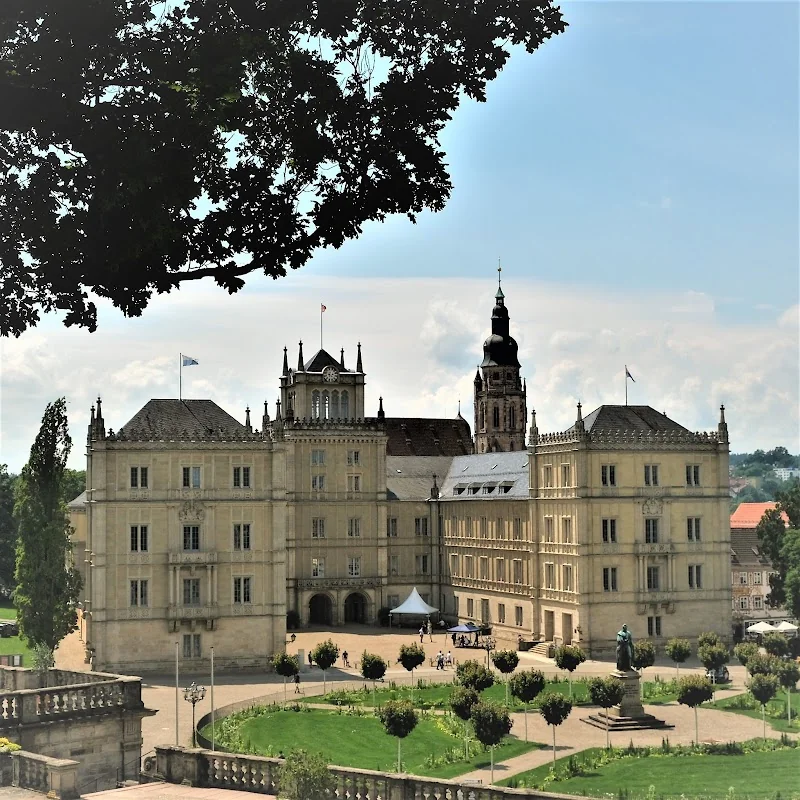
The Schlossplatz in Coburg is not an ordinary town square, but a historically grown center of architecture, culture, and public life. According to the city of Coburg, it lies at the foot of the fortress mountain and is framed by the Ehrenburg, the arcades with the court garden, as well as Palais Edinburgh and the state theater; its current form was shaped in the 19th century. At the same time, the square remains a place for large events: The city lists concerts, the Samba festival, and the annually recurring Schlossplatzfest as fixed components of the program, and several summer highlights at the Schlossplatz appear in the official event calendar for 2026. Those who want to experience Coburg's old town will find a place here where history is not only told but remains visible in everyday life. The Schlossplatz is thus both a place of longing, a stage, and a point of orientation for visitors. ([coburg.de](https://www.coburg.de/coburg-erleben/sehenswuerdigkeiten/schlossplatz/schlossplatz.php))
Events at Schlossplatz Coburg: Open Air, Festival, and City Life
The Schlossplatz is one of the most important event venues in Coburg. The city explicitly describes it as a venue for concerts, performances of the Samba festival, and the annual Schlossplatzfest; the official event portal lists the location entry Schlossplatz, Coburg with map view and travel planning. For visitors, this is particularly convenient, as date, location, and travel can be consolidated in one place. In 2026, the Schlossplatz will be featured multiple times in the calendar: The HUK-COBURG open-air summer runs in two blocks in June and August, the International Samba Festival is scheduled for July 10 to 12, 2026, and the Schlossplatzfest for July 16 to 20, 2026. Thus, the square remains not only historically interesting but also a lively program point in summer with high search relevance for all those looking for events, programs, or today's dates. ([coburg.de](https://www.coburg.de/coburg-erleben/sehenswuerdigkeiten/schlossplatz/schlossplatz.php))
Particularly striking is the combination of historical urban space and modern large events. The city of Coburg speaks of genuine music highlights during the HUK-COBURG open-air summer and emphasizes that not only locals but also music fans from all over Germany appreciate this concert summer. For 2026, the portal mentions Roland Kaiser, Deep Purple, Roxette, Sarah Connor, Powerwolf, Jedermann, and Santiano, among others. The fact that the same square is used for traditional festivals, large open-air shows, and cultural formats makes it particularly relevant for searches related to "events" and "today." Those who keep an eye on the Schlossplatz have not only found a location but a seasonal event hotspot that shapes Coburg's city profile and regularly attracts new visitors. ([veranstaltungen.coburg.de](https://veranstaltungen.coburg.de/details/veranstaltung/huk-coburg-open-air-sommer-5.html))
Parking and Access Around Schlossplatz
For access, it is important to know that there are official short-term and paid parking spaces around the Schlossplatz in the city center. The parking fee regulations of the city of Coburg mention, among other things, Hindenburgstraße and Oberer Bürglaß opposite the Bürglaßschlösschen as paid parking spaces with €0.50 for every started 30 minutes; the maximum parking time there is 30 minutes, and with the use of electronic systems, 60 minutes, each Monday to Saturday from 08:00 to 18:00. Additionally, other central areas such as Oberer Bürglaß near Unterem Bürglaß as well as Ketschengasse, Mohrenstraße, and Webergasse are included in the parking regulations. For many visitors, this is the most important orientation: Not the square itself, but the surrounding streets and parking zones are crucial for regular city visits. ([www1.coburg.de](https://www1.coburg.de/medien/dokumente/stadtpolitik/stadtrecht/141_ParkGebO.pdf))
During large events, the traffic situation changes noticeably. The city of Coburg has pointed out in connection with the HUK-Coburg Open Air that the Schlossplatz can be completely closed for setup work and that adjacent streets such as Oberer Bürglaß, Grafengasse, Rückertstraße, and Steingasse up to the Oberen Anlage may also be affected. In the information example for the action "Coburg blooms," free parking was also allowed on a specific day from 1 PM to 11 PM; access was via Oberer Bürglaß and the state theater. This illustrates very well why the specific date is always important when searching for "parking" or "route": The Schlossplatz is not simply a permanent parking lot, but a versatile city center location whose use varies depending on the event, construction site, or action. Therefore, those who want to be on the safe side should check the event portal and the current traffic situation in advance. ([coburg.de](https://www.coburg.de/mein-coburg/artikel/august/sperrung-open-air.php))
History and Design of the Square
The history of the Schlossplatz is closely linked to the development of Coburg as a residence city. According to city history, the square in front of Schloss Ehrenburg received its current form in the early 19th century; the economic buildings that previously stood there were demolished, and the waters flowing around the north and east sides were filled in 1815. The street history document of the city adds that the Schlossplatz was referred to as the square in front of Schloss Ehrenburg, which was built around 1543 in place of a Franciscan monastery established in 1250. This makes it clear: The location is not a random product of modern urban planning, but the result of many renovations, demolitions, and urban planning decisions that have accumulated over centuries. This layering makes it particularly appealing to history-interested visitors. ([coburg.de](https://www.coburg.de/medien/dokumente/coburg-erleben/stadt-und-stadtgeschichte/strassennamen/Wie_die_Strassen_zu_ihrem_Namen_kamen.pdf))
The current square form was designed, according to the city of Coburg, between 1830 and 1837. In the center stands the monument of Duke Ernst I.; to delineate it from the fortress mountain, the arcades were later erected after the ballroom standing there was demolished in 1840. This also explains the special spatial impression: The Schlossplatz is wide open but simultaneously framed and almost staged. It is thus not only a traffic or event area but a consciously composed urban space with a monument, height reference, and architectural framing. Those searching for "history" or "special features" will find a place here where courtly past, bourgeois urban design, and current use overlap in a remarkably dense way. ([coburg.de](https://www.coburg.de/medien/dokumente/coburg-erleben/stadt-und-stadtgeschichte/strassennamen/Wie_die_Strassen_zu_ihrem_Namen_kamen.pdf))
Ehrenburg, Court Garden, and the Cultural Surroundings
Around the Schlossplatz emerges what the city perceives as a special castle quarter. The official Schlossplatz page names the Ehrenburg, the arcades with the court garden, as well as Palais Edinburgh and the state theater as framing buildings; at the same time, it links to attractions and natural recreation in the immediate vicinity. For visitors, this means: The Schlossplatz is not only worth seeing in itself but also an ideal starting point for a walk through the historical center of Coburg. The Ehrenburg conveys the impression of a residence city, the arcades open the view towards the fortress mountain, and the court garden creates the transition to the green, quiet side of the city. This mixture of architecture, pathways, and vegetation makes the location so attractive for walks, photos, and short cultural breaks. ([coburg.de](https://www.coburg.de/coburg-erleben/sehenswuerdigkeiten/schlossplatz/schlossplatz.php))
The court garden itself is, according to the city of Coburg, an important leisure and recreation destination at the foot of the fortress. It is described as a place for sports, art, and culture and is repeatedly the venue for events throughout the year, from the summer program of the state theater to the offerings of the museum night. The city also explains the historical development: In 1680, a geometrically planned hillside garden was initially laid out, from 1835 it was redesigned into a landscape garden, and under Duke Ernst II, the court garden reached its current size and design by 1860. For the Schlossplatz, this means a special neighborhood: Those standing at the square are in the midst of an ensemble that has grown over centuries and is still shaped by leisure, culture, and urban life today. ([coburg.de](https://www.coburg.de/coburg-erleben/natur-erholung/inhaltsseiten/hofgarten.php))
Schlossplatzfest Coburg 2026 and Other Summer Highlights
In the event calendar for 2026, the Schlossplatz takes on a central role in the Coburg summer. The portal lists not only the HUK-COBURG open-air summer but also the International Samba Festival and the Schlossplatzfest, which is scheduled for July 16 to 20, 2026. Even the description of the open-air summer makes it clear how strongly the square is perceived as an event backdrop: The summer months are reserved in Coburg for special concert experiences in the open air, it is stated in essence on the event page. This is particularly relevant for search queries related to programs, tickets, and dates, as the Schlossplatz is thus one of the places where the seasonal cultural work of the city is presented in concentrated form. ([veranstaltungen.coburg.de](https://veranstaltungen.coburg.de/details/veranstaltung/huk-coburg-open-air-sommer-5.html))
The Schlossplatzfest itself is also a fixed part of this identity. The city describes it as an annually recurring festival at the Schlossplatz, and the event portal lists it as a highlight in its own right. Thus, the square stands for more than individual concerts: It is a recurring festival stage that makes Coburg's city culture visible and creates new occasions year after year to visit the place again. Therefore, those searching for "Schlossplatz Coburg events" or "Schlossplatzfest Coburg" will not find an isolated event location but a square that is permanently present in the official calendars of the city. This continuity is crucial for the perception of the Schlossplatz: It is a summer stage, festival site, and identification place at the same time. ([coburg.de](https://www.coburg.de/coburg-erleben/sehenswuerdigkeiten/schlossplatz/schlossplatz.php))
Practical Tips for Visiting Schlossplatz
For a smooth visit, it is worth taking a look at the official city pages before you set off. The event portal not only offers the map view for the Schlossplatz but also travel planning via the Bayern timetable. This allows for better coordination of travel depending on the date, traffic situation, and personal route. Especially for large summer events, this is sensible because the city regularly points out closures during concerts at the Schlossplatz, and access is temporarily only possible for line buses, official shuttle buses, and emergency vehicles. Therefore, those planning to visit the Schlossplatz for an event, a walk, or a photo tour should keep the date in mind and not just the address. ([veranstaltungen.coburg.de](https://veranstaltungen.coburg.de/details/ort/schlossplatz-coburg.html))
There are also clear regulations in Coburg for people with special mobility needs: The city names several general disabled parking spaces and describes how parking concessions can be applied for. Additionally, it points out that vehicles with electric license plates can park for free in public parking spaces managed by the city up to the maximum parking duration, provided the instructions at the machines are observed. For visitors to the Schlossplatz, this means: Depending on the mode of arrival, the surroundings can be used very differently, which is why the current parking and event information is so important. The Schlossplatz is not a static place, but a lively city center area where culture, traffic, and everyday life regularly meet. Those who plan this will experience the square more relaxed and with significantly more enjoyment. ([www1.coburg.de](https://www1.coburg.de/medien/dokumente/stadtpolitik/stadtrecht/141_ParkGebO.pdf))
Sources:
- Schlossplatz - City of Coburg
- Schlossplatz, Coburg - Event Portal of the City of Coburg
- HUK-Coburg open-air summer - Event Portal of the City of Coburg
- Schlossplatzfest - Event Portal of the City of Coburg
- How the Streets Got Their Names - City of Coburg
- Parking Fee Regulations - City of Coburg
- Streets Along Schlossplatz Closed - City of Coburg
- Coburg Blooms 2026 - City of Coburg
Mehr anzeigenWeniger anzeigen
Schlossplatz Coburg | Events & Parking
The Schlossplatz in Coburg is not an ordinary town square, but a historically grown center of architecture, culture, and public life. According to the city of Coburg, it lies at the foot of the fortress mountain and is framed by the Ehrenburg, the arcades with the court garden, as well as Palais Edinburgh and the state theater; its current form was shaped in the 19th century. At the same time, the square remains a place for large events: The city lists concerts, the Samba festival, and the annually recurring Schlossplatzfest as fixed components of the program, and several summer highlights at the Schlossplatz appear in the official event calendar for 2026. Those who want to experience Coburg's old town will find a place here where history is not only told but remains visible in everyday life. The Schlossplatz is thus both a place of longing, a stage, and a point of orientation for visitors. ([coburg.de](https://www.coburg.de/coburg-erleben/sehenswuerdigkeiten/schlossplatz/schlossplatz.php))
Events at Schlossplatz Coburg: Open Air, Festival, and City Life
The Schlossplatz is one of the most important event venues in Coburg. The city explicitly describes it as a venue for concerts, performances of the Samba festival, and the annual Schlossplatzfest; the official event portal lists the location entry Schlossplatz, Coburg with map view and travel planning. For visitors, this is particularly convenient, as date, location, and travel can be consolidated in one place. In 2026, the Schlossplatz will be featured multiple times in the calendar: The HUK-COBURG open-air summer runs in two blocks in June and August, the International Samba Festival is scheduled for July 10 to 12, 2026, and the Schlossplatzfest for July 16 to 20, 2026. Thus, the square remains not only historically interesting but also a lively program point in summer with high search relevance for all those looking for events, programs, or today's dates. ([coburg.de](https://www.coburg.de/coburg-erleben/sehenswuerdigkeiten/schlossplatz/schlossplatz.php))
Particularly striking is the combination of historical urban space and modern large events. The city of Coburg speaks of genuine music highlights during the HUK-COBURG open-air summer and emphasizes that not only locals but also music fans from all over Germany appreciate this concert summer. For 2026, the portal mentions Roland Kaiser, Deep Purple, Roxette, Sarah Connor, Powerwolf, Jedermann, and Santiano, among others. The fact that the same square is used for traditional festivals, large open-air shows, and cultural formats makes it particularly relevant for searches related to "events" and "today." Those who keep an eye on the Schlossplatz have not only found a location but a seasonal event hotspot that shapes Coburg's city profile and regularly attracts new visitors. ([veranstaltungen.coburg.de](https://veranstaltungen.coburg.de/details/veranstaltung/huk-coburg-open-air-sommer-5.html))
Parking and Access Around Schlossplatz
For access, it is important to know that there are official short-term and paid parking spaces around the Schlossplatz in the city center. The parking fee regulations of the city of Coburg mention, among other things, Hindenburgstraße and Oberer Bürglaß opposite the Bürglaßschlösschen as paid parking spaces with €0.50 for every started 30 minutes; the maximum parking time there is 30 minutes, and with the use of electronic systems, 60 minutes, each Monday to Saturday from 08:00 to 18:00. Additionally, other central areas such as Oberer Bürglaß near Unterem Bürglaß as well as Ketschengasse, Mohrenstraße, and Webergasse are included in the parking regulations. For many visitors, this is the most important orientation: Not the square itself, but the surrounding streets and parking zones are crucial for regular city visits. ([www1.coburg.de](https://www1.coburg.de/medien/dokumente/stadtpolitik/stadtrecht/141_ParkGebO.pdf))
During large events, the traffic situation changes noticeably. The city of Coburg has pointed out in connection with the HUK-Coburg Open Air that the Schlossplatz can be completely closed for setup work and that adjacent streets such as Oberer Bürglaß, Grafengasse, Rückertstraße, and Steingasse up to the Oberen Anlage may also be affected. In the information example for the action "Coburg blooms," free parking was also allowed on a specific day from 1 PM to 11 PM; access was via Oberer Bürglaß and the state theater. This illustrates very well why the specific date is always important when searching for "parking" or "route": The Schlossplatz is not simply a permanent parking lot, but a versatile city center location whose use varies depending on the event, construction site, or action. Therefore, those who want to be on the safe side should check the event portal and the current traffic situation in advance. ([coburg.de](https://www.coburg.de/mein-coburg/artikel/august/sperrung-open-air.php))
History and Design of the Square
The history of the Schlossplatz is closely linked to the development of Coburg as a residence city. According to city history, the square in front of Schloss Ehrenburg received its current form in the early 19th century; the economic buildings that previously stood there were demolished, and the waters flowing around the north and east sides were filled in 1815. The street history document of the city adds that the Schlossplatz was referred to as the square in front of Schloss Ehrenburg, which was built around 1543 in place of a Franciscan monastery established in 1250. This makes it clear: The location is not a random product of modern urban planning, but the result of many renovations, demolitions, and urban planning decisions that have accumulated over centuries. This layering makes it particularly appealing to history-interested visitors. ([coburg.de](https://www.coburg.de/medien/dokumente/coburg-erleben/stadt-und-stadtgeschichte/strassennamen/Wie_die_Strassen_zu_ihrem_Namen_kamen.pdf))
The current square form was designed, according to the city of Coburg, between 1830 and 1837. In the center stands the monument of Duke Ernst I.; to delineate it from the fortress mountain, the arcades were later erected after the ballroom standing there was demolished in 1840. This also explains the special spatial impression: The Schlossplatz is wide open but simultaneously framed and almost staged. It is thus not only a traffic or event area but a consciously composed urban space with a monument, height reference, and architectural framing. Those searching for "history" or "special features" will find a place here where courtly past, bourgeois urban design, and current use overlap in a remarkably dense way. ([coburg.de](https://www.coburg.de/medien/dokumente/coburg-erleben/stadt-und-stadtgeschichte/strassennamen/Wie_die_Strassen_zu_ihrem_Namen_kamen.pdf))
Ehrenburg, Court Garden, and the Cultural Surroundings
Around the Schlossplatz emerges what the city perceives as a special castle quarter. The official Schlossplatz page names the Ehrenburg, the arcades with the court garden, as well as Palais Edinburgh and the state theater as framing buildings; at the same time, it links to attractions and natural recreation in the immediate vicinity. For visitors, this means: The Schlossplatz is not only worth seeing in itself but also an ideal starting point for a walk through the historical center of Coburg. The Ehrenburg conveys the impression of a residence city, the arcades open the view towards the fortress mountain, and the court garden creates the transition to the green, quiet side of the city. This mixture of architecture, pathways, and vegetation makes the location so attractive for walks, photos, and short cultural breaks. ([coburg.de](https://www.coburg.de/coburg-erleben/sehenswuerdigkeiten/schlossplatz/schlossplatz.php))
The court garden itself is, according to the city of Coburg, an important leisure and recreation destination at the foot of the fortress. It is described as a place for sports, art, and culture and is repeatedly the venue for events throughout the year, from the summer program of the state theater to the offerings of the museum night. The city also explains the historical development: In 1680, a geometrically planned hillside garden was initially laid out, from 1835 it was redesigned into a landscape garden, and under Duke Ernst II, the court garden reached its current size and design by 1860. For the Schlossplatz, this means a special neighborhood: Those standing at the square are in the midst of an ensemble that has grown over centuries and is still shaped by leisure, culture, and urban life today. ([coburg.de](https://www.coburg.de/coburg-erleben/natur-erholung/inhaltsseiten/hofgarten.php))
Schlossplatzfest Coburg 2026 and Other Summer Highlights
In the event calendar for 2026, the Schlossplatz takes on a central role in the Coburg summer. The portal lists not only the HUK-COBURG open-air summer but also the International Samba Festival and the Schlossplatzfest, which is scheduled for July 16 to 20, 2026. Even the description of the open-air summer makes it clear how strongly the square is perceived as an event backdrop: The summer months are reserved in Coburg for special concert experiences in the open air, it is stated in essence on the event page. This is particularly relevant for search queries related to programs, tickets, and dates, as the Schlossplatz is thus one of the places where the seasonal cultural work of the city is presented in concentrated form. ([veranstaltungen.coburg.de](https://veranstaltungen.coburg.de/details/veranstaltung/huk-coburg-open-air-sommer-5.html))
The Schlossplatzfest itself is also a fixed part of this identity. The city describes it as an annually recurring festival at the Schlossplatz, and the event portal lists it as a highlight in its own right. Thus, the square stands for more than individual concerts: It is a recurring festival stage that makes Coburg's city culture visible and creates new occasions year after year to visit the place again. Therefore, those searching for "Schlossplatz Coburg events" or "Schlossplatzfest Coburg" will not find an isolated event location but a square that is permanently present in the official calendars of the city. This continuity is crucial for the perception of the Schlossplatz: It is a summer stage, festival site, and identification place at the same time. ([coburg.de](https://www.coburg.de/coburg-erleben/sehenswuerdigkeiten/schlossplatz/schlossplatz.php))
Practical Tips for Visiting Schlossplatz
For a smooth visit, it is worth taking a look at the official city pages before you set off. The event portal not only offers the map view for the Schlossplatz but also travel planning via the Bayern timetable. This allows for better coordination of travel depending on the date, traffic situation, and personal route. Especially for large summer events, this is sensible because the city regularly points out closures during concerts at the Schlossplatz, and access is temporarily only possible for line buses, official shuttle buses, and emergency vehicles. Therefore, those planning to visit the Schlossplatz for an event, a walk, or a photo tour should keep the date in mind and not just the address. ([veranstaltungen.coburg.de](https://veranstaltungen.coburg.de/details/ort/schlossplatz-coburg.html))
There are also clear regulations in Coburg for people with special mobility needs: The city names several general disabled parking spaces and describes how parking concessions can be applied for. Additionally, it points out that vehicles with electric license plates can park for free in public parking spaces managed by the city up to the maximum parking duration, provided the instructions at the machines are observed. For visitors to the Schlossplatz, this means: Depending on the mode of arrival, the surroundings can be used very differently, which is why the current parking and event information is so important. The Schlossplatz is not a static place, but a lively city center area where culture, traffic, and everyday life regularly meet. Those who plan this will experience the square more relaxed and with significantly more enjoyment. ([www1.coburg.de](https://www1.coburg.de/medien/dokumente/stadtpolitik/stadtrecht/141_ParkGebO.pdf))
Sources:
- Schlossplatz - City of Coburg
- Schlossplatz, Coburg - Event Portal of the City of Coburg
- HUK-Coburg open-air summer - Event Portal of the City of Coburg
- Schlossplatzfest - Event Portal of the City of Coburg
- How the Streets Got Their Names - City of Coburg
- Parking Fee Regulations - City of Coburg
- Streets Along Schlossplatz Closed - City of Coburg
- Coburg Blooms 2026 - City of Coburg
Schlossplatz Coburg | Events & Parking
The Schlossplatz in Coburg is not an ordinary town square, but a historically grown center of architecture, culture, and public life. According to the city of Coburg, it lies at the foot of the fortress mountain and is framed by the Ehrenburg, the arcades with the court garden, as well as Palais Edinburgh and the state theater; its current form was shaped in the 19th century. At the same time, the square remains a place for large events: The city lists concerts, the Samba festival, and the annually recurring Schlossplatzfest as fixed components of the program, and several summer highlights at the Schlossplatz appear in the official event calendar for 2026. Those who want to experience Coburg's old town will find a place here where history is not only told but remains visible in everyday life. The Schlossplatz is thus both a place of longing, a stage, and a point of orientation for visitors. ([coburg.de](https://www.coburg.de/coburg-erleben/sehenswuerdigkeiten/schlossplatz/schlossplatz.php))
Events at Schlossplatz Coburg: Open Air, Festival, and City Life
The Schlossplatz is one of the most important event venues in Coburg. The city explicitly describes it as a venue for concerts, performances of the Samba festival, and the annual Schlossplatzfest; the official event portal lists the location entry Schlossplatz, Coburg with map view and travel planning. For visitors, this is particularly convenient, as date, location, and travel can be consolidated in one place. In 2026, the Schlossplatz will be featured multiple times in the calendar: The HUK-COBURG open-air summer runs in two blocks in June and August, the International Samba Festival is scheduled for July 10 to 12, 2026, and the Schlossplatzfest for July 16 to 20, 2026. Thus, the square remains not only historically interesting but also a lively program point in summer with high search relevance for all those looking for events, programs, or today's dates. ([coburg.de](https://www.coburg.de/coburg-erleben/sehenswuerdigkeiten/schlossplatz/schlossplatz.php))
Particularly striking is the combination of historical urban space and modern large events. The city of Coburg speaks of genuine music highlights during the HUK-COBURG open-air summer and emphasizes that not only locals but also music fans from all over Germany appreciate this concert summer. For 2026, the portal mentions Roland Kaiser, Deep Purple, Roxette, Sarah Connor, Powerwolf, Jedermann, and Santiano, among others. The fact that the same square is used for traditional festivals, large open-air shows, and cultural formats makes it particularly relevant for searches related to "events" and "today." Those who keep an eye on the Schlossplatz have not only found a location but a seasonal event hotspot that shapes Coburg's city profile and regularly attracts new visitors. ([veranstaltungen.coburg.de](https://veranstaltungen.coburg.de/details/veranstaltung/huk-coburg-open-air-sommer-5.html))
Parking and Access Around Schlossplatz
For access, it is important to know that there are official short-term and paid parking spaces around the Schlossplatz in the city center. The parking fee regulations of the city of Coburg mention, among other things, Hindenburgstraße and Oberer Bürglaß opposite the Bürglaßschlösschen as paid parking spaces with €0.50 for every started 30 minutes; the maximum parking time there is 30 minutes, and with the use of electronic systems, 60 minutes, each Monday to Saturday from 08:00 to 18:00. Additionally, other central areas such as Oberer Bürglaß near Unterem Bürglaß as well as Ketschengasse, Mohrenstraße, and Webergasse are included in the parking regulations. For many visitors, this is the most important orientation: Not the square itself, but the surrounding streets and parking zones are crucial for regular city visits. ([www1.coburg.de](https://www1.coburg.de/medien/dokumente/stadtpolitik/stadtrecht/141_ParkGebO.pdf))
During large events, the traffic situation changes noticeably. The city of Coburg has pointed out in connection with the HUK-Coburg Open Air that the Schlossplatz can be completely closed for setup work and that adjacent streets such as Oberer Bürglaß, Grafengasse, Rückertstraße, and Steingasse up to the Oberen Anlage may also be affected. In the information example for the action "Coburg blooms," free parking was also allowed on a specific day from 1 PM to 11 PM; access was via Oberer Bürglaß and the state theater. This illustrates very well why the specific date is always important when searching for "parking" or "route": The Schlossplatz is not simply a permanent parking lot, but a versatile city center location whose use varies depending on the event, construction site, or action. Therefore, those who want to be on the safe side should check the event portal and the current traffic situation in advance. ([coburg.de](https://www.coburg.de/mein-coburg/artikel/august/sperrung-open-air.php))
History and Design of the Square
The history of the Schlossplatz is closely linked to the development of Coburg as a residence city. According to city history, the square in front of Schloss Ehrenburg received its current form in the early 19th century; the economic buildings that previously stood there were demolished, and the waters flowing around the north and east sides were filled in 1815. The street history document of the city adds that the Schlossplatz was referred to as the square in front of Schloss Ehrenburg, which was built around 1543 in place of a Franciscan monastery established in 1250. This makes it clear: The location is not a random product of modern urban planning, but the result of many renovations, demolitions, and urban planning decisions that have accumulated over centuries. This layering makes it particularly appealing to history-interested visitors. ([coburg.de](https://www.coburg.de/medien/dokumente/coburg-erleben/stadt-und-stadtgeschichte/strassennamen/Wie_die_Strassen_zu_ihrem_Namen_kamen.pdf))
The current square form was designed, according to the city of Coburg, between 1830 and 1837. In the center stands the monument of Duke Ernst I.; to delineate it from the fortress mountain, the arcades were later erected after the ballroom standing there was demolished in 1840. This also explains the special spatial impression: The Schlossplatz is wide open but simultaneously framed and almost staged. It is thus not only a traffic or event area but a consciously composed urban space with a monument, height reference, and architectural framing. Those searching for "history" or "special features" will find a place here where courtly past, bourgeois urban design, and current use overlap in a remarkably dense way. ([coburg.de](https://www.coburg.de/medien/dokumente/coburg-erleben/stadt-und-stadtgeschichte/strassennamen/Wie_die_Strassen_zu_ihrem_Namen_kamen.pdf))
Ehrenburg, Court Garden, and the Cultural Surroundings
Around the Schlossplatz emerges what the city perceives as a special castle quarter. The official Schlossplatz page names the Ehrenburg, the arcades with the court garden, as well as Palais Edinburgh and the state theater as framing buildings; at the same time, it links to attractions and natural recreation in the immediate vicinity. For visitors, this means: The Schlossplatz is not only worth seeing in itself but also an ideal starting point for a walk through the historical center of Coburg. The Ehrenburg conveys the impression of a residence city, the arcades open the view towards the fortress mountain, and the court garden creates the transition to the green, quiet side of the city. This mixture of architecture, pathways, and vegetation makes the location so attractive for walks, photos, and short cultural breaks. ([coburg.de](https://www.coburg.de/coburg-erleben/sehenswuerdigkeiten/schlossplatz/schlossplatz.php))
The court garden itself is, according to the city of Coburg, an important leisure and recreation destination at the foot of the fortress. It is described as a place for sports, art, and culture and is repeatedly the venue for events throughout the year, from the summer program of the state theater to the offerings of the museum night. The city also explains the historical development: In 1680, a geometrically planned hillside garden was initially laid out, from 1835 it was redesigned into a landscape garden, and under Duke Ernst II, the court garden reached its current size and design by 1860. For the Schlossplatz, this means a special neighborhood: Those standing at the square are in the midst of an ensemble that has grown over centuries and is still shaped by leisure, culture, and urban life today. ([coburg.de](https://www.coburg.de/coburg-erleben/natur-erholung/inhaltsseiten/hofgarten.php))
Schlossplatzfest Coburg 2026 and Other Summer Highlights
In the event calendar for 2026, the Schlossplatz takes on a central role in the Coburg summer. The portal lists not only the HUK-COBURG open-air summer but also the International Samba Festival and the Schlossplatzfest, which is scheduled for July 16 to 20, 2026. Even the description of the open-air summer makes it clear how strongly the square is perceived as an event backdrop: The summer months are reserved in Coburg for special concert experiences in the open air, it is stated in essence on the event page. This is particularly relevant for search queries related to programs, tickets, and dates, as the Schlossplatz is thus one of the places where the seasonal cultural work of the city is presented in concentrated form. ([veranstaltungen.coburg.de](https://veranstaltungen.coburg.de/details/veranstaltung/huk-coburg-open-air-sommer-5.html))
The Schlossplatzfest itself is also a fixed part of this identity. The city describes it as an annually recurring festival at the Schlossplatz, and the event portal lists it as a highlight in its own right. Thus, the square stands for more than individual concerts: It is a recurring festival stage that makes Coburg's city culture visible and creates new occasions year after year to visit the place again. Therefore, those searching for "Schlossplatz Coburg events" or "Schlossplatzfest Coburg" will not find an isolated event location but a square that is permanently present in the official calendars of the city. This continuity is crucial for the perception of the Schlossplatz: It is a summer stage, festival site, and identification place at the same time. ([coburg.de](https://www.coburg.de/coburg-erleben/sehenswuerdigkeiten/schlossplatz/schlossplatz.php))
Practical Tips for Visiting Schlossplatz
For a smooth visit, it is worth taking a look at the official city pages before you set off. The event portal not only offers the map view for the Schlossplatz but also travel planning via the Bayern timetable. This allows for better coordination of travel depending on the date, traffic situation, and personal route. Especially for large summer events, this is sensible because the city regularly points out closures during concerts at the Schlossplatz, and access is temporarily only possible for line buses, official shuttle buses, and emergency vehicles. Therefore, those planning to visit the Schlossplatz for an event, a walk, or a photo tour should keep the date in mind and not just the address. ([veranstaltungen.coburg.de](https://veranstaltungen.coburg.de/details/ort/schlossplatz-coburg.html))
There are also clear regulations in Coburg for people with special mobility needs: The city names several general disabled parking spaces and describes how parking concessions can be applied for. Additionally, it points out that vehicles with electric license plates can park for free in public parking spaces managed by the city up to the maximum parking duration, provided the instructions at the machines are observed. For visitors to the Schlossplatz, this means: Depending on the mode of arrival, the surroundings can be used very differently, which is why the current parking and event information is so important. The Schlossplatz is not a static place, but a lively city center area where culture, traffic, and everyday life regularly meet. Those who plan this will experience the square more relaxed and with significantly more enjoyment. ([www1.coburg.de](https://www1.coburg.de/medien/dokumente/stadtpolitik/stadtrecht/141_ParkGebO.pdf))
Sources:
- Schlossplatz - City of Coburg
- Schlossplatz, Coburg - Event Portal of the City of Coburg
- HUK-Coburg open-air summer - Event Portal of the City of Coburg
- Schlossplatzfest - Event Portal of the City of Coburg
- How the Streets Got Their Names - City of Coburg
- Parking Fee Regulations - City of Coburg
- Streets Along Schlossplatz Closed - City of Coburg
- Coburg Blooms 2026 - City of Coburg
Upcoming Events
Castle Square Festival
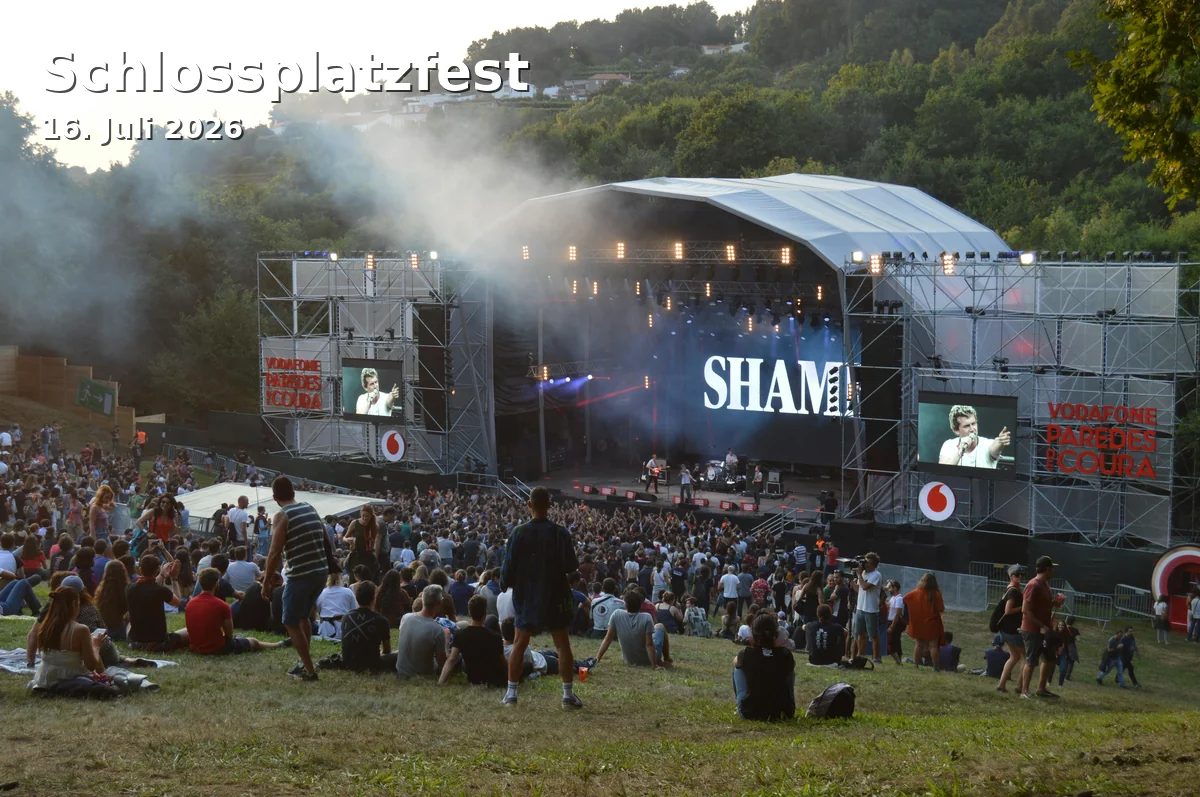
The Castle Square Festival transforms the Coburg Castle Square into a gourmet and stage mile. Be there and enjoy an unforgettable summer festival!

Schlossplatzfest Coburg 2026
Five days of summer, enjoyment, and open-air atmosphere in the heart of Coburg: The Schlossplatzfest 2026 brings music, food, and fireworks together. #Coburg #Festival
Frequently Asked Questions
Reviews
No reviews found