
Coburg
Veste Coburg 1, 96450 Coburg, Deutschland
Veste Coburg | Tours & Tickets
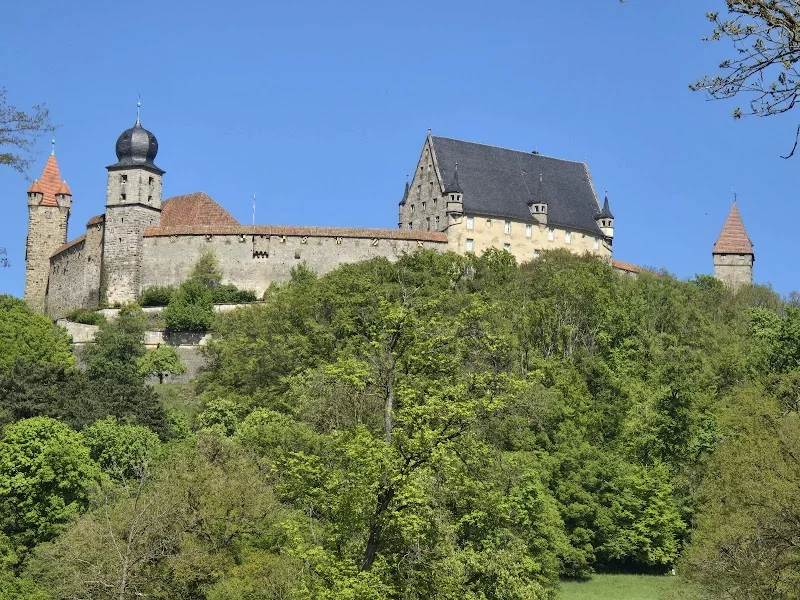
The Veste Coburg is much more than just a castle above the city: it connects a thousand-year history with a vibrant museum operation, historical rooms, changing exhibitions, and a calendar full of tours. Those who visit the site today experience a mix of medieval fortress, courtly representation, and modern cultural mediation. Particularly attractive is the year 2026, when the major exhibition “Coburg | Gotha | 1826. A Duke. Two Residences.” will look back at the founding of the duchy from May 22 to September 20, 2026, while from July 9, 2026, Daniel Nikolaus Chodowiecki will be honored with “Art – Family – Morality” in the studio. Additionally, there are seasonal opening hours from late March to early November and an event program that ranges from classic tours to nighttime cultural formats. ([veste.kunstsammlungen-coburg.de](https://veste.kunstsammlungen-coburg.de/1826-coburg-gotha/))
For planning, it is important to note: The Veste is both a castle and a museum. The historical rooms are located inside the complex, and the collections are closely linked to the building and cannot be separated. That’s why it’s worth thinking of the visit not just as a quick photo stop, but as a tour with enough time. The website of the art collections also offers digital research options, an audio guide at the information desk, and clear visitor information regarding photography, bags, strollers, and barrier-free paths. This way, a trip to the Veste becomes a visit that works for architecture fans, art enthusiasts, and families alike. ([veste.kunstsammlungen-coburg.de](https://veste.kunstsammlungen-coburg.de/en/visit/worth-knowing-faq/))
Tickets, Opening Hours, and Visit Planning
The tickets are simply structured: Adults pay 11 euros, seniors 9 euros, children and teenagers up to 18 years, as well as students and trainees up to 24 years have free admission, and the reduced price for people with disabilities is 7 euros. Groups of 20 or more pay 9 euros per person. Those who want to experience the entire Coburg museum world can also opt for the combination ticket; it is valid for the Veste Coburg, Ehrenburg Palace, the Natural History Museum, Rosenau Palace, and the European Museum of Modern Glass and is valid for one year. Particularly practical is that tickets do not need to be reserved in advance for the visit to the Veste, and public tours in the museum are also possible without prior registration, as long as seats are available. ([veste.kunstsammlungen-coburg.de](https://veste.kunstsammlungen-coburg.de/besuch/eintrittspreise/))
The opening hours for 2026 range from March 28 to November 8, daily from 10:00 AM to 5:00 PM. In the months of April to October, the castle courtyards close at 6:30 PM, allowing for later arrivals or a longer view over Coburg. For breaks in between, there are snack and beverage vending machines in the building, free BayernWLAN in the castle courtyards, the cafeteria, and in the Fürstenbau, as well as the castle tavern in front of the main gate, which is closed on Mondays and Tuesdays. With the ticket, you also gain access through a turnstile to the Covered Battery and thus to the artillery exhibition. Therefore, those looking for tickets want not only to enter the Veste but also to think about the paths, breaks, and additional areas sensibly. ([veste.kunstsammlungen-coburg.de](https://veste.kunstsammlungen-coburg.de/besuch/eintrittspreise/))
Even without a guided tour, the site is worth a visit: All collection halls can be visited independently, hall and object texts provide context, and an audio guide complements the exhibitions on site. For a quick tour, visitors should plan at least a good hour; those who want to take a closer look at the rooms, architecture, and individual objects will need significantly longer. This is precisely the appeal of the Veste Coburg: it is not a museum that one checks off in passing, but a place where history, collection, and spatial effect reinforce each other. ([veste.kunstsammlungen-coburg.de](https://veste.kunstsammlungen-coburg.de/en/visit/worth-knowing-faq/))
Curator Tours, Highlight Tours, and Summer Dates
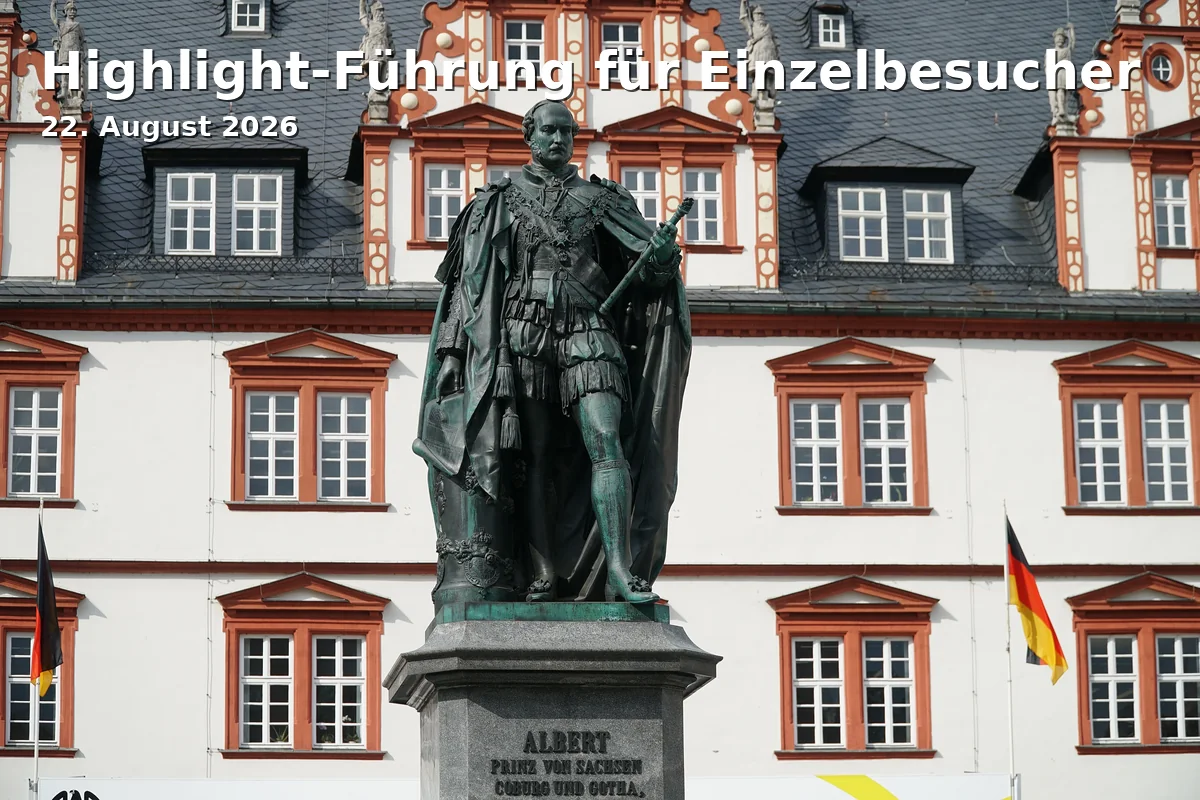
The inquiries about curator tours, highlight tours, and outdoor tours fit well with the actual program of the Veste. Recurring formats include the highlight tour through the Fürstenbau, Great Hall, Hunting Inlay Room, and Luther Room, as well as the outdoor tour through castle courtyards, Bear Bastion, and High Bastion. Additionally, there are curator tours where Dr. Marcus Pilz guides through the special exhibition “Coburg | Gotha | 1826.” For these public offerings, prior registration is not possible; those who arrive early have the best chances of securing a spot. The combination of indoor rooms and outdoor facilities makes these tours so popular because they show the castle once as a residence, once as a fortification, and once as an exhibition venue. ([veste.kunstsammlungen-coburg.de](https://veste.kunstsammlungen-coburg.de/veranstaltungsort/veste-coburg/?utm_source=openai))
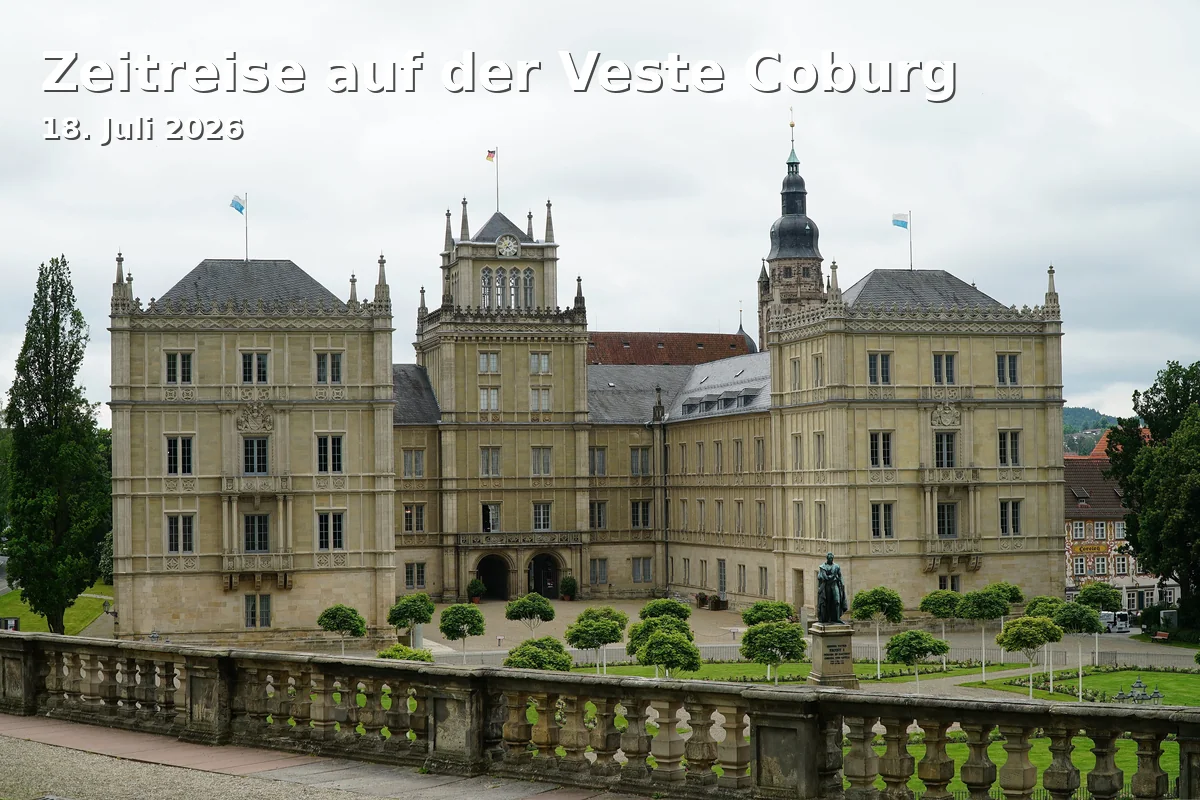
In summer 2026, the themed tours will be complemented by special formats. On July 18 and 19, 2026, the Veste will transform during the “Time Travel at Veste Coburg” into a lively stage for historical groups, crafts, military arts, and interactive moments. A few weeks later, on September 12, 2026, the Coburg Museum Night will take place under the motto “Night of Treasures,” promising a special evening at the Veste with light, music, special exhibitions, and studio exhibitions. It is precisely at such events that one realizes that the Veste is not only a place for quiet contemplation but also for large public cultural moments with families, music, and staging. ([veste.kunstsammlungen-coburg.de](https://veste.kunstsammlungen-coburg.de/zeitreise-auf-der-veste-coburg/?utm_source=openai))
The current exhibition focus for the year 2026 is on the 200th anniversary of the Duchy of Saxe-Coburg and Gotha. The exhibition shows how the inheritance division of 1826 resulted in two residences, two worlds of collections, and two political reference points. Precious works of art, maps, weapons, archival materials, and books tell of power, representation, reforms, and resistance. For those looking for a clear reason to visit, they will find it here: the exhibitions are not only historically grounded but also provide a strong narrative framework for the tours in the same year. ([veste.kunstsammlungen-coburg.de](https://veste.kunstsammlungen-coburg.de/1826-coburg-gotha/))
Access, Parking, and Barrier-Free Paths
The access to the Veste Coburg is well explained, but due to its elevation, one should plan enough time. Visitors can park their cars in the Brandenstein level; from there, a roughly 750-meter footpath leads along the road up to the Veste. Additional parking is available at the kiosk below the complex, and there are parking garages in the city close to the old town as well as an underground garage. Those arriving by city bus can use line 1405 Beiersdorf-Veste. The Veste is also easily accessible on foot from the old town: from the Schlossplatz, there is about a 1.4-kilometer path through the courtyard garden, which should take at least 20 to 30 minutes. ([veste.kunstsammlungen-coburg.de](https://veste.kunstsammlungen-coburg.de/besuch/anreise/))
For guests with mobility impairments, there are additional notes that are important for planning. Disabled parking spaces are located near “am Wall,” the access has been ground down to a width of one meter to facilitate wheelchair movement, and if necessary, one can drive up to the courtyard to disembark there. The entrance, shop, and cafeteria are barrier-free accessible; two elevators provide access to the Duchess's building and the Covered Battery. At the same time, the architectural form of the Veste remains challenging: many rooms are only accessible via stairs, walkers are only conditionally suitable due to the many steps, and some areas are equipped with ramps or a stair climber. This makes it clear that while the Veste facilitates many things, its historical substance remains palpable. ([veste.kunstsammlungen-coburg.de](https://veste.kunstsammlungen-coburg.de/en/visit/accessibility-for-the-disabled/))
History of the Veste Coburg: From Castle to Fortress
Historically, the history of the Veste Coburg begins in the 11th century. The first mention of “Koburk” dates back to 1056, in 1060 a chapel of St. Peter and Paul is mentioned, and in 1075 there is talk of a “monasterio ... Choburgk.” In the 13th century, the monastery became a castle; a document from 1225 already speaks of a “sloss,” and among the oldest parts still recognizable today is the Blue Tower. After the great fire of 1499/1500, the complex was renewed between 1501 and 1504, and the Great Hall with its massive beam ceiling was created as one of the most impressive secular rooms of its time. Therefore, those who walk through these rooms experience not just a reconstructed-looking backdrop but a building whose history can be read through many layers. ([veste.kunstsammlungen-coburg.de](https://veste.kunstsammlungen-coburg.de/en/veste-coburg/from-castle-to-fortress/))
In the 16th and 17th centuries, the Veste further transformed into a fortress. In 1531, Kunz Krebs had a large cistern built, shortly thereafter the High Bastion was constructed. In the 17th century, the last major military bastions were added, including Bear Bastion, Rautenkranz, and Bunter Löwe. In 1632, the Veste was unsuccessfully besieged by Wallenstein, but in 1635 it was captured by Swedish troops through a ruse. This mixture of defensibility, representation, and political significance makes the Veste so special to this day, as its outdoor facilities do not tell a static castle story but a story of constant reconstruction, adaptation, and power shifts. ([veste.kunstsammlungen-coburg.de](https://veste.kunstsammlungen-coburg.de/en/veste-coburg/from-castle-to-fortress/))
From the 18th to the 20th century, the significance changed again. In 1782, the former armory was converted into the High House as a prison, in 1802 the stationed troops were withdrawn, and from 1838 Duke Ernst I had the Veste modified according to plans by Karl Alexander von Heideloff in the spirit of neo-Gothic castle romanticism. Later, the Berlin architect and castle researcher Bodo Ebhardt removed part of these interventions under Carl Eduard of Saxe-Coburg and Gotha and restored the complex between 1910 and 1924 according to the then understanding of its historical origins. Today, the Veste encompasses around 25,000 square meters of castle area, about 10,000 square meters of roof area, 1,863 steps, 727 windows, and 236 shooting holes. These figures illustrate how immense and multifaceted the complex is. ([veste.kunstsammlungen-coburg.de](https://veste.kunstsammlungen-coburg.de/en/veste-coburg/from-castle-to-fortress/))
Historical Rooms, Collections, and Photos for the First Impression
Among the most impressive historical rooms are the Great Hall, the Hunting Inlay Room, and the Fürstenbau. The Great Hall measures 26 by 12 meters and is one of the largest secular rooms of its time; the Hunting Inlay Room was completed in 1632 and is a masterpiece of late Renaissance with 60 inlaid wooden panels. The Fürstenbau is one of the oldest buildings of the Veste, expanded around 1500 as the residence of the Saxon Electors, and was remodeled again between 1910 and 1924 for Carl Eduard, the last reigning duke. Therefore, those who visit these rooms move through representation, craftsmanship, and courtly living culture at the same time. This is one of the main reasons why the Veste Coburg remains so exciting for visitors interested in architecture and interior design. ([veste.kunstsammlungen-coburg.de](https://veste.kunstsammlungen-coburg.de/en/veste-coburg/historical-rooms/))
The collections themselves are also broadly established. The official departments range from paintings and sculptures to crafts, the copper engraving cabinet, historical weapons, as well as carriages and sleds to coins, medals, and orders. This mixture makes the Veste a place where one discovers not just a single theme but an entire cultural history. Particularly practical is that the ticket also includes access to the Covered Battery and thus to the artillery exhibition. Those who explore the complex at leisure should also know that audio guides are available and that the collection halls can also be visited without a guided tour. This makes the Veste suitable for both spontaneous visitors and those who want to focus specifically on individual departments. ([veste.kunstsammlungen-coburg.de](https://veste.kunstsammlungen-coburg.de/))
Those looking for photos will find particularly strong motifs at the Veste: The castle courtyards, the Blue Tower, aerial views, and the view into the second castle courtyard shape the image of the complex. For private recordings, photography in the collection halls is allowed without flash and tripod, as long as it does not concern special exhibitions. The usual deposit rules apply to bags, backpacks, umbrellas, walking sticks, and strollers to protect the historical collections. This creates a visit where the most beautiful impressions may be taken along, but the sensitive rooms are treated with respect. Therefore, those who want to visually get to know the Veste before the visit will find plenty of photo motifs but should observe the museum's rules. ([veste.kunstsammlungen-coburg.de](https://veste.kunstsammlungen-coburg.de/en/veste-coburg/outside-area-of-the-veste/))
Museum Night, Current Highlights, and Why the Visit is Worth It
Another reason for the great attention surrounding the Veste is the Coburg Museum Night. On September 12, 2026, it will take place under the motto “Night of Treasures” and transform the city and the Veste from 6 PM to midnight into a dense backdrop of light, music, and exhibitions. At the Veste, alongside the major anniversary exhibition on the history of Coburg and Gotha, the studio exhibition on Chodowiecki and a light installation in the first castle courtyard will also be in focus. There will be shuttle service between the locations, and parking on the Anger is free that evening. For many visitors, this combination of history, atmosphere, and nighttime staging is what makes the Veste Coburg interesting beyond the classic museum visit. ([veste.kunstsammlungen-coburg.de](https://veste.kunstsammlungen-coburg.de/veranstaltung/coburger-museumsnacht-nacht-der-schaetze/))
Even outside of Museum Night, the Veste remains strong in the program in summer 2026. The time travel on July 18 and 19, curator tours for the exhibition “Coburg | Gotha | 1826,” and the further outdoor tours show that a visit here can be very well combined with a specific event date. Therefore, those looking for tickets, tours, or a special reason for the trip will find an unusually dense connection of castle, museum, anniversary exhibition, and seasonal program at the Veste. This is where its strength lies: One comes for the history, stays for the rooms, and perhaps returns for the next tour or the next exhibition. ([veste.kunstsammlungen-coburg.de](https://veste.kunstsammlungen-coburg.de/zeitreise-auf-der-veste-coburg/?utm_source=openai))
Sources:
Mehr anzeigenWeniger anzeigen
Veste Coburg | Tours & Tickets
The Veste Coburg is much more than just a castle above the city: it connects a thousand-year history with a vibrant museum operation, historical rooms, changing exhibitions, and a calendar full of tours. Those who visit the site today experience a mix of medieval fortress, courtly representation, and modern cultural mediation. Particularly attractive is the year 2026, when the major exhibition “Coburg | Gotha | 1826. A Duke. Two Residences.” will look back at the founding of the duchy from May 22 to September 20, 2026, while from July 9, 2026, Daniel Nikolaus Chodowiecki will be honored with “Art – Family – Morality” in the studio. Additionally, there are seasonal opening hours from late March to early November and an event program that ranges from classic tours to nighttime cultural formats. ([veste.kunstsammlungen-coburg.de](https://veste.kunstsammlungen-coburg.de/1826-coburg-gotha/))
For planning, it is important to note: The Veste is both a castle and a museum. The historical rooms are located inside the complex, and the collections are closely linked to the building and cannot be separated. That’s why it’s worth thinking of the visit not just as a quick photo stop, but as a tour with enough time. The website of the art collections also offers digital research options, an audio guide at the information desk, and clear visitor information regarding photography, bags, strollers, and barrier-free paths. This way, a trip to the Veste becomes a visit that works for architecture fans, art enthusiasts, and families alike. ([veste.kunstsammlungen-coburg.de](https://veste.kunstsammlungen-coburg.de/en/visit/worth-knowing-faq/))
Tickets, Opening Hours, and Visit Planning
The tickets are simply structured: Adults pay 11 euros, seniors 9 euros, children and teenagers up to 18 years, as well as students and trainees up to 24 years have free admission, and the reduced price for people with disabilities is 7 euros. Groups of 20 or more pay 9 euros per person. Those who want to experience the entire Coburg museum world can also opt for the combination ticket; it is valid for the Veste Coburg, Ehrenburg Palace, the Natural History Museum, Rosenau Palace, and the European Museum of Modern Glass and is valid for one year. Particularly practical is that tickets do not need to be reserved in advance for the visit to the Veste, and public tours in the museum are also possible without prior registration, as long as seats are available. ([veste.kunstsammlungen-coburg.de](https://veste.kunstsammlungen-coburg.de/besuch/eintrittspreise/))
The opening hours for 2026 range from March 28 to November 8, daily from 10:00 AM to 5:00 PM. In the months of April to October, the castle courtyards close at 6:30 PM, allowing for later arrivals or a longer view over Coburg. For breaks in between, there are snack and beverage vending machines in the building, free BayernWLAN in the castle courtyards, the cafeteria, and in the Fürstenbau, as well as the castle tavern in front of the main gate, which is closed on Mondays and Tuesdays. With the ticket, you also gain access through a turnstile to the Covered Battery and thus to the artillery exhibition. Therefore, those looking for tickets want not only to enter the Veste but also to think about the paths, breaks, and additional areas sensibly. ([veste.kunstsammlungen-coburg.de](https://veste.kunstsammlungen-coburg.de/besuch/eintrittspreise/))
Even without a guided tour, the site is worth a visit: All collection halls can be visited independently, hall and object texts provide context, and an audio guide complements the exhibitions on site. For a quick tour, visitors should plan at least a good hour; those who want to take a closer look at the rooms, architecture, and individual objects will need significantly longer. This is precisely the appeal of the Veste Coburg: it is not a museum that one checks off in passing, but a place where history, collection, and spatial effect reinforce each other. ([veste.kunstsammlungen-coburg.de](https://veste.kunstsammlungen-coburg.de/en/visit/worth-knowing-faq/))
Curator Tours, Highlight Tours, and Summer Dates
The inquiries about curator tours, highlight tours, and outdoor tours fit well with the actual program of the Veste. Recurring formats include the highlight tour through the Fürstenbau, Great Hall, Hunting Inlay Room, and Luther Room, as well as the outdoor tour through castle courtyards, Bear Bastion, and High Bastion. Additionally, there are curator tours where Dr. Marcus Pilz guides through the special exhibition “Coburg | Gotha | 1826.” For these public offerings, prior registration is not possible; those who arrive early have the best chances of securing a spot. The combination of indoor rooms and outdoor facilities makes these tours so popular because they show the castle once as a residence, once as a fortification, and once as an exhibition venue. ([veste.kunstsammlungen-coburg.de](https://veste.kunstsammlungen-coburg.de/veranstaltungsort/veste-coburg/?utm_source=openai))
In summer 2026, the themed tours will be complemented by special formats. On July 18 and 19, 2026, the Veste will transform during the “Time Travel at Veste Coburg” into a lively stage for historical groups, crafts, military arts, and interactive moments. A few weeks later, on September 12, 2026, the Coburg Museum Night will take place under the motto “Night of Treasures,” promising a special evening at the Veste with light, music, special exhibitions, and studio exhibitions. It is precisely at such events that one realizes that the Veste is not only a place for quiet contemplation but also for large public cultural moments with families, music, and staging. ([veste.kunstsammlungen-coburg.de](https://veste.kunstsammlungen-coburg.de/zeitreise-auf-der-veste-coburg/?utm_source=openai))
The current exhibition focus for the year 2026 is on the 200th anniversary of the Duchy of Saxe-Coburg and Gotha. The exhibition shows how the inheritance division of 1826 resulted in two residences, two worlds of collections, and two political reference points. Precious works of art, maps, weapons, archival materials, and books tell of power, representation, reforms, and resistance. For those looking for a clear reason to visit, they will find it here: the exhibitions are not only historically grounded but also provide a strong narrative framework for the tours in the same year. ([veste.kunstsammlungen-coburg.de](https://veste.kunstsammlungen-coburg.de/1826-coburg-gotha/))
Access, Parking, and Barrier-Free Paths
The access to the Veste Coburg is well explained, but due to its elevation, one should plan enough time. Visitors can park their cars in the Brandenstein level; from there, a roughly 750-meter footpath leads along the road up to the Veste. Additional parking is available at the kiosk below the complex, and there are parking garages in the city close to the old town as well as an underground garage. Those arriving by city bus can use line 1405 Beiersdorf-Veste. The Veste is also easily accessible on foot from the old town: from the Schlossplatz, there is about a 1.4-kilometer path through the courtyard garden, which should take at least 20 to 30 minutes. ([veste.kunstsammlungen-coburg.de](https://veste.kunstsammlungen-coburg.de/besuch/anreise/))
For guests with mobility impairments, there are additional notes that are important for planning. Disabled parking spaces are located near “am Wall,” the access has been ground down to a width of one meter to facilitate wheelchair movement, and if necessary, one can drive up to the courtyard to disembark there. The entrance, shop, and cafeteria are barrier-free accessible; two elevators provide access to the Duchess's building and the Covered Battery. At the same time, the architectural form of the Veste remains challenging: many rooms are only accessible via stairs, walkers are only conditionally suitable due to the many steps, and some areas are equipped with ramps or a stair climber. This makes it clear that while the Veste facilitates many things, its historical substance remains palpable. ([veste.kunstsammlungen-coburg.de](https://veste.kunstsammlungen-coburg.de/en/visit/accessibility-for-the-disabled/))
History of the Veste Coburg: From Castle to Fortress
Historically, the history of the Veste Coburg begins in the 11th century. The first mention of “Koburk” dates back to 1056, in 1060 a chapel of St. Peter and Paul is mentioned, and in 1075 there is talk of a “monasterio ... Choburgk.” In the 13th century, the monastery became a castle; a document from 1225 already speaks of a “sloss,” and among the oldest parts still recognizable today is the Blue Tower. After the great fire of 1499/1500, the complex was renewed between 1501 and 1504, and the Great Hall with its massive beam ceiling was created as one of the most impressive secular rooms of its time. Therefore, those who walk through these rooms experience not just a reconstructed-looking backdrop but a building whose history can be read through many layers. ([veste.kunstsammlungen-coburg.de](https://veste.kunstsammlungen-coburg.de/en/veste-coburg/from-castle-to-fortress/))
In the 16th and 17th centuries, the Veste further transformed into a fortress. In 1531, Kunz Krebs had a large cistern built, shortly thereafter the High Bastion was constructed. In the 17th century, the last major military bastions were added, including Bear Bastion, Rautenkranz, and Bunter Löwe. In 1632, the Veste was unsuccessfully besieged by Wallenstein, but in 1635 it was captured by Swedish troops through a ruse. This mixture of defensibility, representation, and political significance makes the Veste so special to this day, as its outdoor facilities do not tell a static castle story but a story of constant reconstruction, adaptation, and power shifts. ([veste.kunstsammlungen-coburg.de](https://veste.kunstsammlungen-coburg.de/en/veste-coburg/from-castle-to-fortress/))
From the 18th to the 20th century, the significance changed again. In 1782, the former armory was converted into the High House as a prison, in 1802 the stationed troops were withdrawn, and from 1838 Duke Ernst I had the Veste modified according to plans by Karl Alexander von Heideloff in the spirit of neo-Gothic castle romanticism. Later, the Berlin architect and castle researcher Bodo Ebhardt removed part of these interventions under Carl Eduard of Saxe-Coburg and Gotha and restored the complex between 1910 and 1924 according to the then understanding of its historical origins. Today, the Veste encompasses around 25,000 square meters of castle area, about 10,000 square meters of roof area, 1,863 steps, 727 windows, and 236 shooting holes. These figures illustrate how immense and multifaceted the complex is. ([veste.kunstsammlungen-coburg.de](https://veste.kunstsammlungen-coburg.de/en/veste-coburg/from-castle-to-fortress/))
Historical Rooms, Collections, and Photos for the First Impression
Among the most impressive historical rooms are the Great Hall, the Hunting Inlay Room, and the Fürstenbau. The Great Hall measures 26 by 12 meters and is one of the largest secular rooms of its time; the Hunting Inlay Room was completed in 1632 and is a masterpiece of late Renaissance with 60 inlaid wooden panels. The Fürstenbau is one of the oldest buildings of the Veste, expanded around 1500 as the residence of the Saxon Electors, and was remodeled again between 1910 and 1924 for Carl Eduard, the last reigning duke. Therefore, those who visit these rooms move through representation, craftsmanship, and courtly living culture at the same time. This is one of the main reasons why the Veste Coburg remains so exciting for visitors interested in architecture and interior design. ([veste.kunstsammlungen-coburg.de](https://veste.kunstsammlungen-coburg.de/en/veste-coburg/historical-rooms/))
The collections themselves are also broadly established. The official departments range from paintings and sculptures to crafts, the copper engraving cabinet, historical weapons, as well as carriages and sleds to coins, medals, and orders. This mixture makes the Veste a place where one discovers not just a single theme but an entire cultural history. Particularly practical is that the ticket also includes access to the Covered Battery and thus to the artillery exhibition. Those who explore the complex at leisure should also know that audio guides are available and that the collection halls can also be visited without a guided tour. This makes the Veste suitable for both spontaneous visitors and those who want to focus specifically on individual departments. ([veste.kunstsammlungen-coburg.de](https://veste.kunstsammlungen-coburg.de/))
Those looking for photos will find particularly strong motifs at the Veste: The castle courtyards, the Blue Tower, aerial views, and the view into the second castle courtyard shape the image of the complex. For private recordings, photography in the collection halls is allowed without flash and tripod, as long as it does not concern special exhibitions. The usual deposit rules apply to bags, backpacks, umbrellas, walking sticks, and strollers to protect the historical collections. This creates a visit where the most beautiful impressions may be taken along, but the sensitive rooms are treated with respect. Therefore, those who want to visually get to know the Veste before the visit will find plenty of photo motifs but should observe the museum's rules. ([veste.kunstsammlungen-coburg.de](https://veste.kunstsammlungen-coburg.de/en/veste-coburg/outside-area-of-the-veste/))
Museum Night, Current Highlights, and Why the Visit is Worth It
Another reason for the great attention surrounding the Veste is the Coburg Museum Night. On September 12, 2026, it will take place under the motto “Night of Treasures” and transform the city and the Veste from 6 PM to midnight into a dense backdrop of light, music, and exhibitions. At the Veste, alongside the major anniversary exhibition on the history of Coburg and Gotha, the studio exhibition on Chodowiecki and a light installation in the first castle courtyard will also be in focus. There will be shuttle service between the locations, and parking on the Anger is free that evening. For many visitors, this combination of history, atmosphere, and nighttime staging is what makes the Veste Coburg interesting beyond the classic museum visit. ([veste.kunstsammlungen-coburg.de](https://veste.kunstsammlungen-coburg.de/veranstaltung/coburger-museumsnacht-nacht-der-schaetze/))
Even outside of Museum Night, the Veste remains strong in the program in summer 2026. The time travel on July 18 and 19, curator tours for the exhibition “Coburg | Gotha | 1826,” and the further outdoor tours show that a visit here can be very well combined with a specific event date. Therefore, those looking for tickets, tours, or a special reason for the trip will find an unusually dense connection of castle, museum, anniversary exhibition, and seasonal program at the Veste. This is where its strength lies: One comes for the history, stays for the rooms, and perhaps returns for the next tour or the next exhibition. ([veste.kunstsammlungen-coburg.de](https://veste.kunstsammlungen-coburg.de/zeitreise-auf-der-veste-coburg/?utm_source=openai))
Sources:
Veste Coburg | Tours & Tickets
The Veste Coburg is much more than just a castle above the city: it connects a thousand-year history with a vibrant museum operation, historical rooms, changing exhibitions, and a calendar full of tours. Those who visit the site today experience a mix of medieval fortress, courtly representation, and modern cultural mediation. Particularly attractive is the year 2026, when the major exhibition “Coburg | Gotha | 1826. A Duke. Two Residences.” will look back at the founding of the duchy from May 22 to September 20, 2026, while from July 9, 2026, Daniel Nikolaus Chodowiecki will be honored with “Art – Family – Morality” in the studio. Additionally, there are seasonal opening hours from late March to early November and an event program that ranges from classic tours to nighttime cultural formats. ([veste.kunstsammlungen-coburg.de](https://veste.kunstsammlungen-coburg.de/1826-coburg-gotha/))
For planning, it is important to note: The Veste is both a castle and a museum. The historical rooms are located inside the complex, and the collections are closely linked to the building and cannot be separated. That’s why it’s worth thinking of the visit not just as a quick photo stop, but as a tour with enough time. The website of the art collections also offers digital research options, an audio guide at the information desk, and clear visitor information regarding photography, bags, strollers, and barrier-free paths. This way, a trip to the Veste becomes a visit that works for architecture fans, art enthusiasts, and families alike. ([veste.kunstsammlungen-coburg.de](https://veste.kunstsammlungen-coburg.de/en/visit/worth-knowing-faq/))
Tickets, Opening Hours, and Visit Planning
The tickets are simply structured: Adults pay 11 euros, seniors 9 euros, children and teenagers up to 18 years, as well as students and trainees up to 24 years have free admission, and the reduced price for people with disabilities is 7 euros. Groups of 20 or more pay 9 euros per person. Those who want to experience the entire Coburg museum world can also opt for the combination ticket; it is valid for the Veste Coburg, Ehrenburg Palace, the Natural History Museum, Rosenau Palace, and the European Museum of Modern Glass and is valid for one year. Particularly practical is that tickets do not need to be reserved in advance for the visit to the Veste, and public tours in the museum are also possible without prior registration, as long as seats are available. ([veste.kunstsammlungen-coburg.de](https://veste.kunstsammlungen-coburg.de/besuch/eintrittspreise/))
The opening hours for 2026 range from March 28 to November 8, daily from 10:00 AM to 5:00 PM. In the months of April to October, the castle courtyards close at 6:30 PM, allowing for later arrivals or a longer view over Coburg. For breaks in between, there are snack and beverage vending machines in the building, free BayernWLAN in the castle courtyards, the cafeteria, and in the Fürstenbau, as well as the castle tavern in front of the main gate, which is closed on Mondays and Tuesdays. With the ticket, you also gain access through a turnstile to the Covered Battery and thus to the artillery exhibition. Therefore, those looking for tickets want not only to enter the Veste but also to think about the paths, breaks, and additional areas sensibly. ([veste.kunstsammlungen-coburg.de](https://veste.kunstsammlungen-coburg.de/besuch/eintrittspreise/))
Even without a guided tour, the site is worth a visit: All collection halls can be visited independently, hall and object texts provide context, and an audio guide complements the exhibitions on site. For a quick tour, visitors should plan at least a good hour; those who want to take a closer look at the rooms, architecture, and individual objects will need significantly longer. This is precisely the appeal of the Veste Coburg: it is not a museum that one checks off in passing, but a place where history, collection, and spatial effect reinforce each other. ([veste.kunstsammlungen-coburg.de](https://veste.kunstsammlungen-coburg.de/en/visit/worth-knowing-faq/))
Curator Tours, Highlight Tours, and Summer Dates
The inquiries about curator tours, highlight tours, and outdoor tours fit well with the actual program of the Veste. Recurring formats include the highlight tour through the Fürstenbau, Great Hall, Hunting Inlay Room, and Luther Room, as well as the outdoor tour through castle courtyards, Bear Bastion, and High Bastion. Additionally, there are curator tours where Dr. Marcus Pilz guides through the special exhibition “Coburg | Gotha | 1826.” For these public offerings, prior registration is not possible; those who arrive early have the best chances of securing a spot. The combination of indoor rooms and outdoor facilities makes these tours so popular because they show the castle once as a residence, once as a fortification, and once as an exhibition venue. ([veste.kunstsammlungen-coburg.de](https://veste.kunstsammlungen-coburg.de/veranstaltungsort/veste-coburg/?utm_source=openai))
In summer 2026, the themed tours will be complemented by special formats. On July 18 and 19, 2026, the Veste will transform during the “Time Travel at Veste Coburg” into a lively stage for historical groups, crafts, military arts, and interactive moments. A few weeks later, on September 12, 2026, the Coburg Museum Night will take place under the motto “Night of Treasures,” promising a special evening at the Veste with light, music, special exhibitions, and studio exhibitions. It is precisely at such events that one realizes that the Veste is not only a place for quiet contemplation but also for large public cultural moments with families, music, and staging. ([veste.kunstsammlungen-coburg.de](https://veste.kunstsammlungen-coburg.de/zeitreise-auf-der-veste-coburg/?utm_source=openai))
The current exhibition focus for the year 2026 is on the 200th anniversary of the Duchy of Saxe-Coburg and Gotha. The exhibition shows how the inheritance division of 1826 resulted in two residences, two worlds of collections, and two political reference points. Precious works of art, maps, weapons, archival materials, and books tell of power, representation, reforms, and resistance. For those looking for a clear reason to visit, they will find it here: the exhibitions are not only historically grounded but also provide a strong narrative framework for the tours in the same year. ([veste.kunstsammlungen-coburg.de](https://veste.kunstsammlungen-coburg.de/1826-coburg-gotha/))
Access, Parking, and Barrier-Free Paths
The access to the Veste Coburg is well explained, but due to its elevation, one should plan enough time. Visitors can park their cars in the Brandenstein level; from there, a roughly 750-meter footpath leads along the road up to the Veste. Additional parking is available at the kiosk below the complex, and there are parking garages in the city close to the old town as well as an underground garage. Those arriving by city bus can use line 1405 Beiersdorf-Veste. The Veste is also easily accessible on foot from the old town: from the Schlossplatz, there is about a 1.4-kilometer path through the courtyard garden, which should take at least 20 to 30 minutes. ([veste.kunstsammlungen-coburg.de](https://veste.kunstsammlungen-coburg.de/besuch/anreise/))
For guests with mobility impairments, there are additional notes that are important for planning. Disabled parking spaces are located near “am Wall,” the access has been ground down to a width of one meter to facilitate wheelchair movement, and if necessary, one can drive up to the courtyard to disembark there. The entrance, shop, and cafeteria are barrier-free accessible; two elevators provide access to the Duchess's building and the Covered Battery. At the same time, the architectural form of the Veste remains challenging: many rooms are only accessible via stairs, walkers are only conditionally suitable due to the many steps, and some areas are equipped with ramps or a stair climber. This makes it clear that while the Veste facilitates many things, its historical substance remains palpable. ([veste.kunstsammlungen-coburg.de](https://veste.kunstsammlungen-coburg.de/en/visit/accessibility-for-the-disabled/))
History of the Veste Coburg: From Castle to Fortress
Historically, the history of the Veste Coburg begins in the 11th century. The first mention of “Koburk” dates back to 1056, in 1060 a chapel of St. Peter and Paul is mentioned, and in 1075 there is talk of a “monasterio ... Choburgk.” In the 13th century, the monastery became a castle; a document from 1225 already speaks of a “sloss,” and among the oldest parts still recognizable today is the Blue Tower. After the great fire of 1499/1500, the complex was renewed between 1501 and 1504, and the Great Hall with its massive beam ceiling was created as one of the most impressive secular rooms of its time. Therefore, those who walk through these rooms experience not just a reconstructed-looking backdrop but a building whose history can be read through many layers. ([veste.kunstsammlungen-coburg.de](https://veste.kunstsammlungen-coburg.de/en/veste-coburg/from-castle-to-fortress/))
In the 16th and 17th centuries, the Veste further transformed into a fortress. In 1531, Kunz Krebs had a large cistern built, shortly thereafter the High Bastion was constructed. In the 17th century, the last major military bastions were added, including Bear Bastion, Rautenkranz, and Bunter Löwe. In 1632, the Veste was unsuccessfully besieged by Wallenstein, but in 1635 it was captured by Swedish troops through a ruse. This mixture of defensibility, representation, and political significance makes the Veste so special to this day, as its outdoor facilities do not tell a static castle story but a story of constant reconstruction, adaptation, and power shifts. ([veste.kunstsammlungen-coburg.de](https://veste.kunstsammlungen-coburg.de/en/veste-coburg/from-castle-to-fortress/))
From the 18th to the 20th century, the significance changed again. In 1782, the former armory was converted into the High House as a prison, in 1802 the stationed troops were withdrawn, and from 1838 Duke Ernst I had the Veste modified according to plans by Karl Alexander von Heideloff in the spirit of neo-Gothic castle romanticism. Later, the Berlin architect and castle researcher Bodo Ebhardt removed part of these interventions under Carl Eduard of Saxe-Coburg and Gotha and restored the complex between 1910 and 1924 according to the then understanding of its historical origins. Today, the Veste encompasses around 25,000 square meters of castle area, about 10,000 square meters of roof area, 1,863 steps, 727 windows, and 236 shooting holes. These figures illustrate how immense and multifaceted the complex is. ([veste.kunstsammlungen-coburg.de](https://veste.kunstsammlungen-coburg.de/en/veste-coburg/from-castle-to-fortress/))
Historical Rooms, Collections, and Photos for the First Impression
Among the most impressive historical rooms are the Great Hall, the Hunting Inlay Room, and the Fürstenbau. The Great Hall measures 26 by 12 meters and is one of the largest secular rooms of its time; the Hunting Inlay Room was completed in 1632 and is a masterpiece of late Renaissance with 60 inlaid wooden panels. The Fürstenbau is one of the oldest buildings of the Veste, expanded around 1500 as the residence of the Saxon Electors, and was remodeled again between 1910 and 1924 for Carl Eduard, the last reigning duke. Therefore, those who visit these rooms move through representation, craftsmanship, and courtly living culture at the same time. This is one of the main reasons why the Veste Coburg remains so exciting for visitors interested in architecture and interior design. ([veste.kunstsammlungen-coburg.de](https://veste.kunstsammlungen-coburg.de/en/veste-coburg/historical-rooms/))
The collections themselves are also broadly established. The official departments range from paintings and sculptures to crafts, the copper engraving cabinet, historical weapons, as well as carriages and sleds to coins, medals, and orders. This mixture makes the Veste a place where one discovers not just a single theme but an entire cultural history. Particularly practical is that the ticket also includes access to the Covered Battery and thus to the artillery exhibition. Those who explore the complex at leisure should also know that audio guides are available and that the collection halls can also be visited without a guided tour. This makes the Veste suitable for both spontaneous visitors and those who want to focus specifically on individual departments. ([veste.kunstsammlungen-coburg.de](https://veste.kunstsammlungen-coburg.de/))
Those looking for photos will find particularly strong motifs at the Veste: The castle courtyards, the Blue Tower, aerial views, and the view into the second castle courtyard shape the image of the complex. For private recordings, photography in the collection halls is allowed without flash and tripod, as long as it does not concern special exhibitions. The usual deposit rules apply to bags, backpacks, umbrellas, walking sticks, and strollers to protect the historical collections. This creates a visit where the most beautiful impressions may be taken along, but the sensitive rooms are treated with respect. Therefore, those who want to visually get to know the Veste before the visit will find plenty of photo motifs but should observe the museum's rules. ([veste.kunstsammlungen-coburg.de](https://veste.kunstsammlungen-coburg.de/en/veste-coburg/outside-area-of-the-veste/))
Museum Night, Current Highlights, and Why the Visit is Worth It
Another reason for the great attention surrounding the Veste is the Coburg Museum Night. On September 12, 2026, it will take place under the motto “Night of Treasures” and transform the city and the Veste from 6 PM to midnight into a dense backdrop of light, music, and exhibitions. At the Veste, alongside the major anniversary exhibition on the history of Coburg and Gotha, the studio exhibition on Chodowiecki and a light installation in the first castle courtyard will also be in focus. There will be shuttle service between the locations, and parking on the Anger is free that evening. For many visitors, this combination of history, atmosphere, and nighttime staging is what makes the Veste Coburg interesting beyond the classic museum visit. ([veste.kunstsammlungen-coburg.de](https://veste.kunstsammlungen-coburg.de/veranstaltung/coburger-museumsnacht-nacht-der-schaetze/))
Even outside of Museum Night, the Veste remains strong in the program in summer 2026. The time travel on July 18 and 19, curator tours for the exhibition “Coburg | Gotha | 1826,” and the further outdoor tours show that a visit here can be very well combined with a specific event date. Therefore, those looking for tickets, tours, or a special reason for the trip will find an unusually dense connection of castle, museum, anniversary exhibition, and seasonal program at the Veste. This is where its strength lies: One comes for the history, stays for the rooms, and perhaps returns for the next tour or the next exhibition. ([veste.kunstsammlungen-coburg.de](https://veste.kunstsammlungen-coburg.de/zeitreise-auf-der-veste-coburg/?utm_source=openai))
Sources:
Upcoming Events
Frequently Asked Questions
Reviews
No reviews found