
Alexander von Zemlinsky
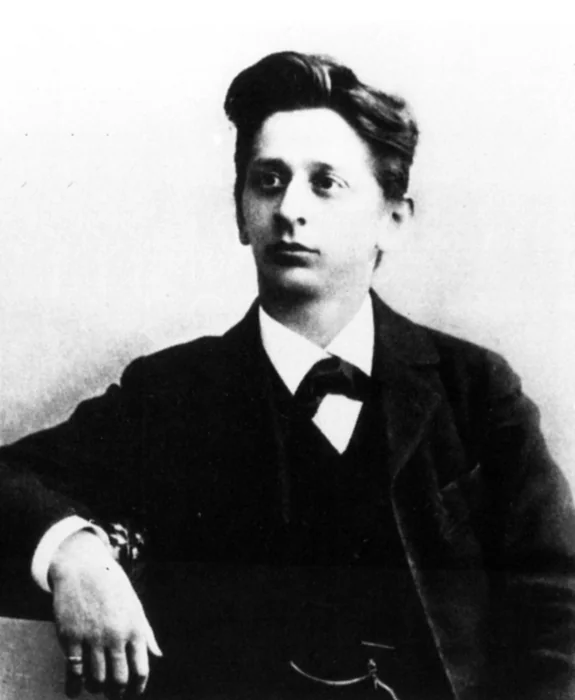
Image from Wikipedia
Image from Wikipedia
Alexander von Zemlinsky – Between Late Romanticism and Modernism
A composer of transitions, a conductor of distinction, a voice between the eras
Alexander von Zemlinsky is one of the defining figures in Vienna and Central European music around 1900. The composer and conductor, born in Vienna, stood at a pivotal intersection artistically: he emerged from the Brahms tradition, opened his musical language to modernity, yet remained committed to tonality. It is precisely from this tension that his music derives its enduring fascination. ([britannica.com](https://www.britannica.com/biography/Alexander-Zemlinsky))
Biography: Viennese origins, early support, first recognition
Zemlinsky was born on October 14, 1871, in Vienna and died on March 15, 1942, in Larchmont near New York. His father was the writer and journalist Adolf von Zemlinszky; thus, his familial and cultural background was set in an environment where language, art, and public life were closely intertwined. He demonstrated his talent as a composer and conductor from a young age, with the Viennese press recognizing him as a gifted representative of the Brahms legacy. ([deutsche-biographie.de](https://www.deutsche-biographie.de/gnd11863643X.html))
For Zemlinsky, Vienna meant not only origin but also an artistic proving ground. Despite early attention, he did not achieve the huge breakthrough in the Austrian capital, although he was perceived as a musical figure of significance. His career exemplifies how challenging it was for innovative composers of that time to secure a lasting foothold amid tradition, institutions, and aesthetic change. ([zemlinsky.at](https://www.zemlinsky.at/de/biographie))
Career as a conductor: Theatre practice, operetta business, and musical authority
After 1900, Zemlinsky consolidated his position in Vienna primarily as a conductor. From 1900 to 1904, he worked at the Carl-Theater and the Theater an der Wien, where he was initially entrusted mainly with operettas; starting in 1904, he also conducted at the Volksoper and briefly at the Hofoper. This theatrical practice sharpened his insight into dramaturgy, vocal line, and orchestral effect. ([zemlinsky.at](https://www.zemlinsky.at/de/biographie))
Later, he became director of the New German Theatre in Prague, where he not only focused on his own works but also embraced modern program policies. He vigorously promoted the music of the Second Viennese School, conducting the premiere of Schönberg's Erwartung and programming works by Berg and Webern. Thus, Zemlinsky was not just a composer, but also a mediator of an entire aesthetic movement. ([universaledition.com](https://www.universaledition.com/Personen/Alexander-Zemlinsky/))
Exile and upheaval: Escape from National Socialism
In 1933, the rise of the National Socialists compelled Zemlinsky to return to Vienna and thwarted his impending breakthrough as an opera composer in Germany with The Chalk Circle. In 1938, he fled with his second wife via Prague and Rotterdam to New York. There, he could not find a fresh start professionally; health setbacks and political catastrophe marked his final years. ([deutsche-biographie.de](https://www.deutsche-biographie.de/gnd11863643X.html))
The exile phase marks a tragic rupture in a career already fraught with uncertainty. Zemlinsky reached the United States as a broken man, composed only a few occasional works, and died after several strokes. His life story thus also symbolizes the losses of European music culture in the 20th century. ([zemlinsky.at](https://www.zemlinsky.at/de/biographie))
Musical development: Late Romanticism, expanded tonality, and expressive harmony
As a composer, Zemlinsky began in the style of the Brahms school, but quickly developed an individual language with finely balanced harmonies and dense motivic work. According to the Doblinger Verlag, he remained within tonality, although he clearly left traditional patterns behind and did not adopt the twelve-tone technique of his brother-in-law Arnold Schönberg. It is exactly this position between late Romanticism and new music that defines his stature. ([doblinger-musikverlag.at](https://www.doblinger-musikverlag.at/de/komponistinnen/zemlinsky-alexander-235))
His works reflect the productive tension between acoustic sensuality and formal rigor that concerned many composers around 1900. Zemlinsky wrote operas, orchestral works, chamber music, songs, and choral works; in all these genres, he combines melodic expressiveness with harmonic density and strong dramatic gesture. His music never comes across as mere imitation but rather as an independent continuation of the late Romantic idiom towards modernity. ([doblinger-musikverlag.at](https://www.doblinger-musikverlag.at/de/komponistinnen/zemlinsky-alexander-235))
Discography and key works: Opera, song, symphony
Among his most well-known works are the operas A Florentine Tragedy and The Dwarf, both after Oscar Wilde. Additionally, research particularly highlights the Lyrical Symphony for soprano, baritone, and orchestra, which is considered one of his central orchestral works. The Songs set to Maeterlinck's texts are also held in high esteem. ([britannica.com](https://www.britannica.com/biography/Alexander-Zemlinsky))
Apple Music Classical additionally lists the Mermaid, the Clarinet Trio in D minor, the First and Second Symphonies, Psalm 13, as well as the 6 Songs among the renowned works. This selection illustrates the broad scope of Zemlinsky's oeuvre: he was not only an opera composer, but also a versatile composer with a strong sense of formal balance and orchestral color. ([classical.music.apple.com](https://classical.music.apple.com/de/artist/4353059))
Critical reception: From neglect to renaissance
After his death, Zemlinsky's music fell into obscurity for decades. It was not until the 1970s that a broad rediscovery began, fostered by performances, recordings, and the scientific examination of his biography. The Hamburg premiere of The King Kandaules in 1996 is considered the completion of this recovery, according to the portrayal by the Zemlinsky Initiative. ([zemlinsky.at](https://www.zemlinsky.at/de/biographie))
Universal Edition describes him as a composer at the intersection of romantic tradition and the avant-garde of the Schönberg circle. At the same time, the publisher points out that his work has returned to concert halls and opera houses since the 1980s, thanks in part to the LaSalle Quartet and important staged rediscoveries. This reception shows: Zemlinsky is not a marginal name, but a central building block in music history between late Romanticism and musical modernity. ([universaledition.com](https://www.universaledition.com/Personen/Alexander-Zemlinsky/))
Cultural influence: Between Vienna, Prague, and New York
Zemlinsky's impact goes beyond individual works. He represented an art of transition that did not rupture the late Romantic expressiveness but rather transformed it into new contexts. His work as a conductor in Vienna and Prague, his closeness to Mahler and Schönberg, as well as his role as a mediator of new music influenced an entire generation of listeners and musicians. ([universaledition.com](https://www.universaledition.com/Personen/Alexander-Zemlinsky/))
His late rediscovery also holds cultural historical significance. That Zemlinsky is once again present on programs, recordings, and in musicological debates today is due not only to his compositional technique but also to the emotional power of his works. He embodies the Vienna of the transitional period, the ruptures of exile, and the lasting strength of music that cannot be reduced to slogans. ([zemlinsky.at](https://www.zemlinsky.at/de/biographie))
Current projects and publications
As Alexander von Zemlinsky died in 1942, there are no current artistic projects in the strictest sense. The present-day prominence of his name arises primarily from re-releases, recordings, and the continuous maintenance of his oeuvre in concert and opera houses. Apple Music Classical continues to feature him with well-known works and current catalog entries, underscoring the ongoing relevance of his creations. ([classical.music.apple.com](https://classical.music.apple.com/de/artist/4353059))
Conclusion: An underrated master with great emotional depth
Alexander von Zemlinsky fascinates because his music connects historical epochs without ever dissolving into any one of them. He wrote works of high dramatic tension, elegant craftsmanship, and harmonies that shimmer between tradition and innovation. Those who want to experience late Romantic modernism in its finest form should listen to Zemlinsky and engage with his sound world live. ([britannica.com](https://www.britannica.com/biography/Alexander-Zemlinsky))
Official channels of Alexander von Zemlinsky:
- Instagram: No official profile found
- Facebook: No official profile found
- YouTube: No official profile found
- Spotify: No official profile found
- TikTok: No official profile found