
Anne-Sophie Mutter
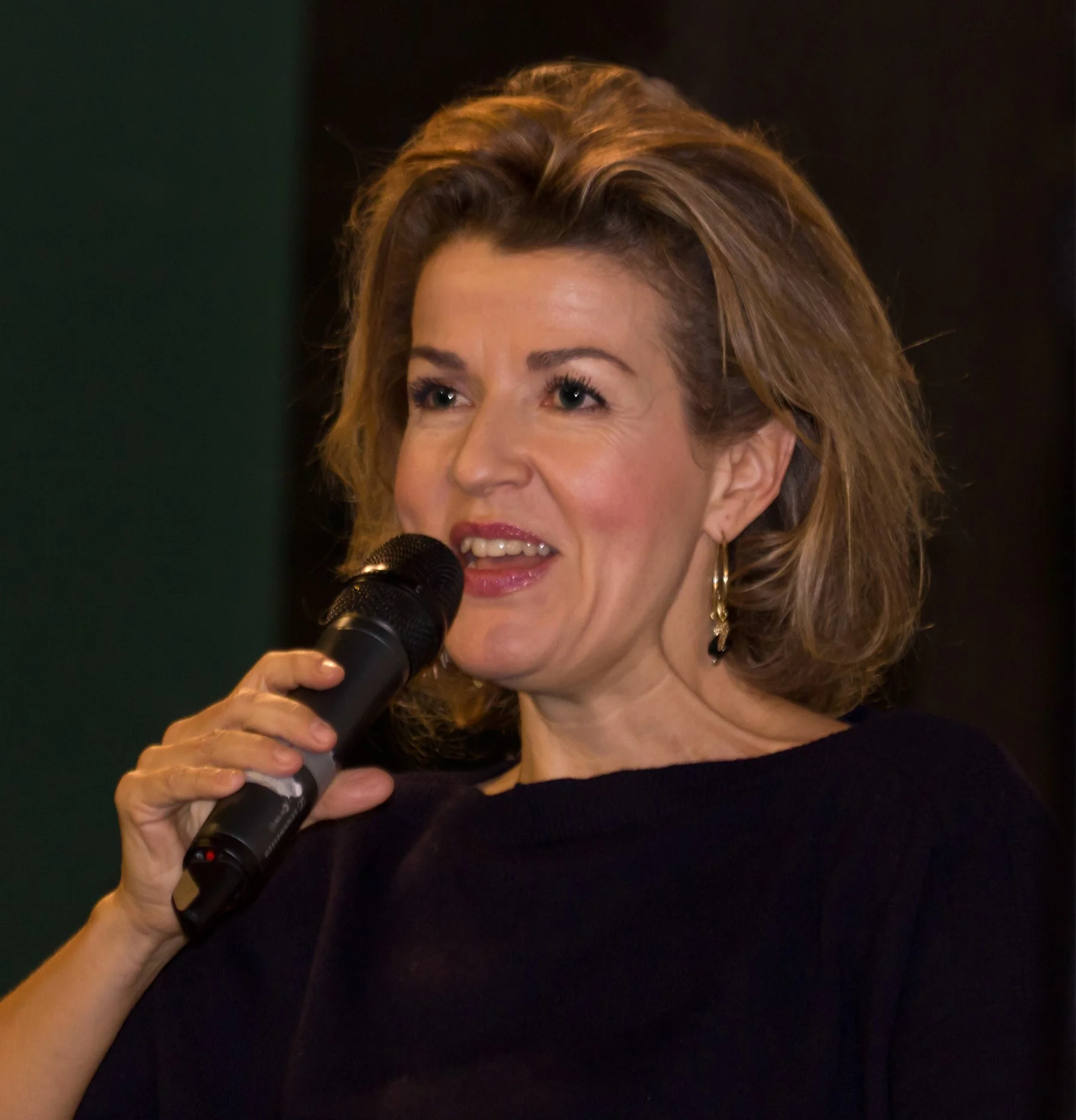
Image from Wikipedia
Image from Wikipedia
Anne-Sophie Mutter – The Violinist Who Sets Standards
Virtuoso, Visionary, Mediator: How Anne-Sophie Mutter Has Shaped Classical Music for Decades
Anne-Sophie Mutter, born on June 29, 1963, in Rheinfelden, embodies the rare combination of technical sovereignty, sonic poetry, and artistic development. Since her early breakthrough in the late 1970s, the German violinist has been one of the most influential voices in classical music. Her music career spans nearly five decades, characterized by iconic recordings, world premieres, and an extraordinary stage presence. Whether as a soloist with the world’s leading orchestras, as a chamber musician, or as a mentor, Mutter blends tradition and modernity into a distinctive artistic identity.
Promoted at an early age and appreciated by great conductors, she developed a repertoire that ranges from the classical-romantic canon to contemporary compositions. She not only masters the great violin concertos but also reinterprets entire musical landscapes with a keen sense for timbre, phrasing, and architecture. Her discography documents an uncompromising quest for expression, meaning, and contemporaneity.
From Prodigy to World Artist: The Formative Beginnings
As a musical prodigy, Mutter made waves at the age of 13 when Herbert von Karajan introduced her to the Berlin Philharmonic in 1977. These early years laid the foundation for an international career that took her to the major music centers of Europe, North America, and Asia. Crucial was not only her virtuosity but also Mutter’s ability to translate form, structure, and emotion into a clear dramaturgy—a rare synthesis of analytical precision and emotional immediacy.
Early on, she began to expand the role of the interpreter: not merely to reproduce, but to co-author music history—this ambition shaped her programs, recordings, and premieres. In this way, the aura of youthful sensation transformed into the authority of a mature artist who expands the discourse on interpretation, ideal sound, and repertoire.
Instruments, Sound, and Technique: The Art of Tone
Mutter plays on historical master instruments, including the Stradivarius "Emiliani" (1703) and the "Lord Dunn-Raven" (1710). Her tone combines core and warmth, projection and cantabile line; the vibrato serves her as a means of coloristic expression rather than an end in itself. Characteristic are her smooth, highly refined bow technique, sophisticated articulation, and a balance of attack and legato that maintains transparency even in virtuosic passages. In her recordings, one can hear an awareness of composition and arrangement, as well as a balance between solo voice and orchestral voices—an expertise she also cultivates in chamber musical formations.
Her artistic development shows a continuous effort towards sound: from the classically influenced brilliance of her early years to the colorfully expansive, risk-taking palette of expression in her mature phase. This constant evolution makes her interpretations timeless yet surprisingly contemporary.
World Premieres and Contemporary Music: Patron of the Present
Few violinists have shaped contemporary violin literature as sustainably as Anne-Sophie Mutter. Composers like Witold Lutosławski, Krzysztof Penderecki, Sofia Gubaidulina, Wolfgang Rihm, Unsuk Chin, Thomas Adès, Jörg Widmann, Sebastian Currier, André Previn, and John Williams have dedicated works to her or closely involved her in their creative process. For music culture, this means not only an expansion of the repertoire but also the strengthening of a creative dialogue between interpreter and composer.
The world premieres—from Lutosławski's "Chain 2" to Penderecki's Second Violin Concerto and John Williams’ Violin Concerto No. 2—represent Mutter’s programmatic stance: concert life must remain vibrant by not only performing new works but also integrating them into the canon. In doing so, she shifts the perspective from merely maintaining tradition to actively shaping musical futures.
Discography: Milestones, Awards, Reference Recordings
Mutter’s discography includes over fifty albums, reflecting the arc of her music career: from Mozart, Beethoven, Brahms, and Tchaikovsky to Dutilleux, Rihm, Currier, and Williams. Her Beethoven sonatas with Lambert Orkis set new benchmarks in dialogical clarity and sonic balance in 1999. “Mutterissimo – The Art of Anne-Sophie Mutter” (2016) compiled highlights from the previous decades, documenting the range of her interpretive artistry. The double album featuring works by Penderecki (2018) illustrated the exceptional artistic partnership between composer and interpreter.
With “Across the Stars” (2019), Mutter demonstrated how film music themes—arranged by John Williams himself for her—can be brought into the concert hall without losing their aura. In 2021/22, she premiered and recorded Williams’ Violin Concerto No. 2 at Tanglewood. Among her recent releases is a comprehensive showcase (set to be released in 2025) titled “The Art of Anne-Sophie Mutter,” which serves as a curated overview of her repertoire. Four Grammy Awards underscore her international recognition, along with prestigious honors such as the Ernst von Siemens Music Prize (2008), the Polar Music Prize (2019), and the Praemium Imperiale (2019).
Chamber Music, Partnerships, and Mutter’s Virtuosi
In chamber music, Mutter unfolds a narrative depth that complements her solos. With Daniil Trifonov, she presented Schubert's "Trout Quintet" with a playfulness that exemplarily merges timing, articulation, and texture; with Lambert Orkis, she developed a sonata partnership that has grown over decades. A notable chapter is Mutter’s Virtuosi: the ensemble she founded gathers exceptional scholarship recipients from her foundation and serves as a sound laboratory, mentoring platform, and touring orchestra simultaneously. Programmatically, they build bridges: Baroque and modernity, virtuosity and ensemble culture, precision and playfulness.
Her foundation—and the circles of friends that support it—assist young string players with instruments, scholarships, coaching, and performance opportunities. This commitment is an integral part of her artistic identity: promoting a music culture that thrives on transmission and exchange.
Stage, Reception, and Artistic Authority
The reception of her concerts demonstrates a rare intersection of critical acclaim and audience enthusiasm. Music press and cultural columns alike highlight her technical perfection, phrasing intelligence, and interpretive courage. Particularly in works that are seemingly “played out,” Mutter sets interpretive accents: new weights of the inner voices, a nuanced dynamics, and a culture of articulation that reveals both architecture and emotion. This mixture grants her performances authority in the best sense: the credibility of an artist who approaches each work with both humility and determination.
As a cultural ambassador, she combines performances on major stages with benefit projects and social engagement. Thus, music becomes a social practice—a stance that lends depth to her stage presence and binds her audience across generations.
Current Projects 2024–2026: New Recording Series, Tours, Collaborations
Among the most recent artistic impulses is a new recording series produced by her that focuses on contemporary music and is set to be released in multiple installments starting in 2026. Thematically, she connects key positions of the present—such as Adès, Unsuk Chin, and Jörg Widmann—with her curatorial view on dramaturgy, programming, and production. Such projects demonstrate that her artistic development is continuously progressing and that she considers recording aesthetics, repertoire, and dissemination as interconnected.
On stage, Mutter makes a strong impression with solo programs and chamber music—often also in America. Reports of a USA tour in 2025 highlight the sustained international demand. Additionally, her collaboration with young talents and long-term partners (such as in Brahms projects with prominent soloists) remains a hallmark that covers the spectrum between romantic core repertoire and contemporary music.
Stylistics and Historical Context
Stylistically, Mutter represents a fusion of cantabile line delivery, structural clarity, and dynamic willingness to take risks. Her interpretations draw from historically informed listening sensitivity, without sacrificing sonic richness. This enables her to achieve interpretations of Beethoven that are of classical rigor and vibrant rhetoric, Brahms interpretations with a chamber music breath, and Tchaikovsky recordings with dramatic coherence. In modern works, she impresses with transparent textures, controlled brilliance, and a sense of the syntax of new sounds—qualities that inspire composers to trust her to write works for her.
Historically speaking, she belongs to the lineage of great violin personalities who actively change performance practice: through repertoire policies (commissions, world premieres), through discographic references, and through a pedagogy that links artistic excellence with social responsibility. In short, she is both an interpreter and a source of inspiration.
Cultural Influence and Mediation Work
Anne-Sophie Mutter’s cultural influence extends beyond the stage. Through foundation work, master classes, Mutter’s Virtuosi, and media presence, she creates resonance spaces where classical music is experienced as contemporary art. Benefit concerts and collaborations with humanitarian organizations turn music into a humanitarian gesture—art as a stance. In the digital space, she uses curated content to make projects and recordings accessible and to reach younger audiences. This results in an ecosystem of concerts, recordings, education, and community.
Notably, she adeptly combines classical brand aesthetics with modern storytelling formats: behind-the-scenes glimpses, rehearsal moments, brief insights into repertoire decisions—all of which foster trust and enhance the understanding of complex programs. This trust-building work supports the reception of new works and challenging cycles.
Voices of the Fans
The reactions from fans clearly show: Anne-Sophie Mutter captivates people worldwide. On Instagram, one finds comments filled with gratitude for her artistic clarity and warmth: “Your tone tells stories that carry me through the day.” On Facebook, listeners praise the energy of her tours: “Live, every note sparks—pure inspiration.” On streaming platforms, fans report how her recordings have changed their perspective on well-known works: “I’ve never heard Mendelssohn like this before—transparent, bold, moving.”
Conclusion: Why You Should Experience Anne-Sophie Mutter
Anyone wanting to understand how interpretations shape generations should hear Anne-Sophie Mutter live. Her concerts connect precision and risk, virtuosity and meaning. In a time that demands artistic stance, she shows how to continue writing tradition: with courage, curiosity, and responsibility. Her music career represents excellence and renewal—a resounding testament that classical music has a future. Recommendation: Go, listen, engage your mind—and experience how music becomes an event.
Official Channels of Anne-Sophie Mutter:
- Instagram: https://www.instagram.com/anne_sophie_mutter/
- Facebook: https://www.facebook.com/annesophiemutter/
- YouTube: No official profile found
- Spotify: https://open.spotify.com/artist/6pzfUmBsQAKxOhy0NSi8zn
- TikTok: No official profile found
Sources:
- Anne-Sophie Mutter – Official Website
- Anne-Sophie Mutter – Biography (Official Website)
- Anne-Sophie Mutter – Extended Biography (Official Website)
- Anne-Sophie Mutter – Discography (Official Website)
- Facebook – US Tour 2025 Announcement
- Encyclopaedia Britannica – Anne-Sophie Mutter
- Wikipedia – Anne-Sophie Mutter
- Sony Classical – Mutter & Pablo Ferrández (Project News)
- Apple Music – The Art of Anne-Sophie Mutter (2025)
- Wikipedia: Image and Text Source
Upcoming Events
Anne-Sophie Mutter (Violin) & Berlin Baroque Soloists
Join the exclusive concert with Anne-Sophie Mutter and the Berlin Baroque Soloists on June 13, 2026, at Audimax Regensburg.
Berlin Baroque Soloists & Anne-Sophie Mutter
Experience Anne-Sophie Mutter and the Berlin Baroque Soloists on June 13, 2026 at Audimax Regensburg.
Anne-Sophie Mutter with Berliner Baroque Soloists
Attend the breathtaking concert of Anne-Sophie Mutter and the Berliner Baroque Soloists on June 14, 2026, at the Max-Littmann-Saal.
Anne-Sophie Mutter – Berlin Baroque Soloists in the Max-Littmann-Saal
World star Anne-Sophie Mutter live in the Max-Littmann-Saal: Mozart, Previn, Darvishi, brilliant acoustics. Sun, 14.06.2026, 19:30, tickets from €46.40. Experience, share, spread the word! #BadKissingen
Anne-Sophie Mutter
Ludwigstraße 2, 97688 Bad Kissingen Sat., 26.12.2026 to Sat., 26.12.2026