
Christian Springer (Kabarettist)
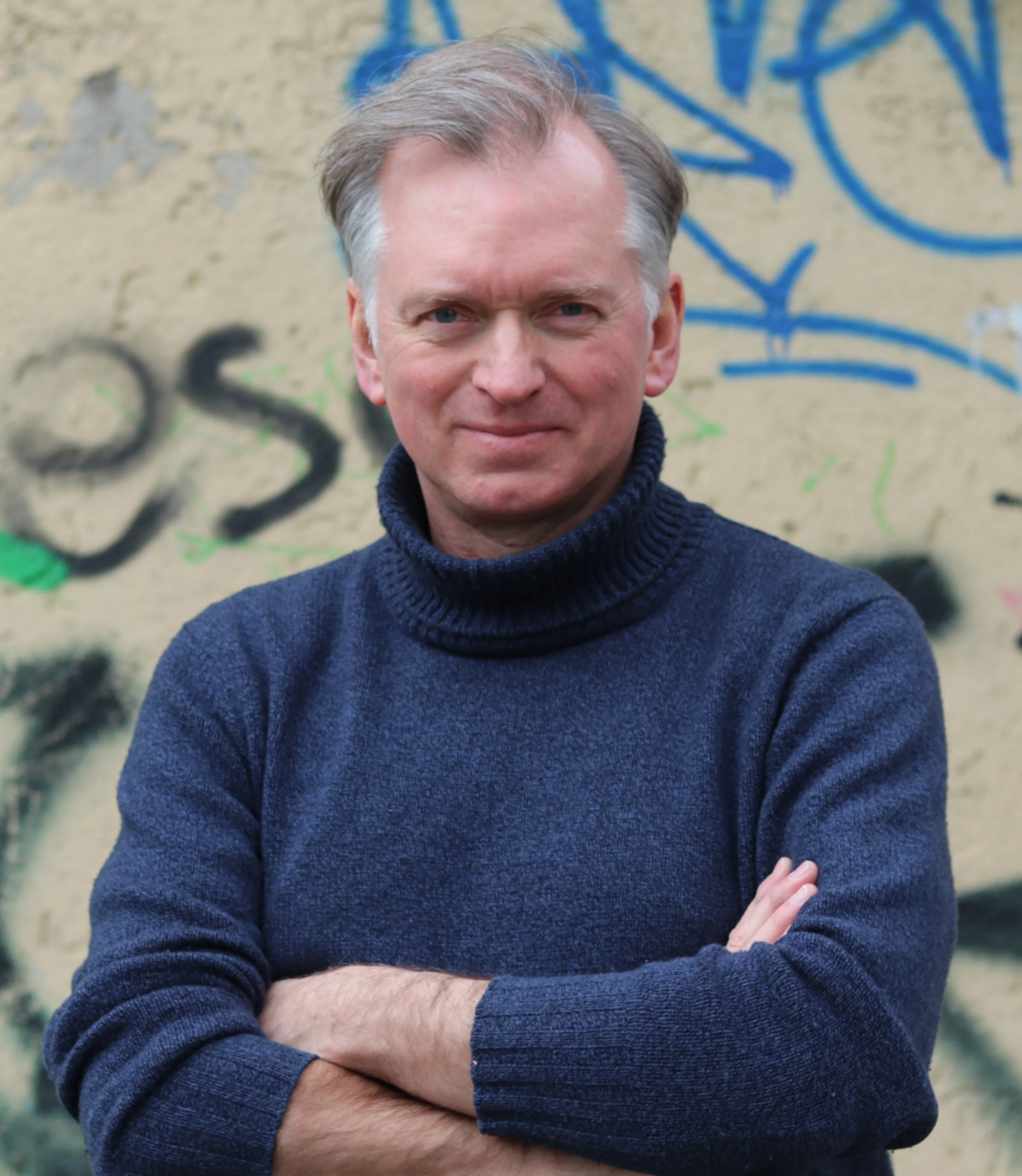
Image from Wikipedia
Image from Wikipedia
Christian Springer: Cabaret Between Stance, Humor, and Social Intervention
An Artist Who Unites Stage and Reality Indivisibly
Christian Springer is one of the most prominent voices in German cabaret, as he never understands humor as mere entertainment, but rather as a precise tool for observation, intervention, and enlightenment. Born on December 31, 1964, in Munich-Haidhausen, he developed a close affinity for the stage, satire, and political sharpness at an early age. From the children's choir of the Bavarian State Opera, he transitioned into a musical culture of language, rhythm, and pointed dramaturgy, which has profoundly shaped his later cabaret work.
His career tells not only of programs, television formats, and books, but also of a consistent artistic stance. Springer combines stage presence with social commitment, sharp analysis, and a clear democratic perspective. This very blend makes him a cabaret artist whose work extends far beyond the classic stage and remains visible in public discourse.
Biographical Roots in Munich: Early Influence and First Steps
Springer's artistic development did not begin in a vacuum, but in the urban and political climate of Munich. Even during his high school years, he commenced his cabaret endeavors, spurred on by his love for satire, which he discovered through the children's choir of the Bavarian State Opera. This early connection of discipline, voice, timing, and public performance forms an important key to his later stage profile.
From 1983 to 1994, he collaborated with Helmut Schleich and Andreas Rüttenauer at the Kabarett Fernrohr. This long phase of collective learning honed his sensitivity for ensemble work, political sharpness, and the art of transforming social friction into stage energy. Even at this early stage, a characteristic emerged that defined his entire musical career in the metaphorical sense of the word, namely his stage career: the precise transition between observation, irony, and direct address.
The Breakthrough as Fonsi and the Birth of an Unmistakable Stage Character
Since 1999, Christian Springer became known as the stage character "Fonsi," primarily on stage and in the programs of BR television surrounding the Munich Oktoberfest. This character made him visible both locally and regionally, linking Bavarian folk proximity with satirical sharpness. Fonsi turned into a distinctive figure of Munich cabaret, where grumpiness, observation, and social commentary converged.
The crucial turning point came in 2014 with the premiere of "Oben ohne." In this program, Springer shed his alter ego and appeared for the first time under his own name. This step not only marked a new artistic phase but also a denser consolidation of his style: less masquerade, more immediate authorship, more personal responsibility on stage.
Cabaret as Stance: Programs, Themes, and Dramaturgical Development
Springer's solo programs are characterized by a consistent thematic approach to social conflicts. Titles such as "Sand in der Wasserpfeife," "Türschlosspanik," "Machts so weiter," "Trotzdem," "Alle machen. Keiner tut was!," "Nicht egal," and the 2024 premiere program "Leider" showcase an artistic line that interconnects political present, everyday absurdity, and moral challenges. His works follow not merely an economy of punchlines but a dramaturgy of intensification and argument.
The official description of his program "Leider" emphasizes that Springer begins where others give up and transforms societal obstacles, blockers, and skeptics into a satirical reflection. The artist appears as someone who speaks quickly, does not miss a punchline, and brings serious topics to the stage with a casual aggressiveness. This mix of energy, political clarity, and linguistic agility makes his artistic development both consistent and adaptable.
Television, Authorship, and Media Presence
Springer has also steadily expanded his profile on television. Since 2013, he has co-hosted the BR cabaret show "Schlachthof" with Michael Altinger, a format that combines political debate and satirical live presence. Since 1999, he has also been a member of the ensemble "Die Komiker" of the Bavarian Broadcasting Corporation and regularly appears in other formats, including "Nix für ungut," "Fonsi am Nockherberg," "Fonsi auf der Zugspitze," and various satirical TV sketches.
Additionally, he has worked as an actor in productions like "Tatort" and "München 7." These appearances highlight his versatility and his ability to navigate between performance, commentary, and public role. As an author, he has also contributed to television shows, strong beer speeches, and musical plays, thereby anchoring his signature style not only on stage but also in the media and literary public.
Books as an Extension of the Stage: Political, Polemical, Precise
Springer's books are not a sideline but a central pillar of his work. Titles such as "Wo geht’s hier nach Arabien," "Nazi, komm raus," "Wir müssen Freiheit aushalten," "Die Antwort auf Söders Kreuz… ist 240 Jahre alt," "Ich und der Russe," "Bayerischer Mob. Wie die Gewalt in die Politik einzog." and "Sisi in Gaza" show how consistently he intertwines current political conflicts, historical threads, and personal research. His texts employ condensation, observation, and documentary energy.
Noteworthy is the thematic breadth: the Middle East, anti-Semitism, the refugee crisis, political violence, democracy, and culture of remembrance. Springer writes not from a distance but from a stance of intervention. This is precisely where the authority of his journalistic work lies: he does not limit himself to commentary but translates his perspective into concrete projects, books, and public actions.
Commitment and Impact: Orienthelfer, Shoulder-to-Shoulder, and Social Responsibility
In 2012, Christian Springer founded the association Orienthelfer e.V. to support civilian victims of the Syrian civil war. This commitment points to an artistic biography that does not merely content itself with reflection but seeks practical consequences. He organized aid deliveries to Syria, Jordan, and especially Lebanon, turning his public presence into a tool for concrete help.
In early 2020, the initiative SCHULTERSCHLUSS followed, where Springer aims to set a democratic sign against racism, anti-Semitism, conspiracy theories, and messages of hate. Lectures, actions, and memorial events have since become part of his expanded work. This connection of cabaret, political education, and civil society action gives his career a particular credibility.
Style, Language, and Artistic Signature
Springer's style is marked by tempo, linguistic precision, and a pronounced sense of dramatic escalation. Critics describe him as an artist who has developed his own genre, existing between a flow of thoughts, satire, and surprise. This observation captures the essence of his performance: Springer thinks publicly, comments quickly, and constantly opens new layers of meaning between information and intensification.
His cabaret thrives on heart and brain, on political alertness and a clear aversion to mere posing. He works with irony, biographical fragments, Bavarian coloring, and an unwavering gaze at societal developments. This is precisely why his stage art appears not only entertaining but also analytical and timely diagnostic.
Awards and Recognition in Culture and the Public Sphere
For his work as a cabaret artist and his social commitment, Christian Springer has received numerous awards. These include the main prize of the Bavarian Cabaret Prize, the Cabaret Prize of the City of Munich, the Waldemar von Knoeringen Prize, the Tolerance Prize of the Protestant Academy Tutzing, as well as the Bavarian Constitutional Medal in Silver. Additionally, he has received the "München leuchtet" Gold Medal and other honors that affirm his role as a cultural and societal voice.
These awards represent more than symbolic recognition. They document that Springer is perceived as an authority in German-language cabaret because he combines stance with craftsmanship. His work thus aligns in a way that does not pit artistic aspiration, political responsibility, and audience success against each other but rather brings them together.
Cultural Influence and Current Relevance
Christian Springer has profoundly shaped Munich and Bavarian cabaret for decades while continually leading it into larger societal debates, emerging from its regional roots. Whether as Fonsi, as the host of "Schlachthof," as an author, as a book writer, or as an initiator of humanitarian and democratic projects: His influence arises from the consistency with which he thinks stage and reality together.
His artistic relevance lies in the connection of satire, research, and responsibility. Especially in times of political polarization, his work remains current, as it not only comments but also takes a stance. Those who experience Christian Springer live encounter a cabaret artist who merges wit, sharpness, and stance into a rare unity.
Conclusion: A Cabaret Artist Who Does Not Just Perform but Acts
Christian Springer is exciting because he has consistently expanded the boundaries of cabaret. His career showcases an artist who sharpens his points on stage, reflects in books, and assumes responsibility in the public realm. This blend of art, analysis, and commitment makes him one of the most distinguished voices in his field.
Anyone who sees him live experiences more than just a program: they witness a stance in motion, a precise linguistic instrument, and an artist who engages energetically with the present. This is precisely where Christian Springer’s strength lies – and the reason why an evening with him is not only worthwhile but leaves a lasting impression.
Official Channels of Christian Springer:
- Instagram: no official profile found
- Facebook: no official profile found
- YouTube: no official profile found
- Spotify: no official profile found
- TikTok: no official profile found
Sources:
Upcoming Events
38. Weiden Literature Days 2026 - Sisi in Gaza
Experience a unique reading with Christian Springer on the Middle East. Literature meets cabaret in Weiden.
38. Weiden Literary Days 2026 – Sisi in Gaza
Join the reading 'Sisi in Gaza' with Christian Springer at the Weiden Regional Library. Political-literary reflections on the Middle East.
Sisi in Gaza - Reading with Christian Springer in Weiden
An evening full of literature, debate, and clarity: Christian Springer reads in Weiden from Sisi in Gaza. On 25.04.2026 from 7 PM. #Weiden #LiteraryDays
Christian Springer reads Sisi in Gaza in Weiden
An evening full of history, stance, and literary tension in Weiden: Christian Springer reads from Sisi in Gaza. April 25, 2026, 7 PM. #Weiden #LiteratureDays
Christian Springer live: Unfortunately in Munich 2026
Munich laughs again: Christian Springer brings his new cabaret program Unfortunately to the stage at Lustspielhaus. 04/27/2026, from 35 €. #Cabaret
Christian Springer: Unfortunately - the new cabaret program in Munich
Munich laughs again: Christian Springer brings 'Unfortunately' to Wirtshaus im Schlachthof. Political cabaret, pace, and strong punchlines on 23.06.2026. #Cabaret #Munich
Christian Springer - Humanity Does Not perish
An evening full of humanity and attitude in Augsburg: Christian Springer brings courage, dignity, and clear words to the stage. 04.07.2026, 13.20 Euro. #Humanity
Humanity Does Not Perish - A Plea for Humanity
An evening with conviction in Augsburg: Christian Springer speaks about humanity, responsibility, and courage. 04.07.2026, from 13.20 Euros. Discover now! #Humanity
Christian Springer - Unfortunately
Christian Springer brings sharp Munich cabaret to the stage at the Lustspielhaus. Unfortunately promises punchlines, attitude, and great laughter. 25.07.2026, from 29 €. #Cabaret
Events
As part of the 75th anniversary of the Caritas Association for the City of Amberg and the District of Amberg-Sulzbach e.V., Christian Springer presents his current cabaret program "Unfortunately" – an evening full of sharp observations, humor, and surprising optimism. Springer starts where others give up: at blockages, naysayers, and the everyday "it's not possible". With pace, wit, and a clear stance, he connects political and social issues with pointed reality satire. Be...