
Friedrich Kalkbrenner
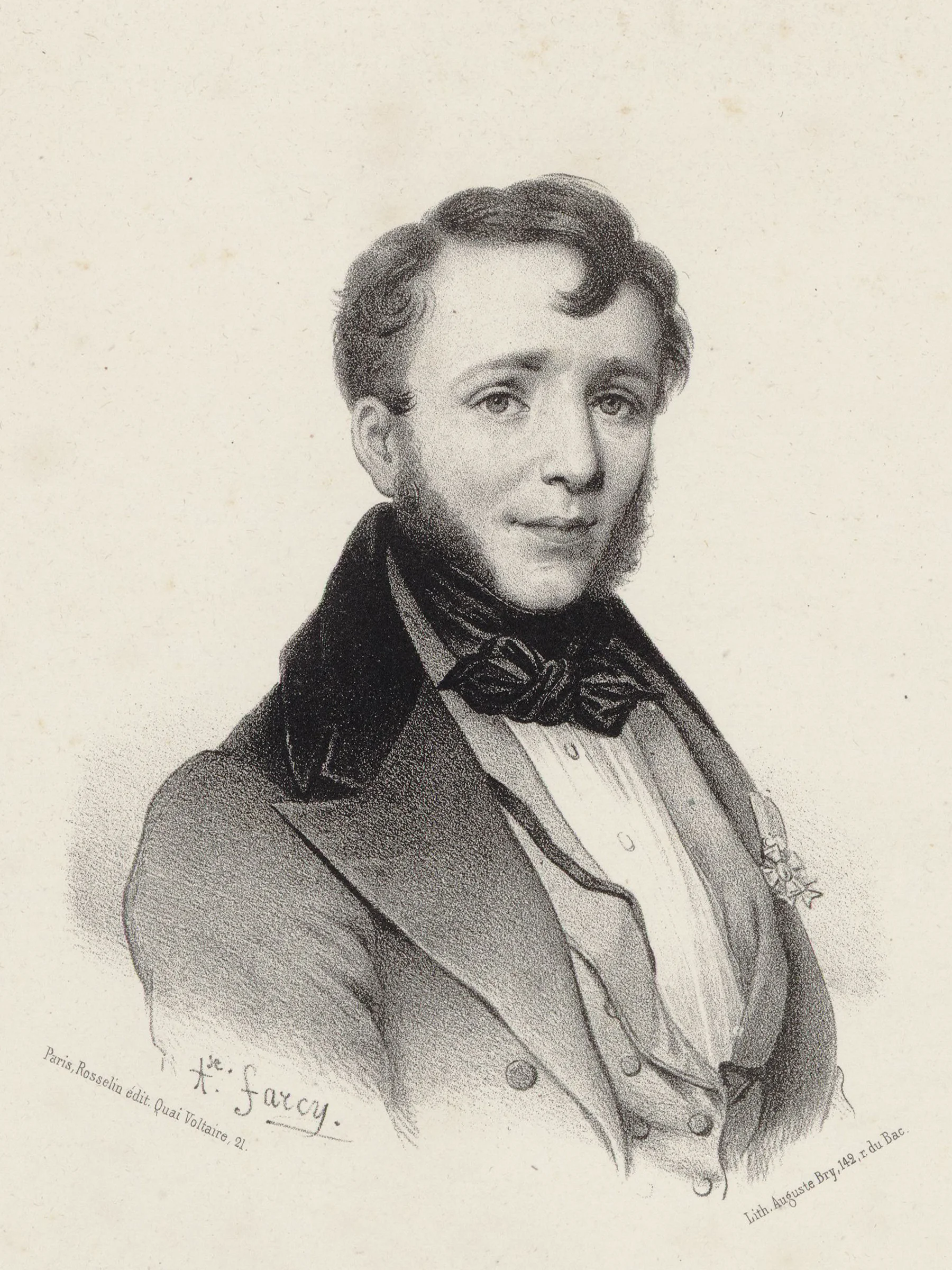
Image from Wikipedia
Image from Wikipedia
Friedrich Kalkbrenner: The Elegant Virtuoso of Early Romantic Piano
A Pianist Between Classicism, Romanticism, and International Fame
Friedrich Wilhelm Michael Kalkbrenner, also known as Frédéric Kalkbrenner, is considered one of the defining piano personalities of the 19th century. Born on November 7, 1785, during his mother's journey from Kassel to Berlin, and dying on June 10, 1849, in Enghien-les-Bains near Paris, he united German heritage with a French career and European impact. As a German-French pianist and composer, he was particularly renowned in France as one of the most famous musical figures of his time. ([de.wikipedia.org](https://de.wikipedia.org/wiki/Friedrich_Kalkbrenner?utm_source=openai))
Early Years and Musical Formation
Kalkbrenner's journey began not in a fixed home but during a journey between Kassel and Berlin. This biographical movement aligns with a career shaped by mobility, international exchange, and artistic self-presentation. Later, Paris became his center, yet his musical identity emerged from a European tension between German training and the French public. ([de.wikipedia.org](https://de.wikipedia.org/wiki/Friedrich_Kalkbrenner?utm_source=openai))
According to available music history sources, he received his training at the Paris Conservatoire, studying piano under Louis Adam and harmony with Catel. There, he won first prize for piano and composition; in the following years, he expanded his technical and stylistic training in Vienna and Berlin. His studies and encounters included counterpoint studies with Albrechtsberger as well as contacts with Clementi and Hummel, sharpening his position between virtuosic tradition and emerging Romanticism. ([s9.imslp.org](https://s9.imslp.org/files/imglnks/usimg/2/2d/IMSLP97337-PMLP200167-cyclopediamusicm02cham_bw.pdf?utm_source=openai))
The Breakthrough of a European Virtuoso
His artistic breakthrough occurred in the early 1800s. After traveling and performing in several musical centers, he made a public appearance in Paris with great success and quickly became sought after as a teacher and concert pianist. Especially in London, he was regarded from 1814 to 1823 as one of the leading virtuosos of his time, before returning to Paris in 1824, where he again took a strong position in the music scene. ([s9.imslp.org](https://s9.imslp.org/files/imglnks/usimg/2/2d/IMSLP97337-PMLP200167-cyclopediamusicm02cham_bw.pdf?utm_source=openai))
Historical descriptions depict Kalkbrenner as an artist with a strong stage presence, technical brilliance, and pronounced self-confidence. His contemporaries viewed him as a brilliant improviser, and his name stood for a piano culture that united virtuosity, elegance, and salon aesthetics. Frédéric Chopin dedicating his E minor piano concerto to him underscores the stature that Kalkbrenner held in the musical milieu of the era. ([de.wikipedia.org](https://de.wikipedia.org/wiki/Friedrich_Kalkbrenner?utm_source=openai))
Teaching, Salon, and Influence on Piano Culture
Aside from concert life, Kalkbrenner was also an influential teacher. Sources cite him as a sought-after educator in Paris and London; his teaching shaped a generation of pianists who adopted his concepts of touch, clarity, and stylistic discipline. His involvement in technical and pedagogical ideas, such as those related to Logier's Chiroplast, illustrates him as a musician who not only played but also sought to rethink piano instruction of his time. ([s9.imslp.org](https://s9.imslp.org/files/imglnks/usimg/2/2d/IMSLP97337-PMLP200167-cyclopediamusicm02cham_bw.pdf?utm_source=openai))
Historically, he represents a type of early Romantic pianist: not only a composer but also an interpreter, educator, networker, and sound aesthetic. His position with Pleyel in Paris also highlights the closeness between artistic practice and instrument making, that is, between repertoire, interpretation, and the industrial development of the piano. This represents a substantial part of his cultural influence. ([s9.imslp.org](https://s9.imslp.org/files/imglnks/usimg/2/2d/IMSLP97337-PMLP200167-cyclopediamusicm02cham_bw.pdf?utm_source=openai))
Compositions and Discography: Between Concert Hall and Salon
Kalkbrenner’s work includes piano concertos, chamber music, and numerous pieces for piano. AllMusic describes him as a composer of the Romantic era, known for piano concertos, chamber music, and a vast number of works for solo piano. IMSLP and music historical entries confirm a wide repertoire comprising concertos, rondos, fantasies, sonatas, trios, quartets, quintets, and a septet. ([allmusic.com](https://www.allmusic.com/artist/fr%C3%A9d%C3%A9ric-kalkbrenner-mn0001206489?utm_source=openai))
Notable works include the 24 Etudes, Op. 20, the Piano Sonata, Op. 28, and various chamber works such as sextets, septets, and different trios and quartets. These titles showcase a compositional practice that connects technical training with musical representation. Kalkbrenner wrote for the piano not only as a solo instrument but as the centerpiece of a bourgeois concert and salon taste. ([imslp.org](https://imslp.org/wiki/24_Etudes%2C_Op.20_%28Kalkbrenner%2C_Friedrich_Wilhelm%29?utm_source=openai))
Stylistic Signature and Musical Development
Stylistically, Kalkbrenner is characterized by a controlled, brilliant, and clearly structured piano style. AllMusic assigns him to the Romantic repertoire and emphasizes his works for keyboard, concert, and chamber music. The historical classification in reference works also shows that he was perceived as a virtuoso of international stature in the first half of the 19th century, whose playing and compositions focused on elegance, brilliance, and formal awareness. ([allmusic.com](https://www.allmusic.com/artist/fr%C3%A9d%C3%A9ric-kalkbrenner-mn0001206489?utm_source=openai))
Especially compared to later Romantic sound extremes, his music appears as a balance of virtuosity and discipline. The piano serves in his works less as an instrument of subjective confession and more as a medium of articulation, brilliance, and controlled emotion. This aesthetic made him appealing to contemporaries seeking technical precision and social representation in the same music. ([allmusic.com](https://www.allmusic.com/artist/fr%C3%A9d%C3%A9ric-kalkbrenner-mn0001206489?utm_source=openai))
Reception, Legacy, and Cultural Influence
Kalkbrenner’s impact extends beyond his immediate era. As a teacher, virtuoso, and composer, he stood at an important intersection in piano history, and his presence among Chopin, Pleyel, Clementi, and Hummel anchors him at the center of the 19th-century European music network. The fact that modern recordings and re-releases of his works continue to appear shows that his name has remained present in historical reception. ([allmusic.com](https://www.allmusic.com/artist/fr%C3%A9d%C3%A9ric-kalkbrenner-mn0001206489?utm_source=openai))
His cultural influence also lies in the fact that he helped shape a professional standard for the traveling virtuoso. Concert activities, teaching, publishing, instrument making, and repertoire management merged in his case into a model of a musical career that became characteristic of Romanticism. Anyone wanting to understand the development of the piano in the 19th century cannot overlook Kalkbrenner. ([s9.imslp.org](https://s9.imslp.org/files/imglnks/usimg/2/2d/IMSLP97337-PMLP200167-cyclopediamusicm02cham_bw.pdf?utm_source=openai))
Fans' Voices
No official social media channels could be verified for Friedrich Kalkbrenner; therefore, this section is omitted entirely. There are no verifiable official profiles from which authentic fan comments or community reactions could be quoted. ([de.wikipedia.org](https://de.wikipedia.org/wiki/Friedrich_Kalkbrenner?utm_source=openai))
Conclusion: A Name that Shaped Early Piano Modernity
Friedrich Kalkbrenner remains intriguing because he was more than a brilliant pianist: he was an architect of the Romantic piano style, an influential teacher, a composer with a broad oeuvre, and a celebrated virtuoso across Europe. His career connects Kassel, Berlin, Paris, London, and the major musical centers of an era when the piano became the leading instrument of the bourgeoisie. Those experiencing the history of Romantic piano will discover a style-defining protagonist in Kalkbrenner. ([de.wikipedia.org](https://de.wikipedia.org/wiki/Friedrich_Kalkbrenner?utm_source=openai))
His music is worth rediscovering because it condenses the sound of early Romanticism in particularly elegant form. Those who hear his works live or in historically informed recordings encounter a piano artistry filled with clarity, virtuosity, and courtly sophistication. This is where the lasting fascination of this artist lies: in the connection of technique, style, and European music history. ([allmusic.com](https://www.allmusic.com/artist/fr%C3%A9d%C3%A9ric-kalkbrenner-mn0001206489?utm_source=openai))
Official Channels of Friedrich Kalkbrenner:
- Instagram: no official profile found
- Facebook: no official profile found
- YouTube: no official profile found
- Spotify: no official profile found
- TikTok: no official profile found