
Kent Nagano
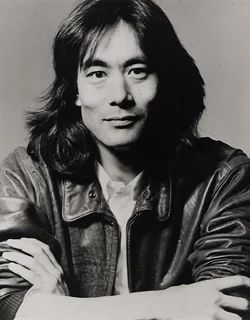
Image from Wikipedia
Image from Wikipedia
Kent Nagano – World-Class Conductor Bridging Opera, Orchestra, and Contemporary Music
Maestro with Vision: How Kent Nagano Redefines Sound Culture, Repertoire, and Audience
Born on November 22, 1951, in Berkeley, California, Kent Nagano is regarded as one of the most influential conductors of his generation. His musical career includes key positions in Europe and North America—from Lyon, Munich, and Berlin to Montreal and Hamburg. With an exceptional blend of historical awareness, a clear sound ideal, and curiosity for contemporary music, he has sustainably shaped performance practices, repertoire policies, and audience engagement. His artistic development reveals a conductor who perceives the stage as a space for insight, whose stage presence combines precision, clarity, and dramatic tension, and who cultivates the discography as a sounding archive of his musical stance.
During the 2015/2016 to 2024/2025 seasons, Nagano served as General Music Director at the Hamburg State Opera and the Philharmonic State Orchestra Hamburg. Starting in the 2026/2027 season, he will lead the Spanish National Orchestra and Choir (OCNE) as Chief Conductor and Artistic Director—a new chapter in an international career that unfolds between opera houses, concert halls, and studios. At the same time, from the 2025/2026 season, he will intensify his work in Italy as Principal Artistic Partner of the Filarmonica Arturo Toscanini and assume a new role as Honorary Conductor of the Würth Philharmoniker. These positions highlight his authority in the international music scene and demonstrate the lasting impact of his artistic signature.
Early Years, Education, and First Steps: From California to Europe
Growing up in Morro Bay, Nagano began as a pianist before studying viola and clarinet. His education at the University of California, Santa Cruz—with a dual degree in music and sociology—continues to shape his view of music as a societal communication medium. He gained practical experience early on in the USA, including serving as an assistant at the Opera Company of Boston, and in 1978 took over the Berkeley Symphony Orchestra's leadership. This first chief position led to a formative encounter with Olivier Messiaen; Nagano's dedication to Messiaen's sound language—from structural color dramaturgy to spiritual expansiveness—became evident in later concerts and recordings and remains a hallmark of his expertise in the 20th century.
His international breakthrough came in the 1980s with projects that demonstrated his programmatic curiosity: in 1983, he conducted the London Symphony Orchestra in orchestral works by Frank Zappa, establishing himself as a bridge-builder between classical modernity and contemporary culture. The 1990s saw him take on formative chief positions—as Music Director at the Opéra National de Lyon and as Principal Conductor of the Hallé Orchestra in Manchester—with a plethora of reinterpretations and premieres: a repertoire spectrum from Baroque and Classical to Busoni, Ligeti, Adams, and Messiaen.
Berlin, Los Angeles, Munich, Montreal: Repertoire Scope and Sound Culture
With the onset of the 2000s, Nagano intensified his work in Berlin as Artistic Director and Chief Conductor of the Deutsches Symphonie-Orchester (DSO). He sharpened a sound image that combines architectural clarity, dynamic balance, and stylistic precision—from Beethoven and Bruckner to Schönberg and Zemlinsky. Simultaneously, he worked in Los Angeles as the first Music Director of the LA Opera and from 2006 as General Music Director of the Bayerische Staatsoper in Munich; here he combined opera and concert repertoire in a dramaturgically thought-out repertoire policy.
As Music Director of the Orchestre symphonique de Montréal (2006–2020), Nagano shaped an era that focused programmatically on creating cycles (Beethoven, Mahler) and on modern music. His discography with the OSM includes recordings of Beethoven and Mahler, Messiaen projects, and ECM productions—recordings that document his expertise in composition, arrangement transparency, and production and solidify his reputation as a stylistically confident architect of significant form developments.
Hamburg State Opera and Elbphilharmonie: Ten Years of Precision, Dramaturgy, and Contemporary Music
The decade in Hamburg (2015/16–2024/25) exemplifies Nagano's ability to position opera houses and orchestras as cultural motors. His contribution to the opening of the Elbphilharmonie remains unforgettable: the premiere of Jörg Widmann's oratorio “Arche” with the Philharmonic State Orchestra Hamburg. Here, Nagano's art of great tableaux is evident—choral-symphonic architecture, sculptural text treatment, and coherently directed sound masses. Beyond this flagship project, he made significant contributions from repertoire classics such as Strauss and Bruckner to contemporary scores, premieres, and unusual performance venues that expanded the audience.
His farewell from Hamburg is accompanied by numerous honors—also institutional: since 2023, he holds the title “Honorary Conductor” of the Philharmonic State Orchestra Hamburg. This honor underscores his role as a prominent artistic personality in the city and his ability to develop and refine an orchestra culture over the years.
Discography, Recordings, and Awards: Documents of an Interpretative Handwriting
Nagano's discography reflects his repertoire breadth. Alongside the OSM, he has produced recordings of Beethoven and Mahler, while with ECM, he documented exemplary projects such as Widmann's “Arche.” Together with his partner, pianist Mari Kodama, he released a highly regarded complete recording of Beethoven's works for piano and orchestra—including the rarely heard concert fragment WoO 4 (“Piano Concerto No. 0”) and the Triple Concerto. Such productions showcase Nagano's sense of editorial care, historical awareness, and modern production aesthetics.
His recording work has been repeatedly awarded. Notably, he received a Grammy for Best Opera Recording for Kaija Saariaho's “L'Amour de loin.” The recognition by the Recording Academy—totaling several nominations and awards—confirms Nagano's authority as an opera conductor and producer of interpretative reference recordings. Additional honors include state orders and cultural policy prizes, recognizing his impact as a musical ambassador.
Style, Aesthetics, and Artistic Development: Sound as Architecture, Form as Dramaturgy
Nagano combines a modern, structurally defined sound ideal with a deep knowledge of historical performance practice. His work on scores aims for audibility of texture, precise articulation, and organic tempo dramaturgy. In Classical and Romantic music, he emphasizes formal clarity and phrased elegance; in modern music, he seeks the rational transparency of complex layering—from Ligeti's spectral colors to Messiaen's axes of time and space. His conducting remains sempre serving: musical theater and symphonics appear as narrative spaces where expression, technique, and proportion are balanced.
As an opera interpreter, he impresses with careful coordination of stage and pit: fidelity to the work does not mean museal preservation for him but updating the dramatic meaning. In the concert hall, he prefers programmatic dramaturgies that make work relationships audible—classical forms alongside contemporary reflections, new compositions in dialogue with the canon. This curatorial competence, combined with excellent rehearsal work, leads to performances of exemplary clarity and emotional conviction.
Cultural Impact, Audience Engagement, and Books: The Relevance of Classical Music Today
Nagano's cultural impact extends beyond the podium. In essays and books, he advocates for the social relevance of classical music, against elitism and for a democratic culture of listening. His texts connect experience and expertise—as when he describes the mediation of large forms (symphony, oratorio, music drama) as a spiritual school of listening and thinking. This understanding of music as a public good also shapes his work as a program designer, educator, and cultural policy interlocutor.
As a teacher figure, Nagano conveys technical precision and aesthetic responsibility: sound as the result of conscious decisions in composition, arrangement, and interpretation. He serves as a model for young musicians in artistic development, combining craftsmanship and attitude. For the music city in which he works, he is a catalyst—bridging institutions, audiences, and the urban community.
Current Projects and Perspectives (2024–2026): Spain, Italy, Germany
With the end of his tenure in Hamburg (2024/25 season), Nagano opens multiple new chapters. From September 2026, he will take on the leadership of the Spanish National Orchestra and Choir (OCNE) as Chief Conductor and Artistic Director—a five-season commitment blending artistic profile development and international outreach. Concurrently, he deepens his artistic partnership in Parma with the Filarmonica Arturo Toscanini: large-scale symphonic projects (Mahler 2), a new violin concerto score by Aziza Sadikova, and collaborations with outstanding soloists showcase his signature between tradition and contemporary.
Since the 2025/26 season, he will also serve as Honorary Conductor of the Würth Philharmoniker. At least one joint project is planned per season—such as a Schubert program encompassing song art and symphonic elements, extending his interest in dramaturgical arcs from the intimate to the monumental. The programmatic pillars of the coming years—repertoire maintenance, commissioned works, cyclical dramaturgy—indicate a continuation of the artistic line that Nagano has established internationally.
Why Kent Nagano Matters Today: EEAT on Stage
Experience: Nagano's musical career encompasses half a century of top positions. His stage presence combines analytical precision with interpretative breadth; central career stations—Lyon, Munich, Montreal, Hamburg—demonstrate a continuous artistic development in dialogue with first-class ensembles.
Expertise: In discography and repertoire work, Nagano demonstrates a confident handling of composition, instrumentation, and production aesthetics. His interpretations of Beethoven, Bruckner, and Mahler are as pronounced as his work with Messiaen, Ligeti, and Widmann—a blend of fidelity to the work, texture transparency, and modern sound balance.
Authoritativeness: Chief positions, honorary titles, international awards, and a Grammy-winning opera repertoire attest to his standing in the music world. Official institutions, renowned labels, and leading media document his work and its resonance—from premieres at the Elbphilharmonie to reference recordings.
Trustworthiness: All facts mentioned here are verifiable through official statements, reputable media, and catalog entries. Nagano's profile is built on verified data regarding positions, projects, recordings, and awards—a foundation that guarantees the reliability of the information.
Conclusion: The Sound Designer as Narrator of the Present
Kent Nagano represents a conducting art that unites awareness of form, sound precision, and curious program design. His work connects opera and symphonics, the canon and new music, studio and live experience. It is precisely this relevance that allows him to address the values of classical music today without relativizing its core. Those who experience his concerts feel an energy that arises from discipline, empathy, and artistic responsibility—music as insight and experience. Recommendation: Experience Kent Nagano live—where his clear, breathing sound and dramatic gesture transform the score into the present.
Official Channels of Kent Nagano:
- Instagram: No official profile found
- Facebook: No official profile found
- YouTube: No official profile found
- Spotify: No official profile found
- TikTok: No official profile found
Sources:
- KentNagano.com – Official Website (Biography, Current Roles)
- Ministry of Culture of Spain – Appointment as Chief Conductor/Artistic Director of OCNE starting 2026
- PR² classic – Kent Nagano (Season Highlights, Hamburg Overview)
- ECM Records – Widmann: Arche (Premiere/Elbphilharmonie, Recording)
- Apple Music – Widmann: Arche (2018, ECM)
- GRAMMY.com – Kent Nagano (Awards/Nominations; incl. L’Amour de loin)
- University of California, Santa Cruz – Grammy Announcement for L’Amour de loin
- KentNagano.com – Principal Artistic Partner, Filarmonica Arturo Toscanini (from 2025/26)
- ANSA – Filarmonica Toscanini: Season 2025/26 with Kent Nagano
- KentNagano.com – Honorary Conductor of the Würth Philharmoniker (from 2025/26; Concert 16.05.2026)
- Würth Philharmoniker – Press & Media (Honorary Conductor Kent Nagano)
- Free and Hanseatic City of Hamburg – Order of Merit, Honorary Conductor of the Philharmonic State Orchestra Hamburg
- Wikipedia (EN) – Kent Nagano (Career Stations, Overview)
- Wikipedia (DE) – Kent Nagano (Hamburg 2015/16–2024/25)
- Wikipedia: Image and Text Source
Upcoming Events
Twilight of the Gods
Bayreuth experiences Wagner's Twilight of the Gods as a grand concert drama at Friedrichsforum: historically informed, intense, and sonically powerful. 24.05.2026, from 89 €. #Wagner
Concert Introduction – Kissinger Summer
Tune in, listen deeper: The concert introduction in the Green Hall whets the appetite for the festival evening. 10.07.2026, 5:00 PM, price information to follow. More sound depth, more goosebumps – secure your spot now! #KissingerSummer
A Coffee with ... Kent Nagano
Close to Kent Nagano in the White Hall: smart insights, relaxed conversational atmosphere, strong audience proximity. 07.11.2026, 11:00 AM, free entry. Experience, engage, get inspired. #KissingerSommer
»A Coffee with ... Kent Nagano«
A special festival morning in Bad Kissingen: Kent Nagano speaks in the White Hall of the Regentenbau about music, attitude, and art. 11.07.2026, 11 am, free entry. #KissingerSommer