
Maria Imma Mack
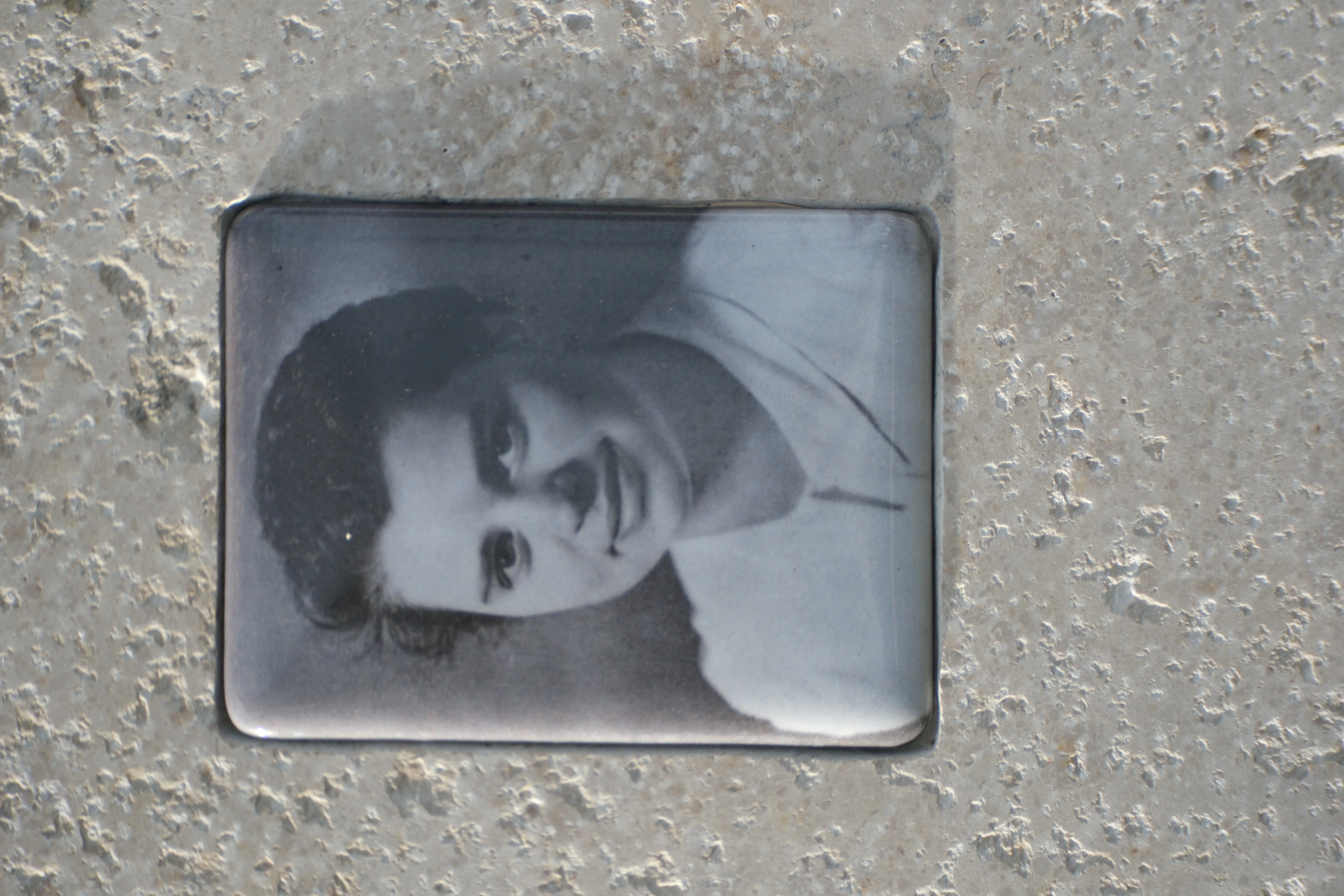
Image from Wikipedia
Image from Wikipedia
Maria Imma Mack: The Quiet Heroine of Dachau and a Life Dedicated to Humanity
A nun who did not just observe history but changed it
Maria Imma Mack, born as Josefa Mack on February 10, 1924, in Möckenlohe near Eichstätt and passed away on June 21, 2006, in Munich, is one of the most remarkable figures in German memory culture. As a nun of the Congregation of the Poor School Sisters of Our Lady, she became a covert helper for prisoners in the Dachau concentration camp under the codename "Mädi." Her actions combined faith, courage, and organizational determination at a time when any sign of solidarity could be life-threatening.
Her life story is not a loud chapter in contemporary history but rather a quiet one, yet all the more impactful. Maria Imma Mack embodies a form of civil courage that acts out of conviction rather than for show. Her story is about a young woman who found her way from the convent into one of the darkest chapters of the 20th century and took on responsibility where fear and inhumanity reigned.
Biographical Origins: From Möckenlohe to Munich
Josefa Mack grew up in a Bavarian village between Eichstätt and Ingolstadt. Her father worked as a carpenter, while her mother was a housewife; she was shaped in a Catholic household that paid close attention to political developments and did not shy away from discussions about current events. From an early age, she was engaging with martyr legends from early Christian history, whose images of steadfastness and mutual assistance shaped her later path.
In 1933, the year of the Nazi seizure of power, she received her First Communion. This biographical coincidence exemplifies the tension in which her life unfolded: religious influence, political radicalization, moral testing. Her decision for religious life ultimately led her to the Congregation of the Poor School Sisters of Our Lady in Munich, where Josefa Mack eventually became Sister Maria Imma.
The Road to Dachau: From an Everyday Task to an Act of Resistance
In May 1944, the then 20-year-old first traveled to the Dachau concentration camp, originally to purchase flowers for the convent from the sales outlet of a camp garden. From this seemingly harmless task, a chain of actions with enormous moral significance developed. Her first contact with the prisoners, especially with one of the priest prisoners in the garden, left a lasting impression on her.
From then on, her occasional visits turned into regular trips into danger. Until the liberation of the camp in April 1945, she traveled to Dachau most weeks, later often by bicycle after a train route was interrupted due to a bomb alarm. In winter, she used a sled to navigate snowy paths when the bicycle was no longer usable. This persistence transformed logistical routine into a quiet symbol of solidarity.
Secret Help Actions: Food, Letters, Liturgical Items
Maria Imma Mack provided prisoners with food, church items, and medication. Over the years, she also smuggled letters, maintaining contact between the captives and their families. According to the City of Munich, she did this at the risk of her life, knowing that such help could result in the death penalty. This is where the weight of her biography lies: amidst systematic dehumanization, she maintained awareness of concrete human needs.
Particularly impressive is the account of how she procured medication at the behest of the sisters when typhus broke out in the camp. She secretly brought these supplies into the concentration camp. Her help was not abstract but practical, physical, and immediate. She not only supported faith but, more tangibly, the survival of people who depended on food, comfort, and hope in the camp.
Faith as a Driving Force: The Spiritual Dimension of Her Actions
Maria Imma Mack did not act from a sense of heroic self-importance but from a deep religious conviction. She was influenced early on by stories of Christian martyrs, and her experiences in the convent were tied to her responsibility towards the imprisoned. The SSND community describes that she only fully grasped the reality of camp life after her first visit and continued with the support of the religious leadership.
Her tasks also included providing priest prisoners with mass wine, hosts, church forms, and other liturgical items. These elements were not secondary; they expressed pastoral continuity under conditions of complete violence. It is precisely here that her historical significance emerges: she was not just a helper, but a mediator of dignity, liturgy, and hope.
The Codename "Mädi" and the Quiet Self-denial
Among the prisoners, she was known as "Mädi," a codename that created closeness and intimacy while also providing protection. Later, she was referred to by some as the "Angel of Dachau," a name that highlights the emotional dimension of her actions. Nonetheless, she remained modest and spoke little about her experiences. This reticence is a part of her personality and makes her story all the more credible.
After the war, she documented her experiences in the memoir "Warum ich Azaleen liebe." The fact that she only wrote these records at the request of Munich Cardinal Friedrich Wetter underscores her humble approach to her own role. Her work documents not self-promotion but memory, witness, and the quiet duty to make the past comprehensible for future generations.
Impact and Recognition: Awards, Memory Culture, and Public Respect
For her dedicated work, Maria Imma Mack received several awards. In 1986, she was awarded the Bavarian Order of Merit. In 2004, she was inducted as a knight into the French Legion of Honor, recognized for her courage and commitment to peace and reconciliation between Germany and France. Additionally, she received the Federal Cross of Merit 1st Class and the Cross of Honor Pro Ecclesia et Pontifice.
The city of Munich also honors her with the Imma-Mack-Weg. The naming not only refers to a biography but signifies a historical consciousness that remains visible in the public space. In her home region, memorial plaques and places of remembrance have also been established, anchoring her actions as part of local and national memory culture. Thus, her name has long been more than a biographical entry: it stands for lived humanity under extreme conditions.
Written Legacy and Historical Contextualization
Her book "Warum ich Azaleen liebe" is one of the central written testimonies of her memory. It documents the trips to the Dachau camp's garden between May 1944 and April 1945 and makes visible how closely daily life and moral decisions were intertwined in her life. As a source, the work holds not only biographical but also contemporary historical value.
Historically, Maria Imma Mack demonstrates how resistance in National Socialism could also consist of small, repeated acts. No spectacular speeches, no public appearances, but regular aid, secret transports, and loyal assistance formed the core of her actions. It is this very continuity that makes her life path so impressive: from routine came salvation, from faith came responsibility, and from silence came a lasting contribution to memory.
Not a Music Biography in the Narrow Sense – but a Culturally Charged Life
Maria Imma Mack was not a musician and does not have a discography, charts, hits, or musical releases in the traditional sense. Nevertheless, her life path deserves detailed cultural journalistic consideration, as it demands the language of stance, dramaturgy, and public memory. Her biography has the power of a grand narrative: with crises, turning points, inner conflicts, and lasting resonance.
In a broader cultural sense, her story acts as a resonance chamber. It connects religious practice, historical experience, and literary testimony. Anyone who engages with her persona encounters not a star but a moral authority, whose influence remains palpable in memorials, publications, and public honors to this day.
Conclusion: Why Maria Imma Mack Continues to Inspire
Maria Imma Mack fascinates because her life shows how much strength lies in consistency, compassion, and discipline. She acted without pathos but with extraordinary determination, and she preserved the humanity amidst a reign of terror. Her biography stands for civil courage, strength of faith, and a form of quiet greatness that resonates so lastingly.
Anyone interested in history, moral courage, and memory culture should undoubtedly engage with Maria Imma Mack. Her life makes it clear that true greatness often emerges where no applause is given. Those who read her story recognize: It is worthwhile not only to remember such role models but to make them visibly relevant time and again.
Official Channels of Maria Imma Mack:
- Instagram: No official profile found
- Facebook: No official profile found
- YouTube: No official profile found
- Spotify: No official profile found
- TikTok: No official profile found